In this comparison guide, we look at the key differences between Kajabi and Skool so you can pick the best online course platform for your needs right now.
If you have ever created an online course, you know the dream is to package what you know, help people get real results, and build a scalable business around your expertise.
The reality can be tough, though.
I know this because I’ve been creating, launching, and selling online courses long before Skool or Kajabi blew up.
Over the years, I’ve used both Kajabi and Skool enough to see where each one shines, where each one falls short, and who each one is REALLY built for.
And in this review, I’ll help you break down how Skool and Kajabi compare on pricing, course creation, community building, and overall value. By the end, you’ll have a much clearer idea of which community platform fits your business, your audience, and the way you want to grow.
Quick Decision
👍 What I like most about Skool compared to Kajabi
- Easier to use: A cleaner, more intuitive interface that feels effortless from day one.
- Community-centered: Strong community engagement through built-in gamification tools, like points, levels, and leaderboards.
- Organic growth: Its built-in discovery approach can help interested users in other communities find and join your community organically.
- Affordable, not cheap: A lower-cost starting point ($9 or $99) makes it a top choice for creators on a budget or when a full-fledged online course platform is overkill.
- No bloatware: Skool also fits nicely into your existing stack if you already use separate tools for your website builder, email marketing, and sales funnels. For example, I already host my website on WordPress and have email marketing sorted out, so it’d make sense to skip Kajabi for course creation only.
👍 What I like most about Kajabi compared to Skool
- True all-in-one online learning platform: Kajabi can easily replace several separate tools and simplify your setup.
- Built-in marketing tools: Includes professional-grade email campaigns, funnels, automations, and landing pages to attract, nurture, and convert readers to customers.
- Expect advanced capabilities, such as quizzes, assessments, and student progress tracking, to encourage seriousness and better support learners who get stuck.
- Multiple native automations: Seamlessly connect your products, email marketing, and customer journeys without relying as heavily on third-party tools.
- More integrations overall, and that gives you extra flexibility as your expertise business grows.
Explore Kajabi (30 days trial)
Upfront verdict
In a hurry?
Here’s the short answer. If you want a simple, community building platform with strong engagement features and built-in discovery, Skool can be your top Kajabi alternative here.
But, if you want an all-in-one platform for courses, email marketing, sales funnels, marketing automations, and a website builder, go with Kajabi.
Now, if you have a few more minutes, you’ll see why each platform is ideal for more scenarios than just those two.
Overview
What does Skool do exactly?
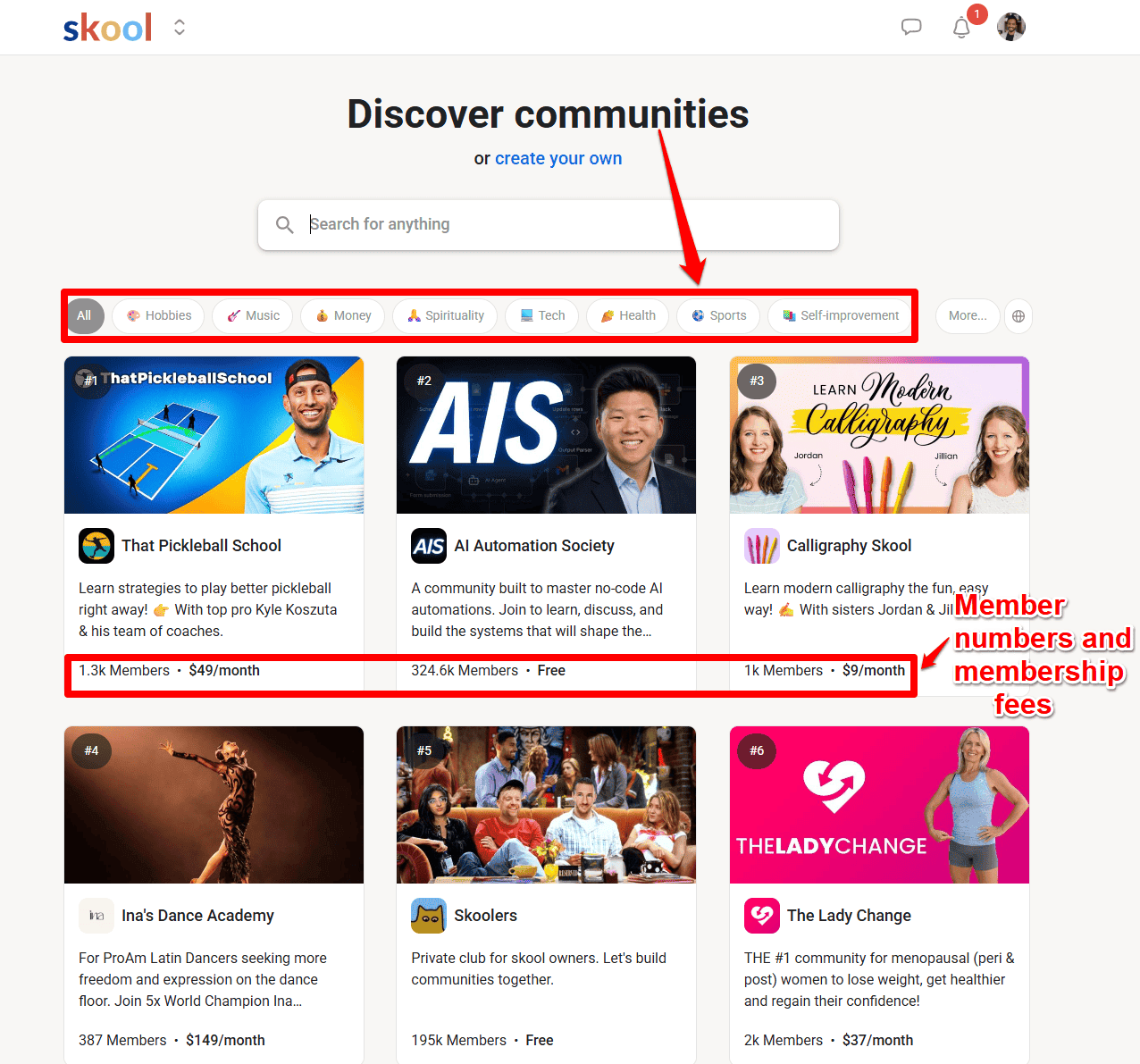
Skool’s biggest strength is that it does not treat learning as a solo activity. Instead, it brings together course content, discussions, gamification, and community interaction to keep your members active and invested.
That makes it especially appealing if you want to build a more social learning experience, rather than treat your course like a static library of lessons.
If you want a closer look at how Skool works in practice, check out my detailed Skool review here. Or, try Skool for free and see for yourself.
What does Kajabi do exactly?
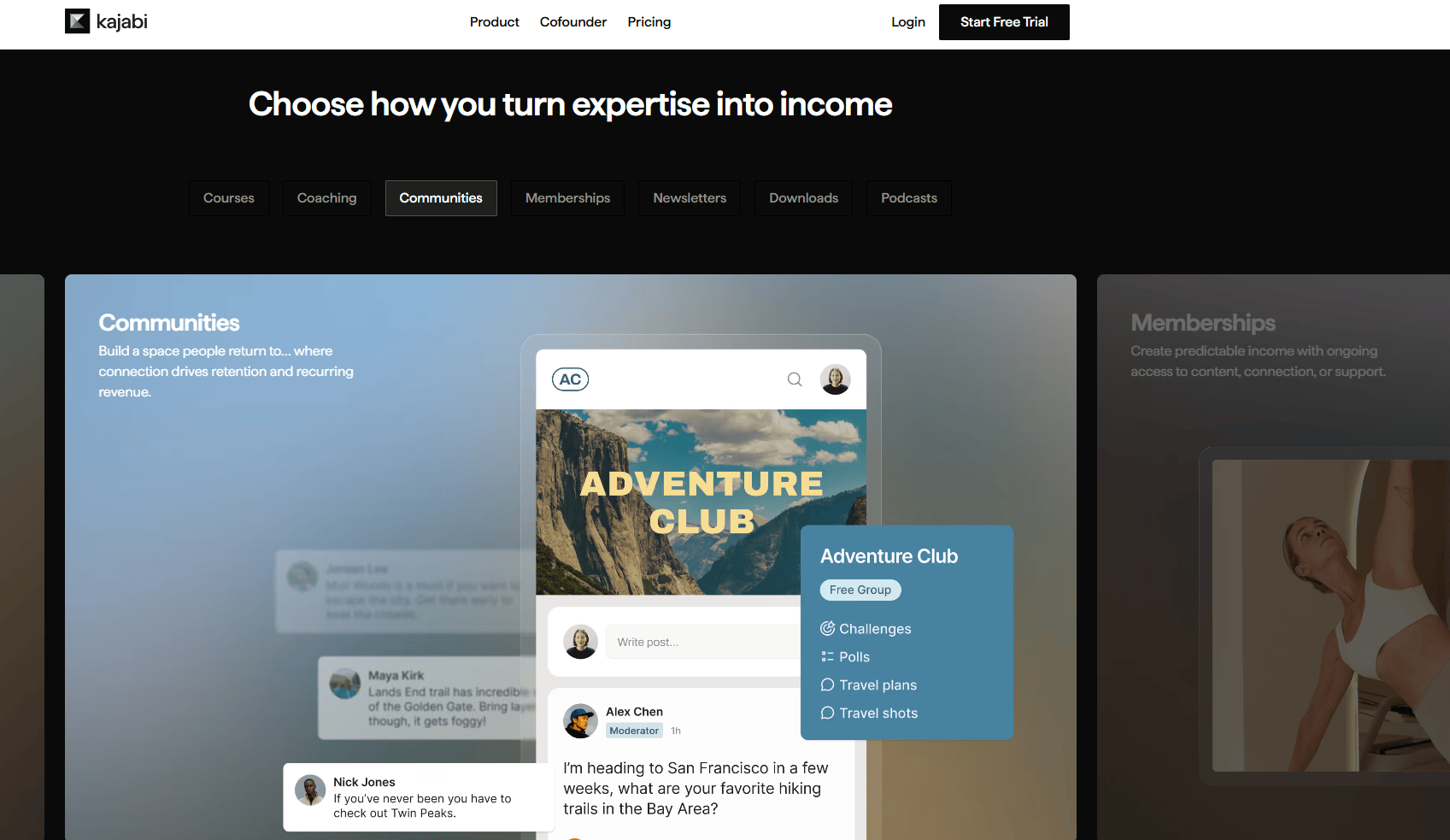
On the flip side, Kajabi is designed to help you run and grow your entire knowledge business from one place, without having to piece together a patchwork of tools behind the scenes. That also makes it a strong fit if you want to scale from gigs to an expertise-based business over time.
If you want the full breakdown of Kajabi’s capabilities, strengths, and limitations first, check out my in-depth Kajabi review here. Or, if you prefer more hands-on, try Kajabi yourself free for 30 days here.
Skool or Kajabi: Which offers better community-first memberships?
Most course creators will tell you the hard part is not creating the course. It is keeping learners engaged long enough to finish, get results, and feel their time and money were well spent.
Too often, students sign up, watch a few lessons, then lose momentum and drift away. Usually, that is not because your content is weak, but because traditional course platforms leave students to figure things out alone.
For those reasons, I believe community-centered learning is the future in the age of AI. And Skool’s built-in community features look to fill in exactly that.
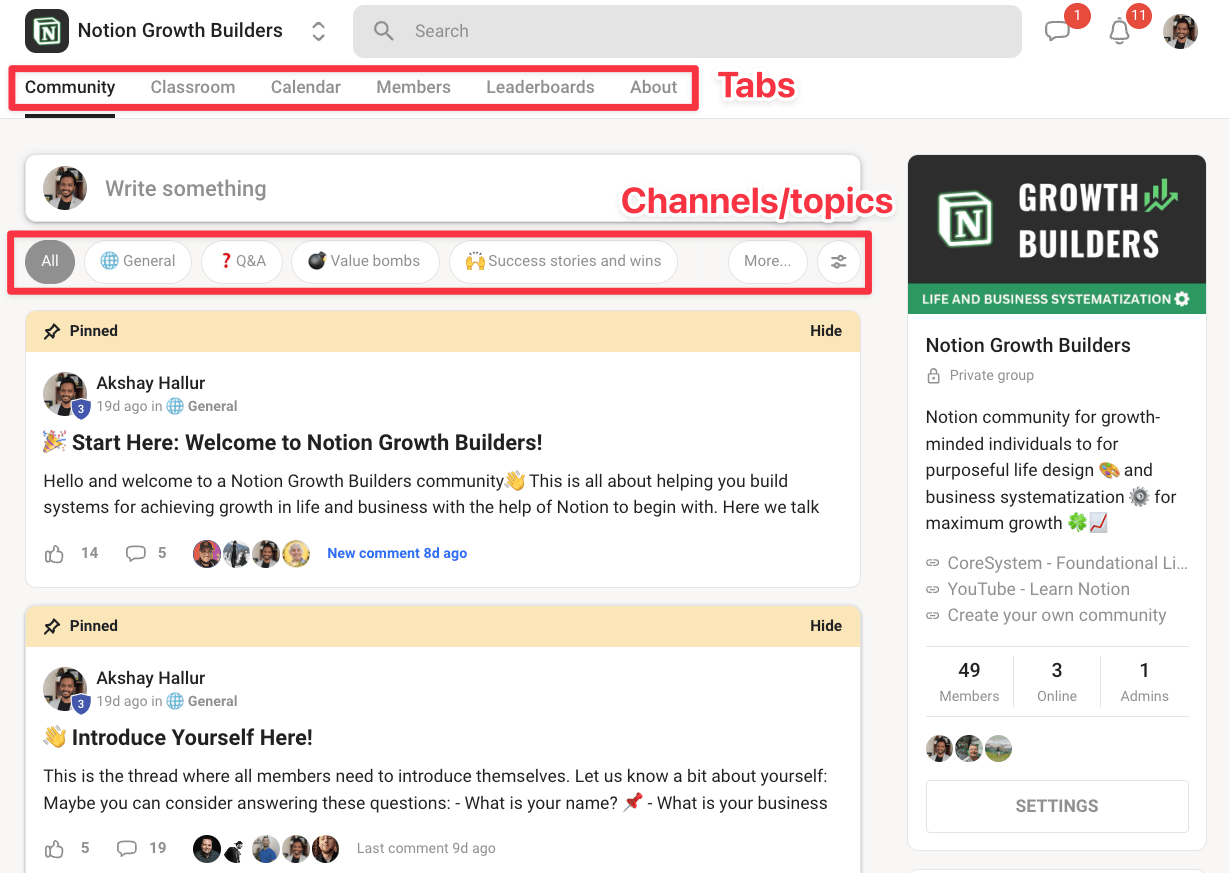
Skool gives you an easy-to-use content editor. It still lets you write community posts, add links, run polls, host discussion forums, upload native videos, and embed external ones. You can even upload videos directly to direct messaging (DMs) and add them to your About page.
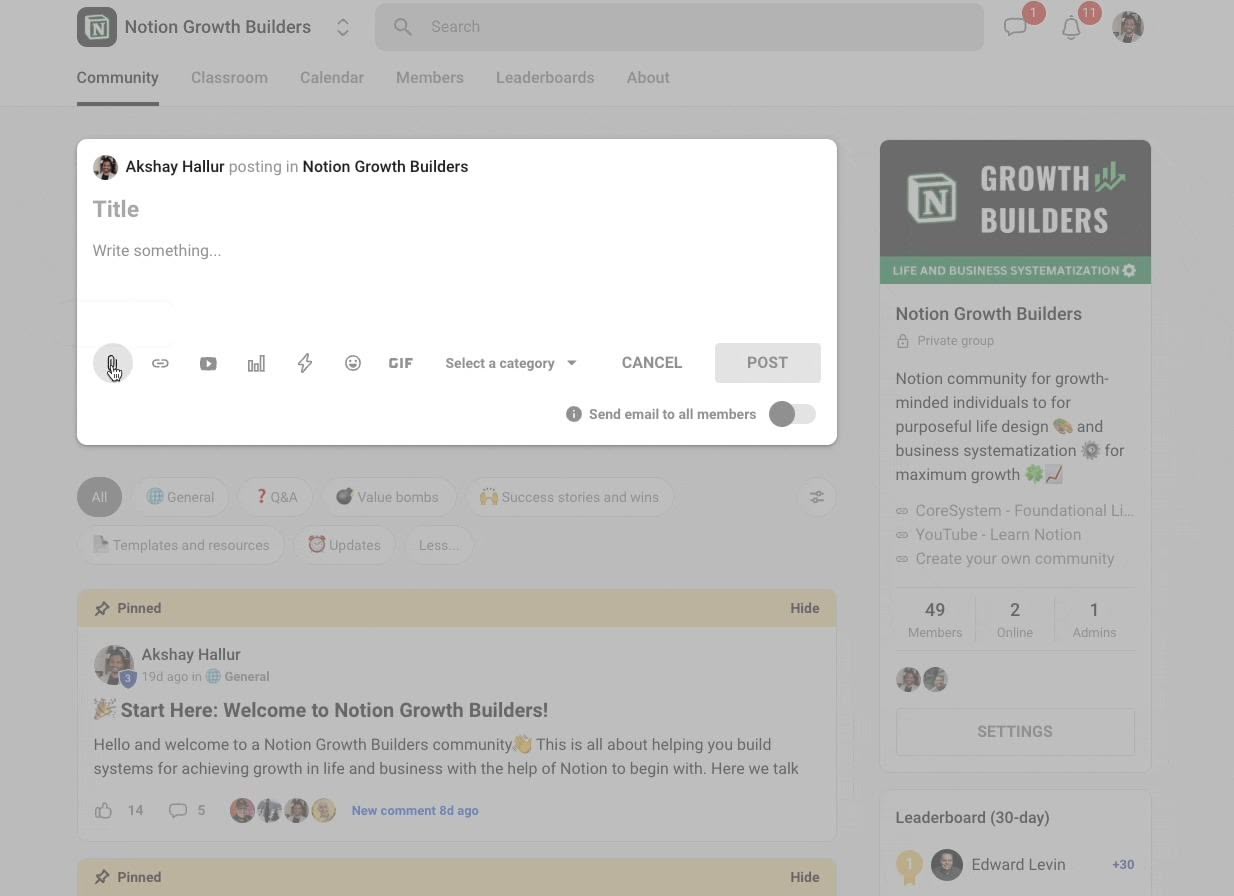
Skool’s discovery feature also lets people search for keywords and join membership sites (communities) they care about, much like Facebook Groups, but often with more qualified members.
However, Skool’s gamification system is the heart of its community engagement success. Consider this.
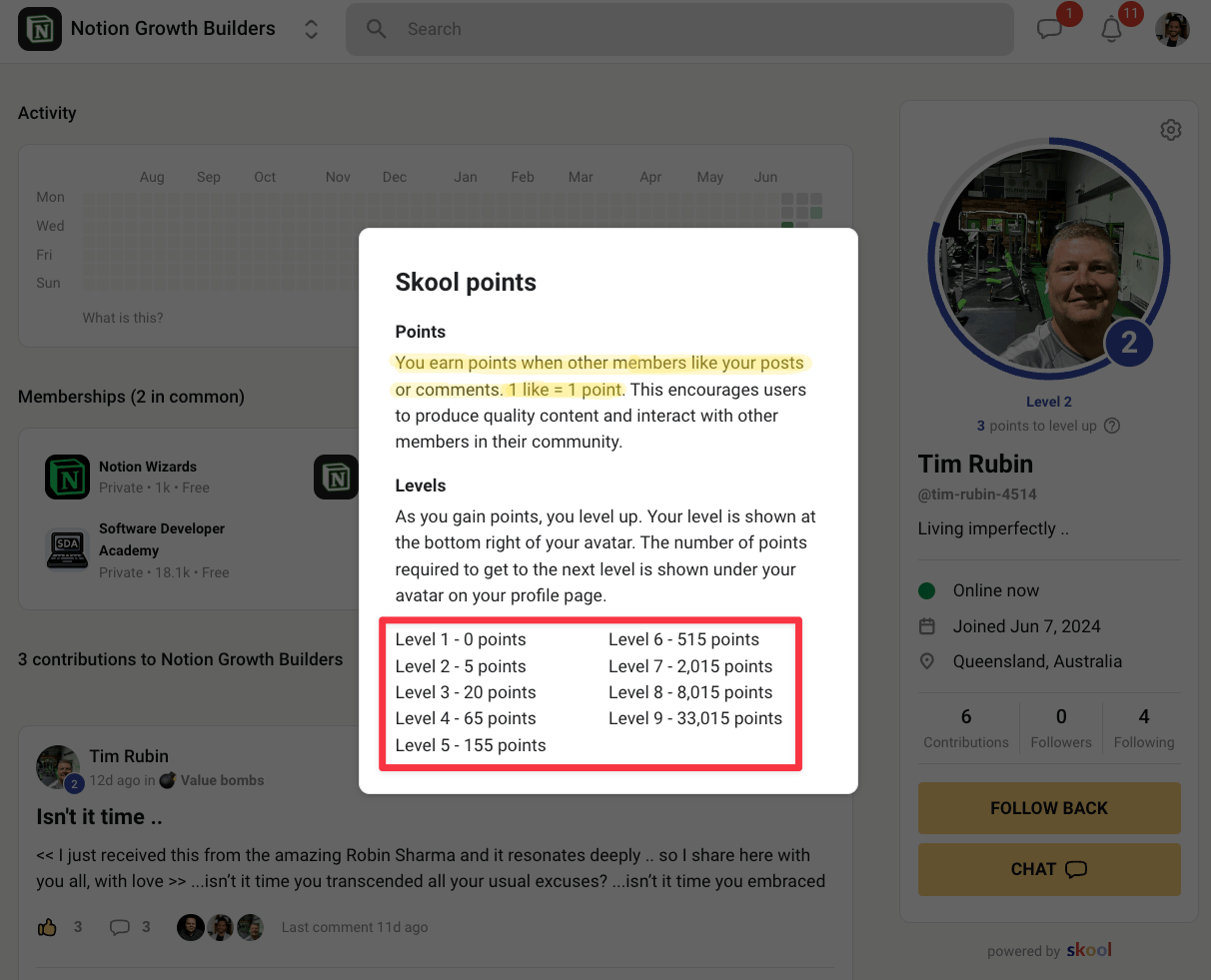
Skool does a great job of turning passive members into active community spaces. At your disposal are gamification tools such as points, levels, leaderboards, and streaks. These give your members a reason to show up, contribute, and stay engaged.
Now, picture this.
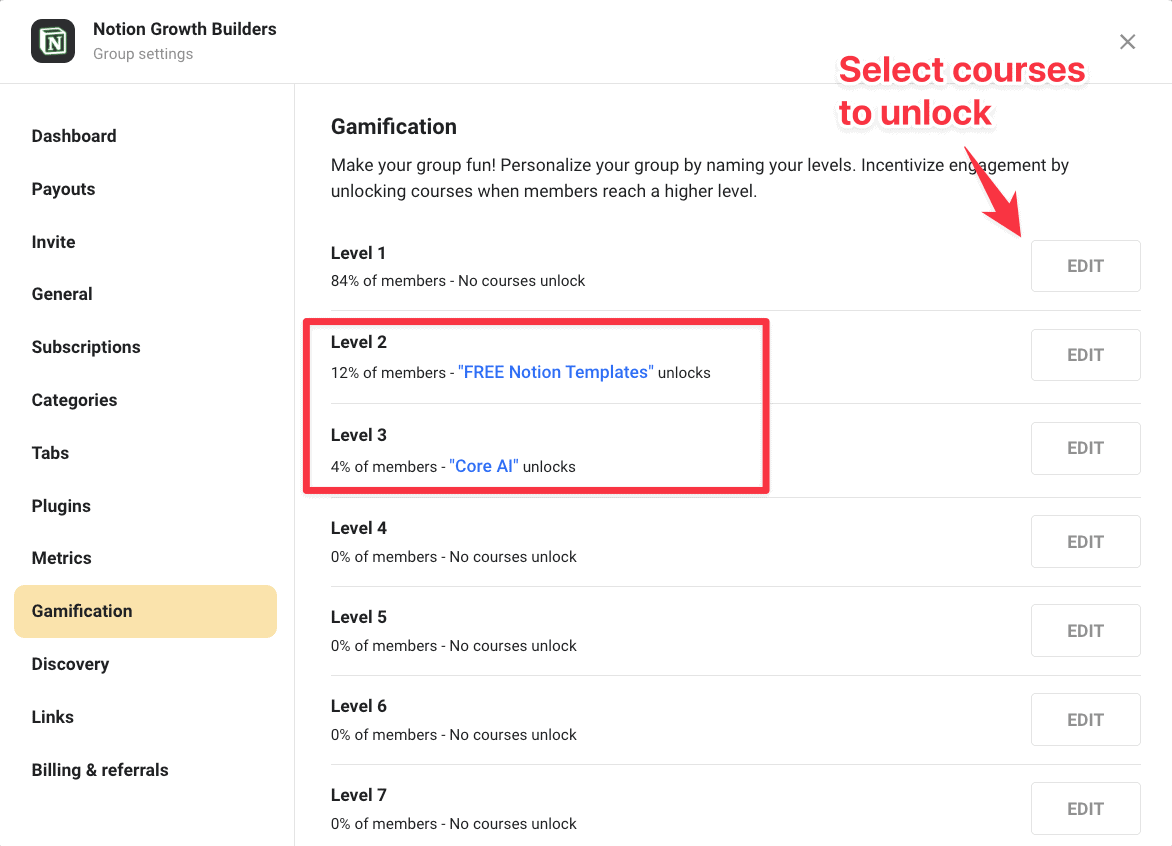
The members earn points when others engage with their posts. And that creates a healthy sense of momentum and recognition within the community.
As they level up, you can reward them with perks like access to exclusive courses, events, or private community perks. This creates a learning environment that actually feels alive.
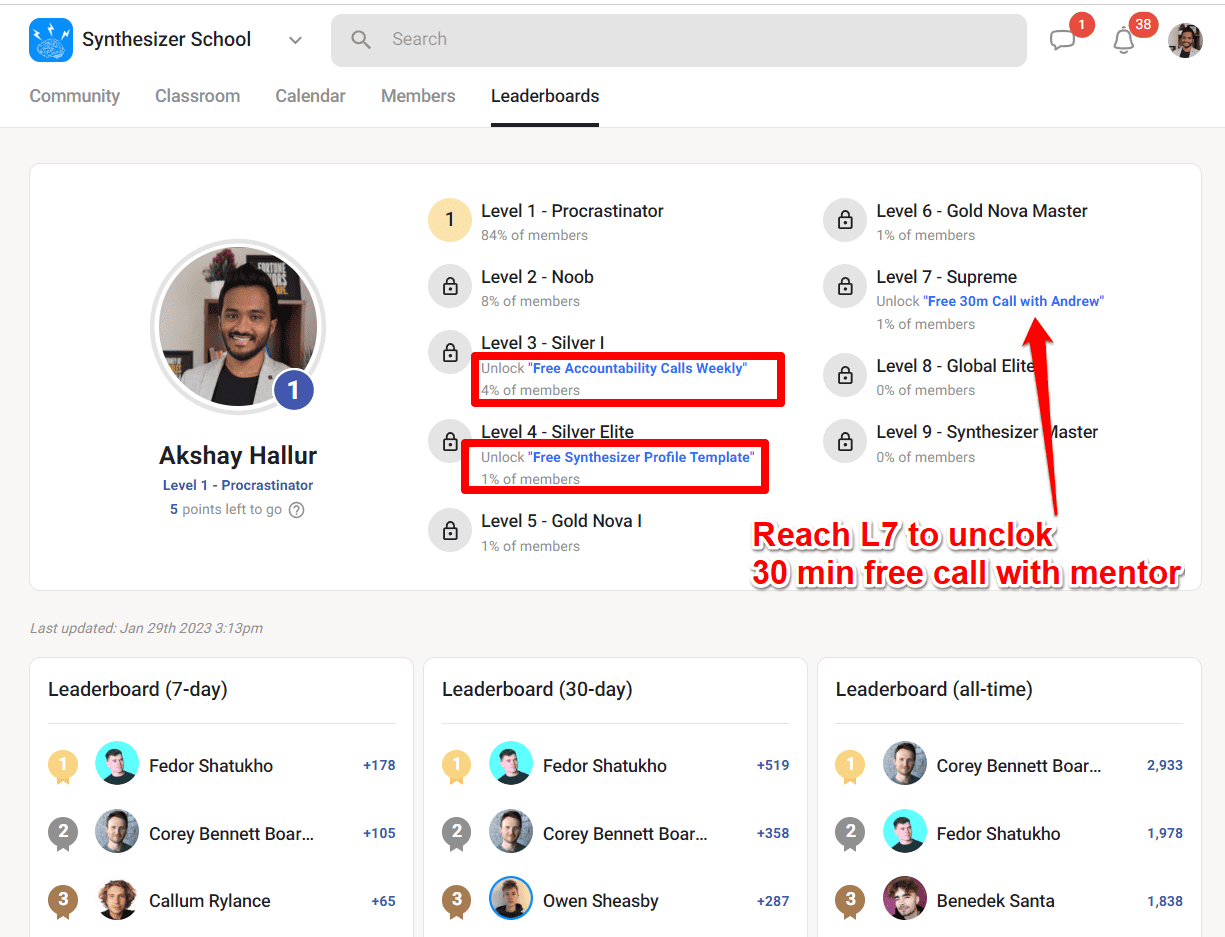
As the creator, you can also see how active each member has been in the community, like this:
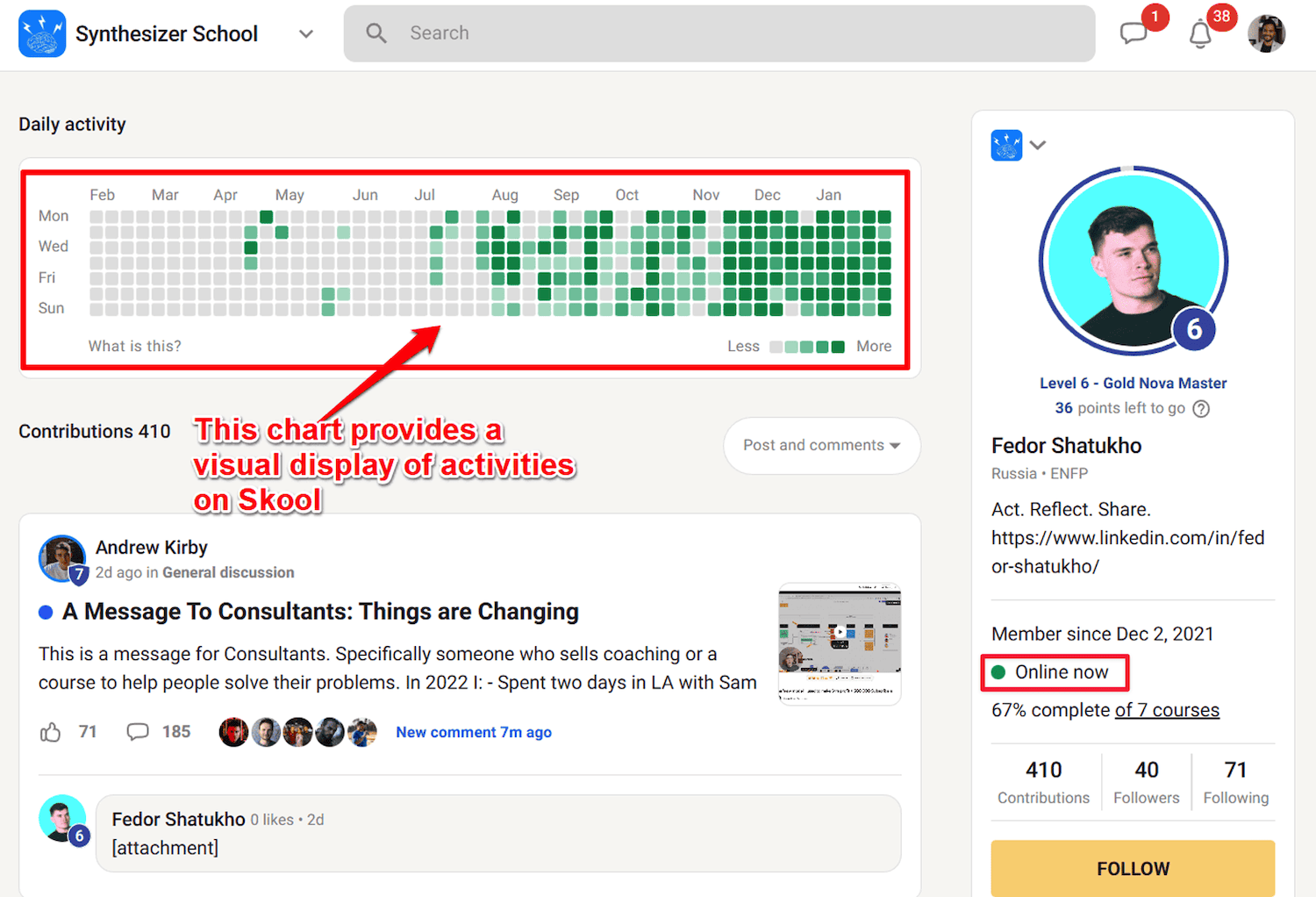
That gives you helpful context before you interact with them, making it easier to have a more personal and relevant conversation.
Add to that the ability to host live streams, calendar activities, and events, and the platform feels well-equipped for community engagement around your course.
Across the ring, Kajabi also lets you create community spaces, and with the recent redesign, Kajabi Communities is now treading Skool and Circle territory better than before.
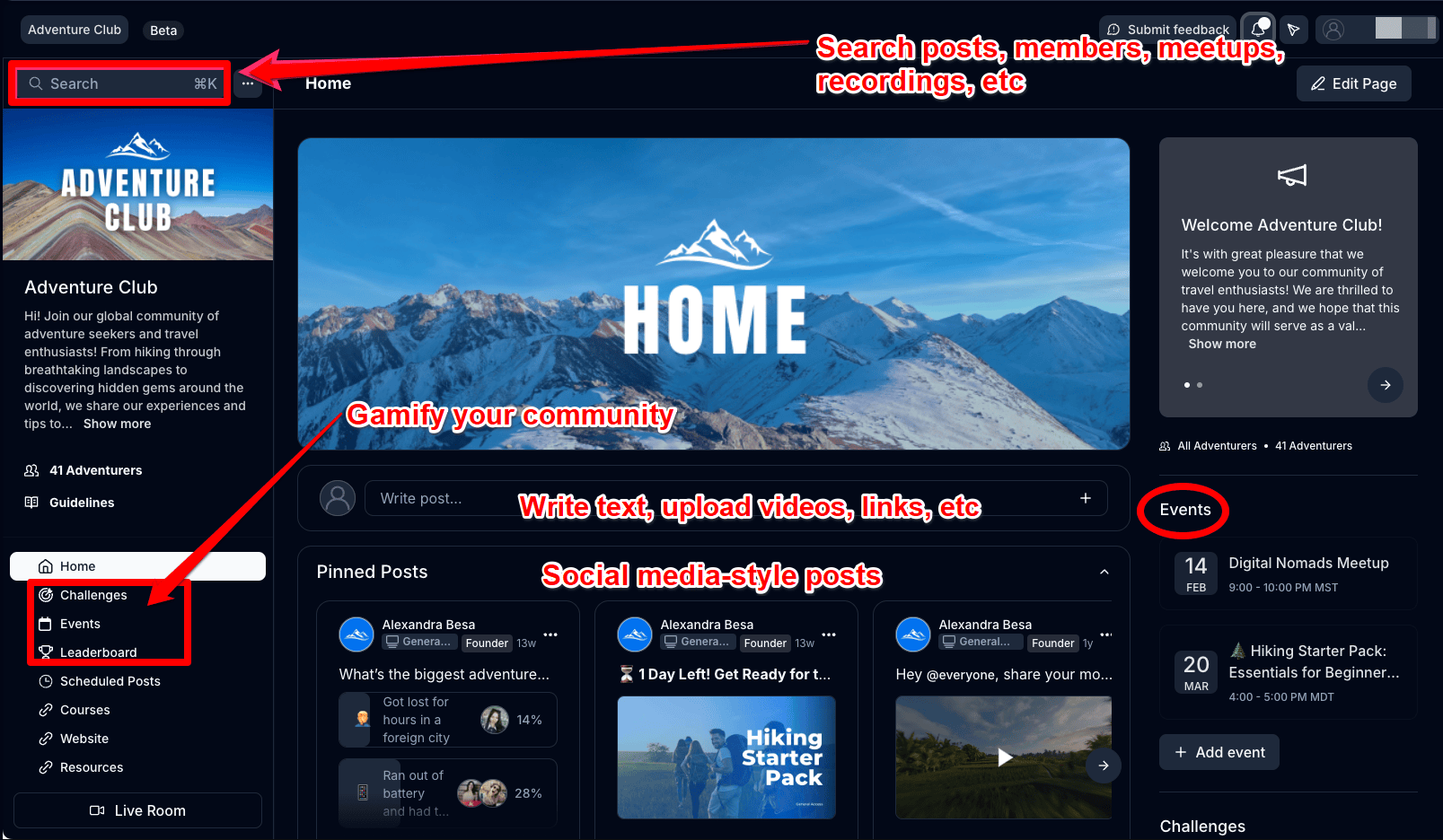
With Kajabi Communities, you get more control over how your community is organized and how members experience it.
For example, you can easily rearrange access groups, custom pages, and circles so the space feels intuitive for your members and matches the way you want to guide them through your content.
For your learners, that means less confusion and a smoother path to the right discussions, resources, and groups.
Kajabi also makes it easier to find people and things with a more prominent search experience. That means you can help your members quickly find posts, people, recordings, and meetups without too much digging around.
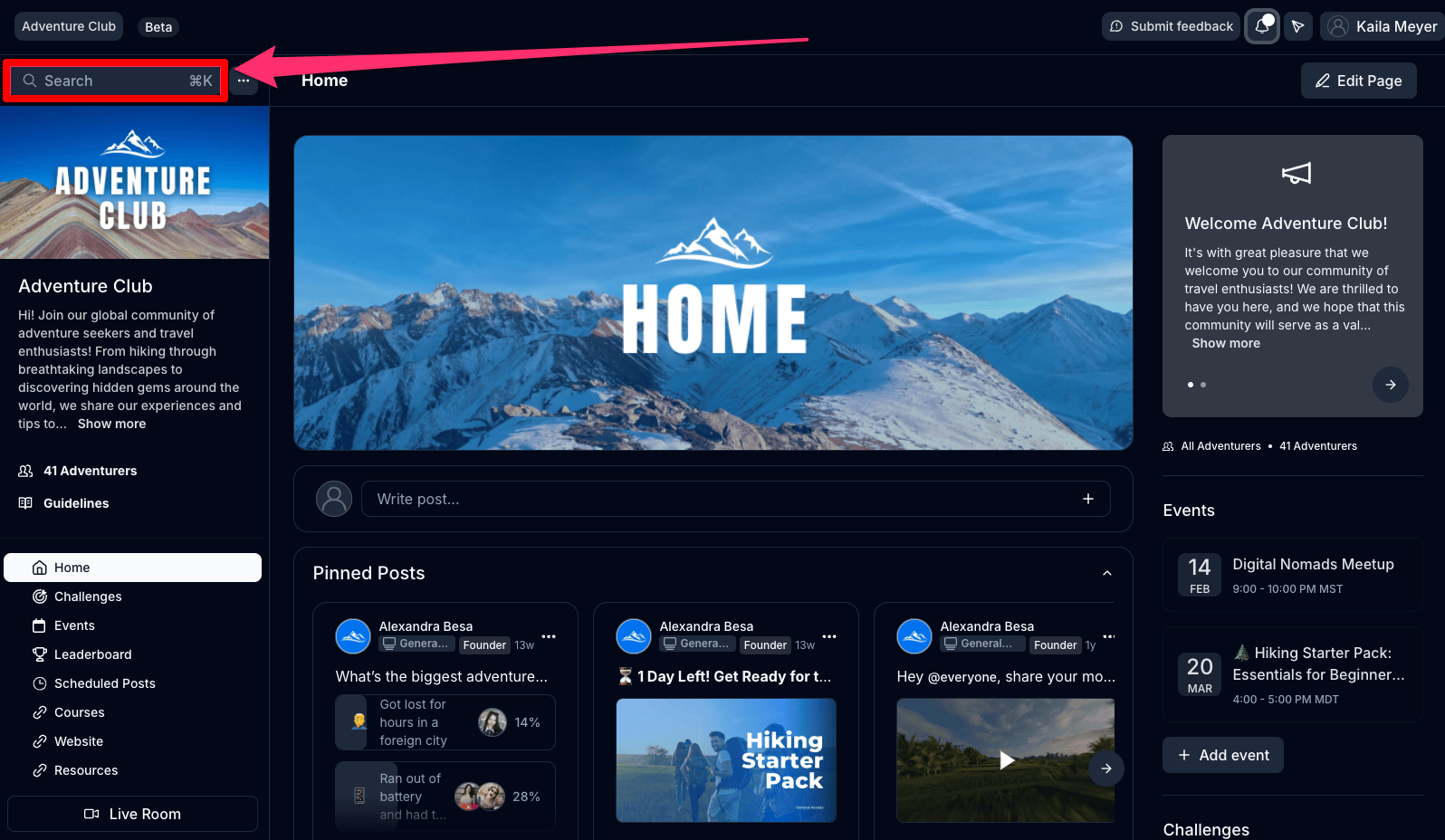
And if you host live sessions, Kajabi stores those recordings in one place. That makes it easier to build an evergreen library your community can revisit anytime for continued learning and support.
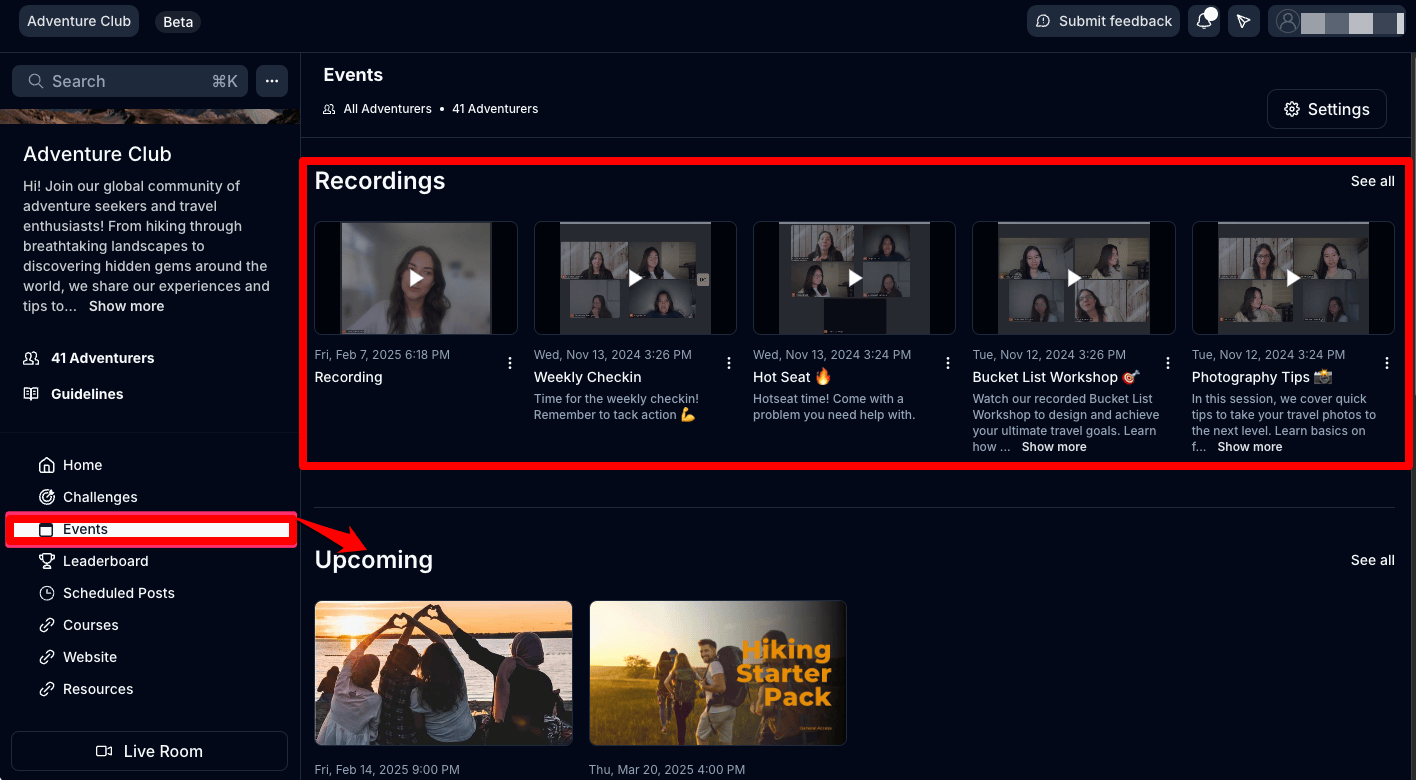
That said, Kajabi does not offer the same built-in organic discovery that Skool uses to help new people find your community and courses. You will need to rely more on your own marketing for that.
Then again, I like that Kajabi Communities connect more natively with Kajabi’s broader marketing automation system.
That makes it easier to tie your community experience to your emails, funnels, and customer journeys (Skool doesn’t do funnels and customer journeys).
Kajabi has leveled up their gamification in 2026
I’m thankful for the competition from Circle and Skool because Kajabi has also stepped up its community perks with an improved gamification system.
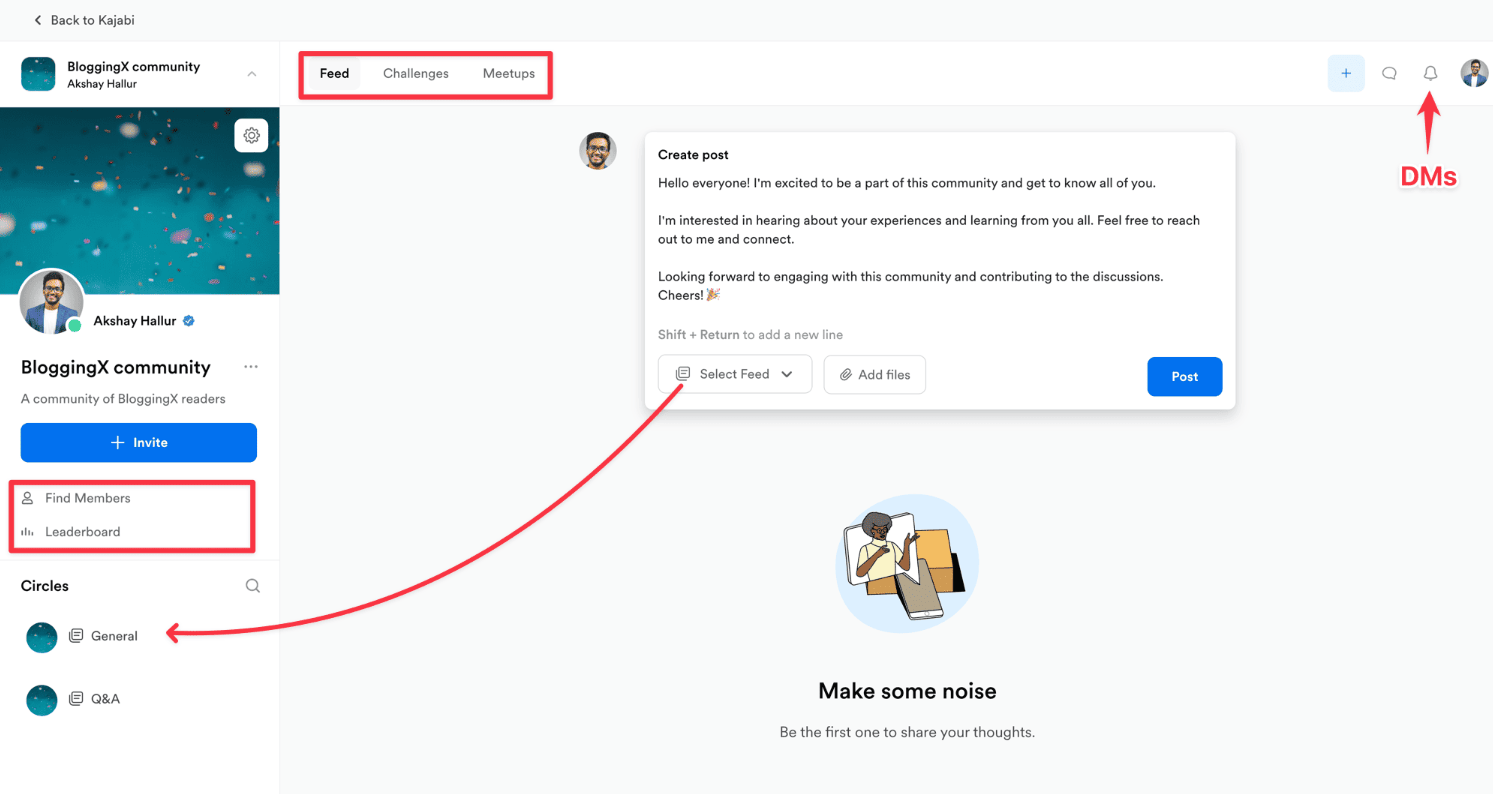
Here’s how Kajabi Communities looked before 2026:
And here’s the After look of the redesigned Kajabi Community 2.0:
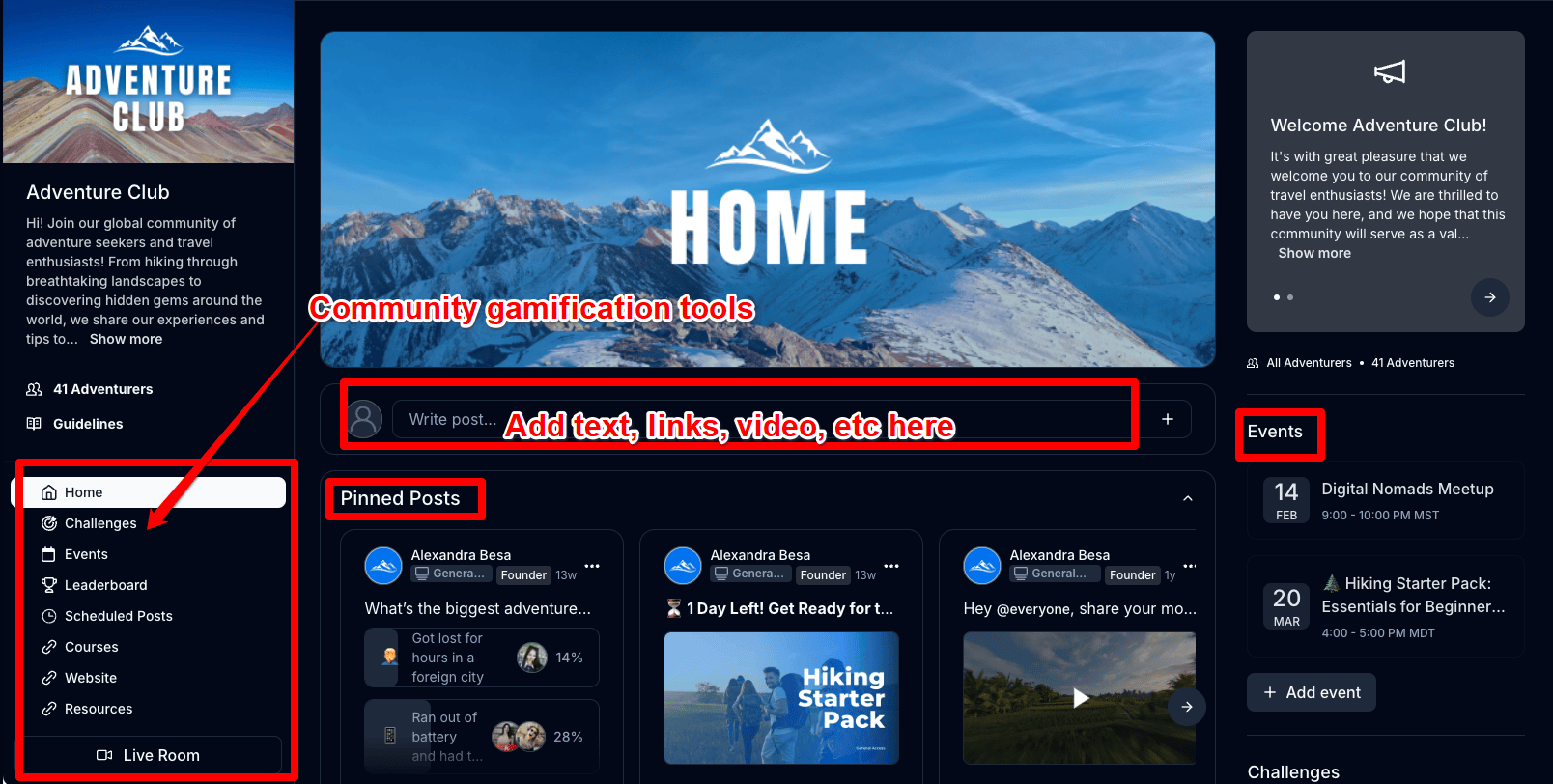
Fresh new look and feel.
You now get cool tools like:
- Points
- Badges
- Titles
- Leaderboards, and
- Customizable rewards.
Those give your members more reasons to participate and stay involved.
For example, your people can earn points not just for posting and engaging in discussions, but also for:
- Completing lessons
- Passing quizzes
- Joining live sessions
- Taking part in challenges and even logging in consistently.
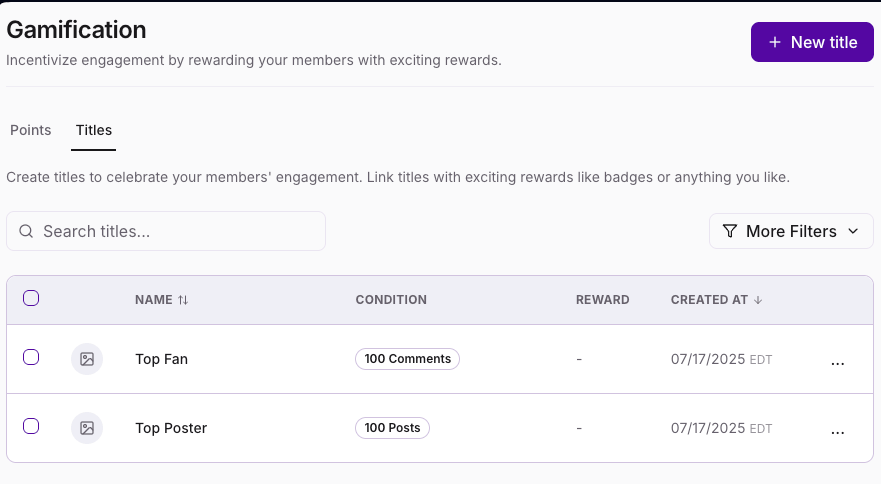
You can also customize point values, assign community managers, rename the points system, turn leaderboards on or off, manually grant badges, and even tie rewards to real-world perks like discounts and access to exclusive content.
That makes Kajabi community spaces much more competitive with Skool than they used to be.
🏆 Winner: If your top priority is pure community engagement, Skool still has the edge. But if you want community spaces (with a layer of gamification) woven into your online courses, offers, and customer journeys, the new Kajabi is a much stronger choice for creators looking to grow.
Helpful Resources:
- 7 Kajabi Community Examples Crashing It With Gamification to Inspire You
- How to Build an Online Community from Zero (Step-by-Step)
Kajabi is the better online course platform
Skool’s course builder looks intentionally simple, while still letting you control course access, monetization, and unlock logic.
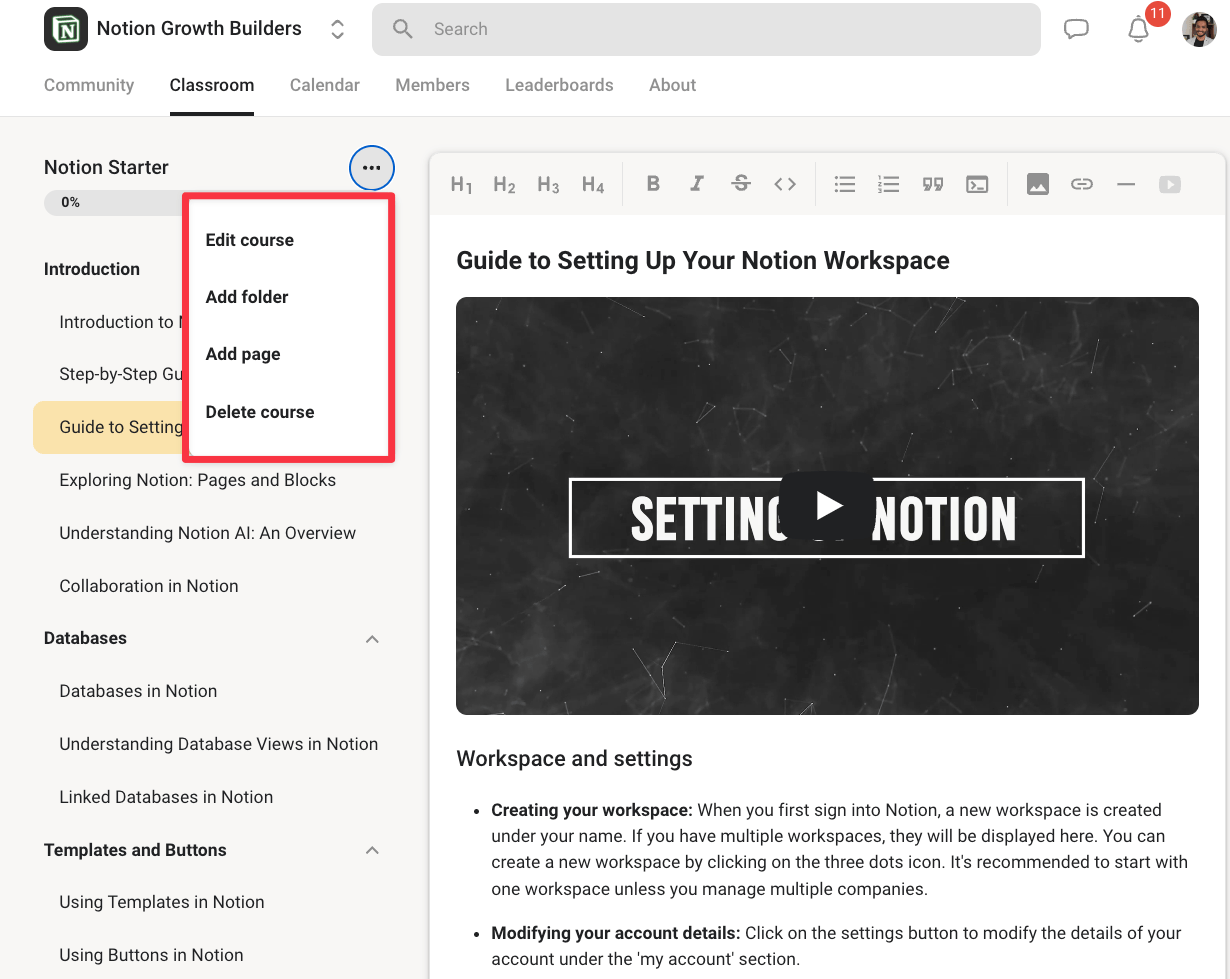
Like Kajabi’s modules, submodules, and lessons, Skool’s course builder helps you organize your curriculum under “folders” and “pages”.
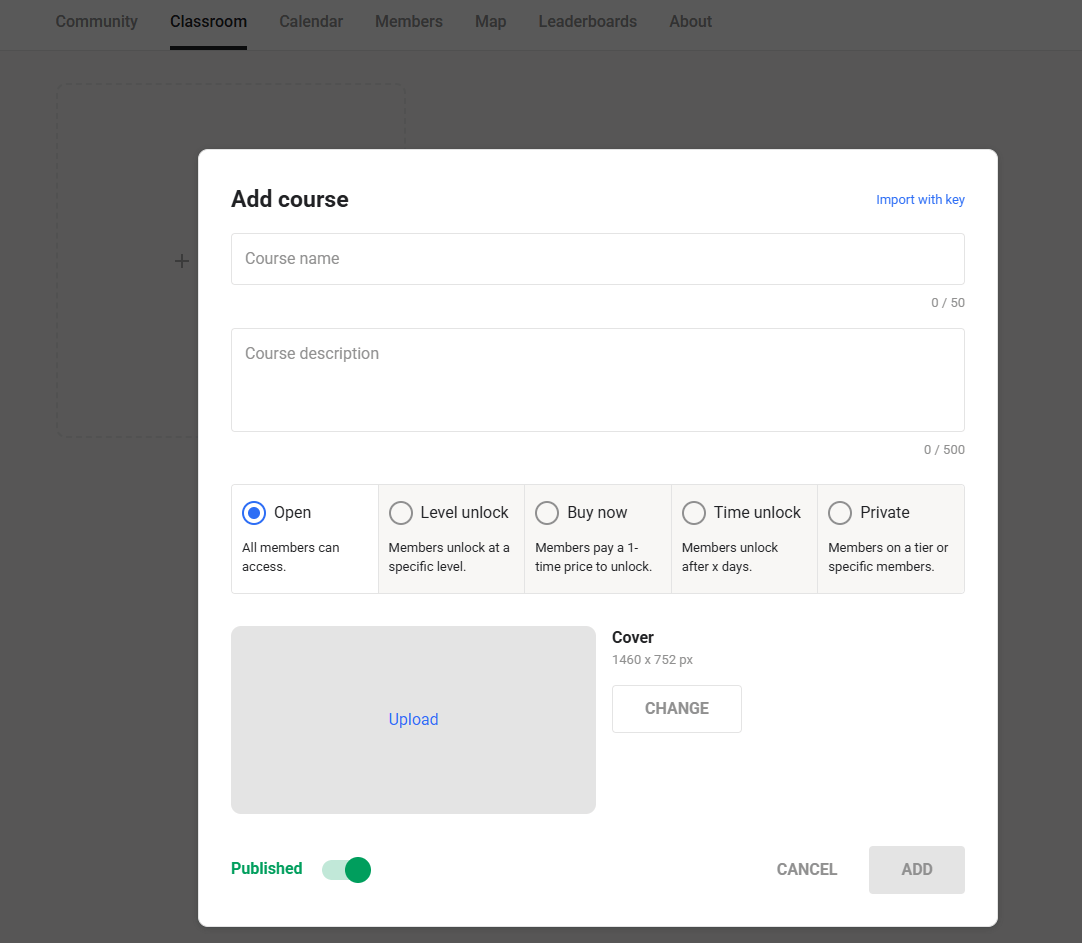
For access and monetization, the access options include Open for all members, Level unlock for gamified progression, Buy now for paid access, Time unlock for drip-style release, and Private for specific members or tiers.
You can also support one-time purchases, like this:
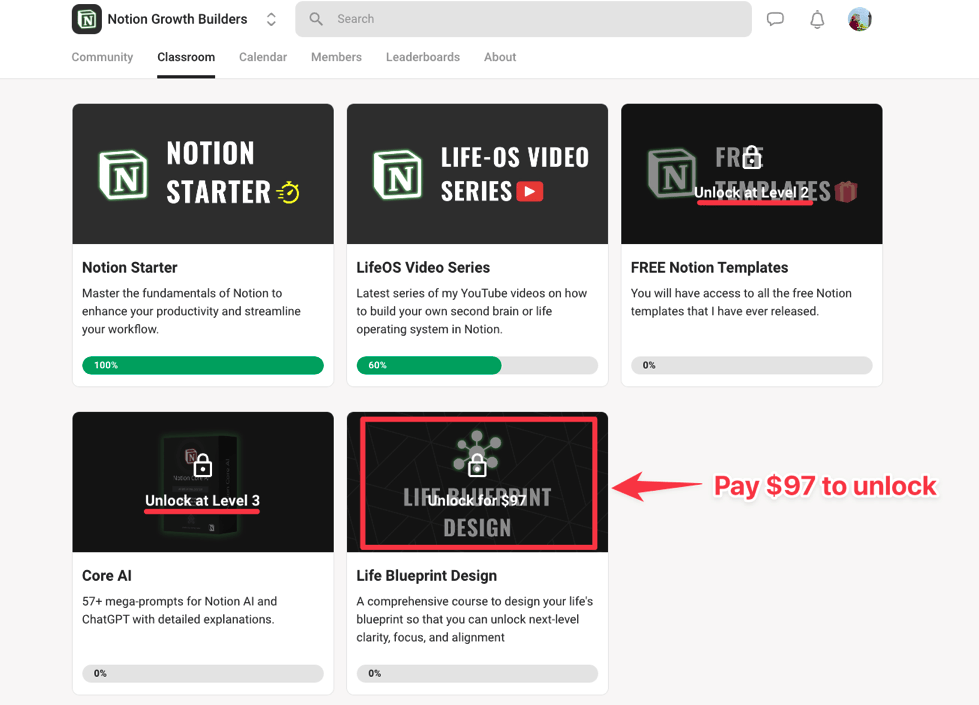
Part of Skool’s appeal here is that it ties course access directly to community interaction, which is great for engagement. That can make the course experience feel more alive and motivating than a traditional online course tool a.library of static lessons.
You can also track a student’s learning journey (course completion percentage), drip lessons, and host discussions (tiered discussion forums).
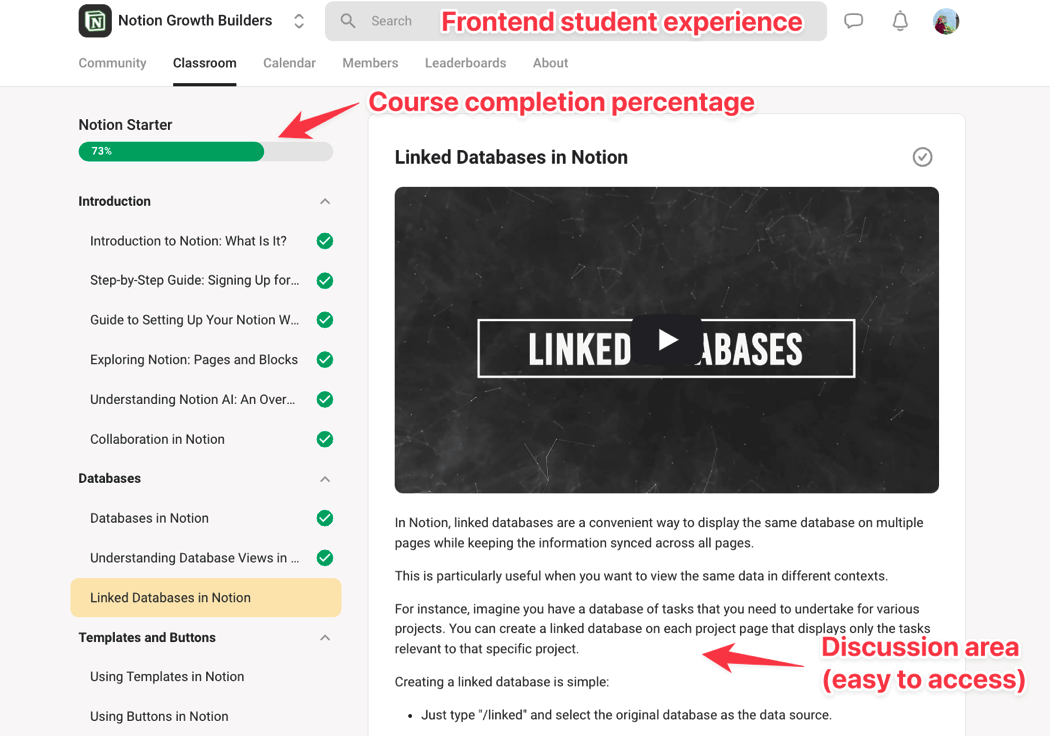
And as with Kajabi’s course player, expect the non-negotiables: full HD videos, playback speed control, autotimestamps, ability to add transcripts, and so on.
That said, Kajabi still offers a more advanced and structured course builder.
<iframe allowtransparency=”true” title=”Wistia video player” allowFullscreen frameborder=”0″ scrolling=”no” class=”wistia_embed” name=”wistia_embed” src=”https://fast.wistia.net/embed/iframe/7hk6mvmtjp” width=”400″ height=”225″></iframe>
On top of what Skool can do, Kajabi’s course builder can help you better organize and customize your content into modules and submodules.
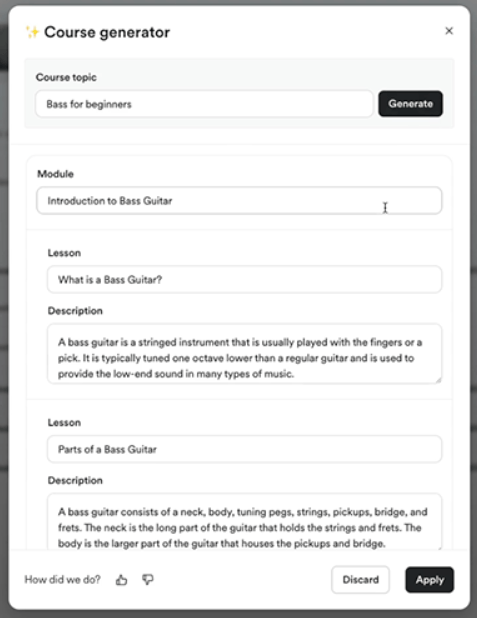
You can also set each section to draft, publish, drip, or lock status, and require students to complete a lesson or quiz before new content opens up.
Kajabi also supports more robust course progress tracking, quizzes, downloadable files, course templates, and certificates. SCORM is not supported here (or on Skool). Also note that Kajabi has moved away from older in-course assessments, with quizzes now doing more of that work inside courses.
Moreover, there’s a new cohort-based delivery through Drip by Specific Date. This option lets your entire class move through the material on the same calendar schedule.
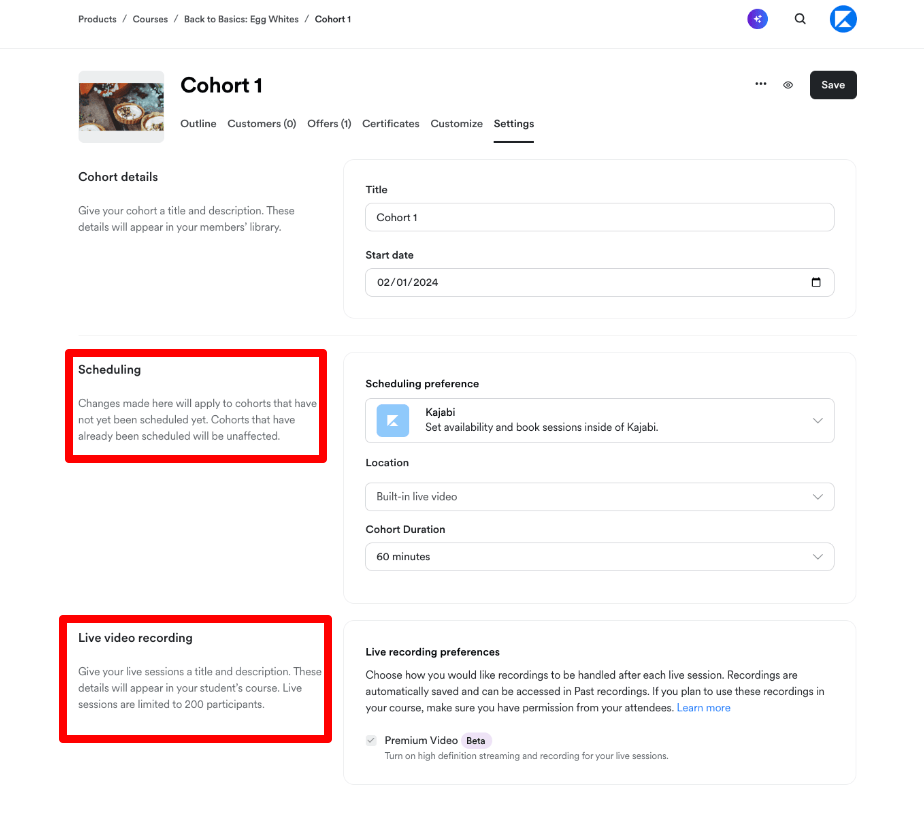
These are live, time-bound, group-based video sessions that I see as Kajabi’s answer to making learning less lonely and more community-centric.
<iframe allowtransparency=”true” title=”Wistia video player” allowFullscreen frameborder=”0″ scrolling=”no” class=”wistia_embed” name=”wistia_embed” src=”https://fast.wistia.net/embed/iframe/8z28myepki” width=”400″ height=”225″></iframe>
Oh, one more thing.
Kajabi has an AI layer through Cofounder. You can use the AI assistant to shape what to teach, structure your curriculum, and plan related business assets faster. Skool does not offer comparable native AI-assisted course creation at this point, so its course building experience is still more manual by comparison.
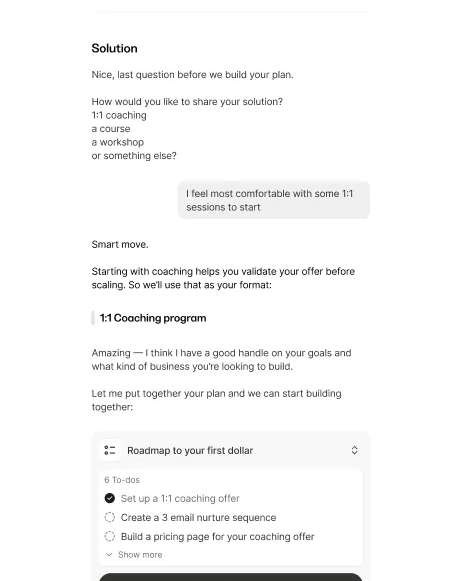
It feels like using ChatGPT or Claude directly in Kajabi, and it is better than a year or two ago.
🏆 Winner: Skool’s course building feels lighter, cleaner, and less overwhelming because it focuses on doing a few things really well. But if branding, detailed learning progress tracking, and a course marketing suite matter to you, Kajabi brings all of that together in one online course tool.
Kajabi is better than Skool for 1:1 coaching
Courses are great when you want to build a knowledge hub that people can move through at their own pace. You can package your expertise once, sell it at a more standard price point, and enroll as many students as your business can support.
But if your expertise is more specialized, and you want to offer live events, direct feedback, and ongoing accountability, coaching content is often the better approach.
And Kajabi clearly gives you more room to grow than Skool does here.
<iframe allowtransparency=”true” title=”Wistia video player” allowFullscreen frameborder=”0″ scrolling=”no” class=”wistia_embed” name=”wistia_embed” src=”https://fast.wistia.net/embed/iframe/2cdsqh051v” width=”400″ height=”225″></iframe>
Kajabi’s dedicated coaching product supports both 1:1 coaching and focus group coaching.
You get built-in session scheduling, native live events, and flexible payment processing (hourly, monthly, retainer packages) handled inside the same platform.
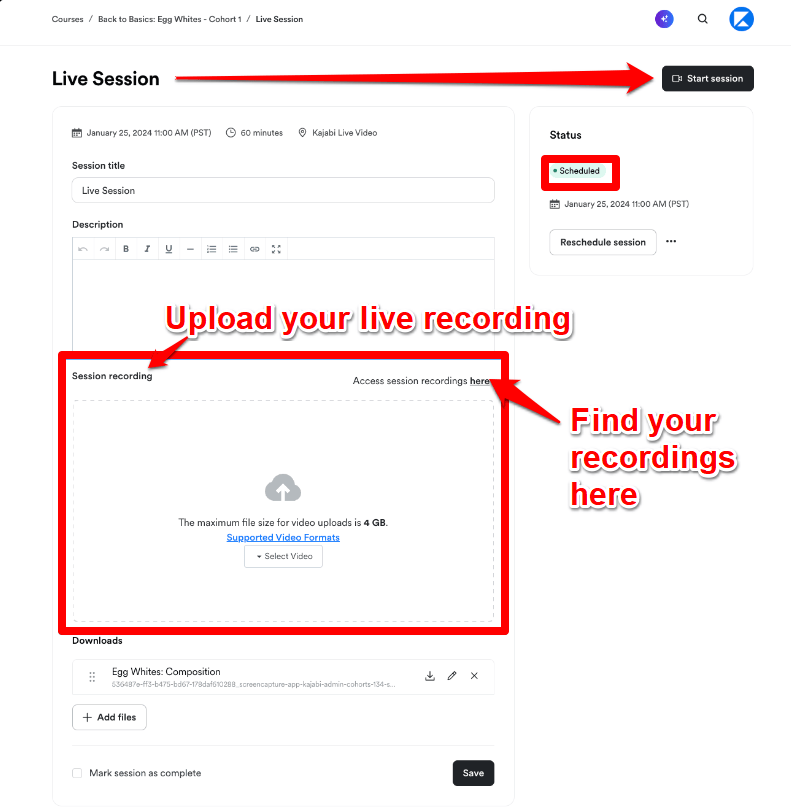
You can also offer a single session or a multi-session package, run sessions manually or through Kajabi Scheduler (set up to 2 weeks’ bookings).
The payment gateway can also help you handle payments in more than 140 currencies, upsells, invoicing, and other buy/sell matters right within Kajabi.
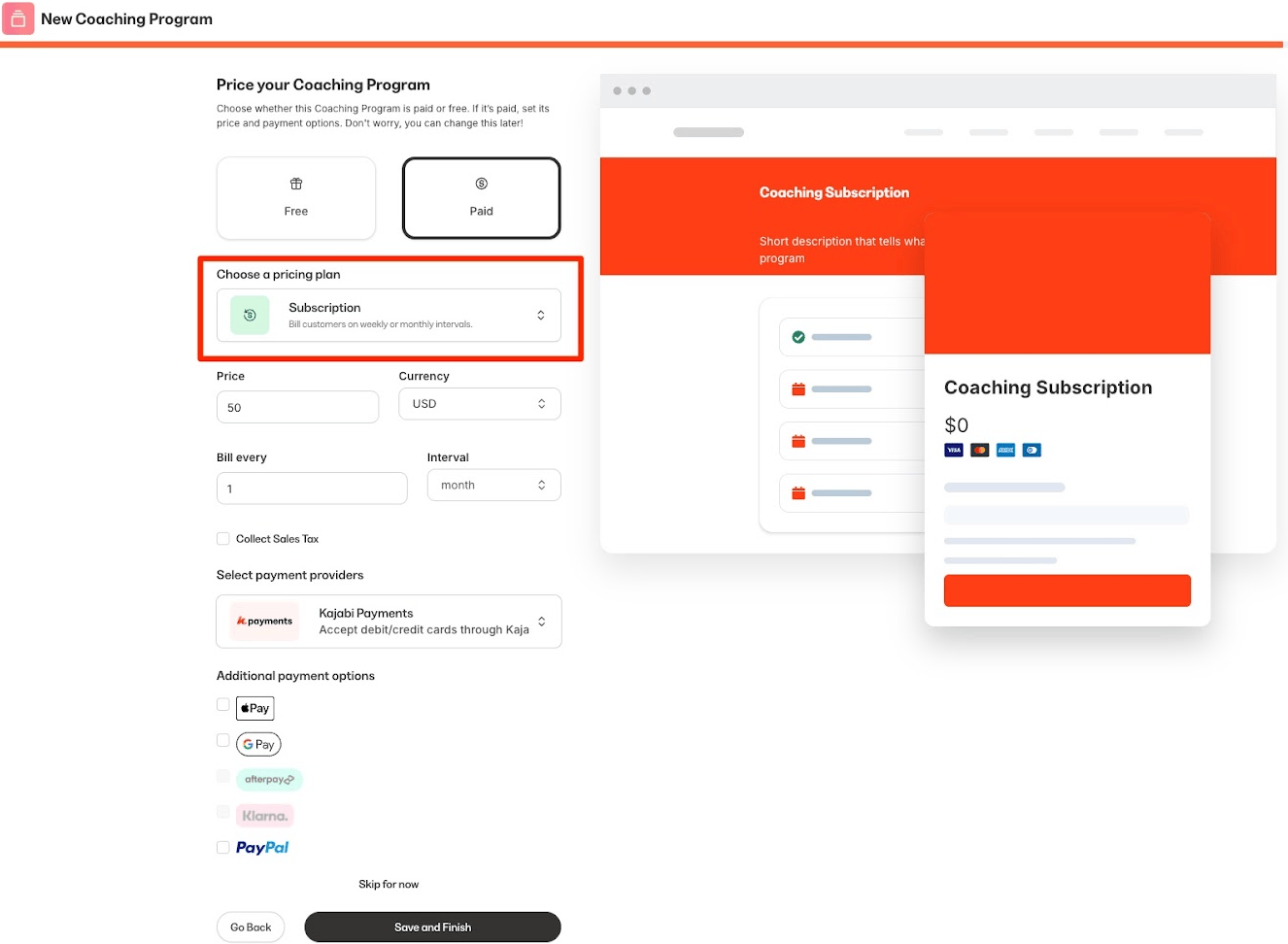
Kajabi Coaching even enables you to use the mobile apps (IOS or Android) as well as outside tools like Calendly, Acuity, Zoom, or Google Meet, whichever fits your workflow better.
The Coaching product also lets you add coaching resources, client notes, recorded sessions, and tailor sessions to your client’s preferences.
All that means you can create a more personal, high-touch experience without juggling a stack of tools.
In my experience, it is the kind of tooling you’ll want for building the kind of trust that supports premium pricing. And you can structure that in different ways, whether you want to charge for one-off sessions, recurring coaching, or a higher-ticket package.
🏆 Winner: Kajabi. Skool, by comparison, is much better suited to community-led learning than structured coaching delivery. It can support interaction and access to you through the community itself, but it does not currently offer the same native coaching setup, scheduling flow, or built-in session infrastructure that Kajabi does.
Skool is better if you have WordPress and Email marketing already set up
Here is the thing. Running an expertise business pushes you to wear more hats than one. You often need several tools to manage your website, email marketing, payments, automations, community, affiliates, and beyond.
And when it comes to having everything you need under one roof, Kajabi clearly takes the crown. Picture this:
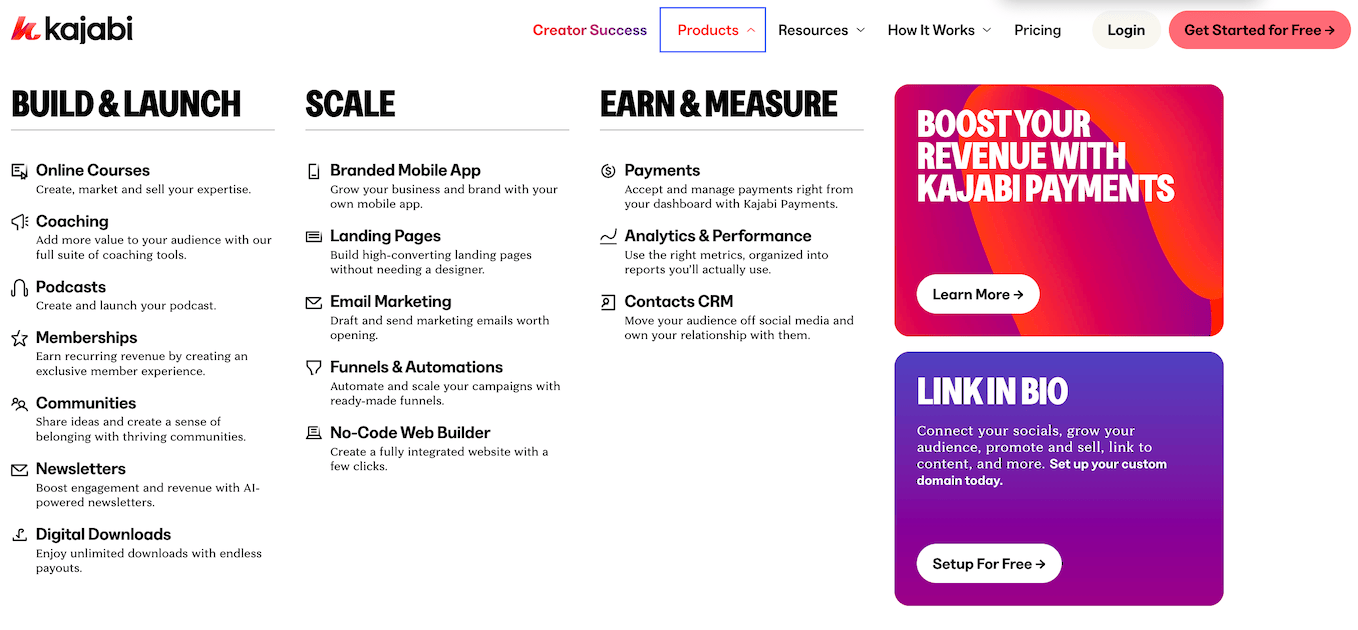
Kajabi pulls ahead here because it gives you more of the tools you need at every stage of actually running, scaling, and even pivoting your expertise business, as opposed to just hosting your course or community.
For starters, it comes with built-in email marketing, so you can send broadcasts, create automated sequences, and nurture leads without relying on a separate platform (and subscription).
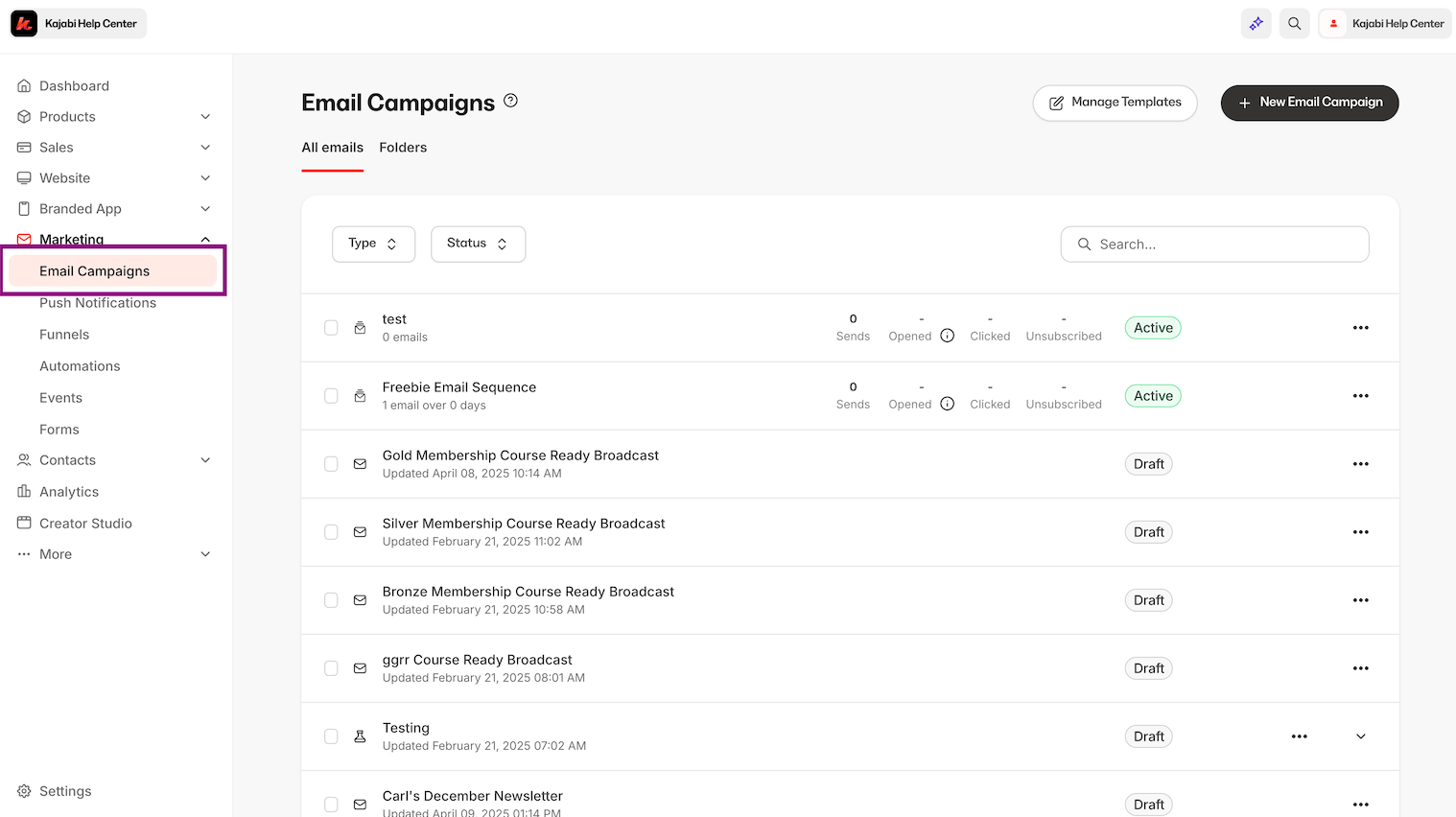
That email marketing system is backed by a full-blown CRM, Kajabi Contacts:
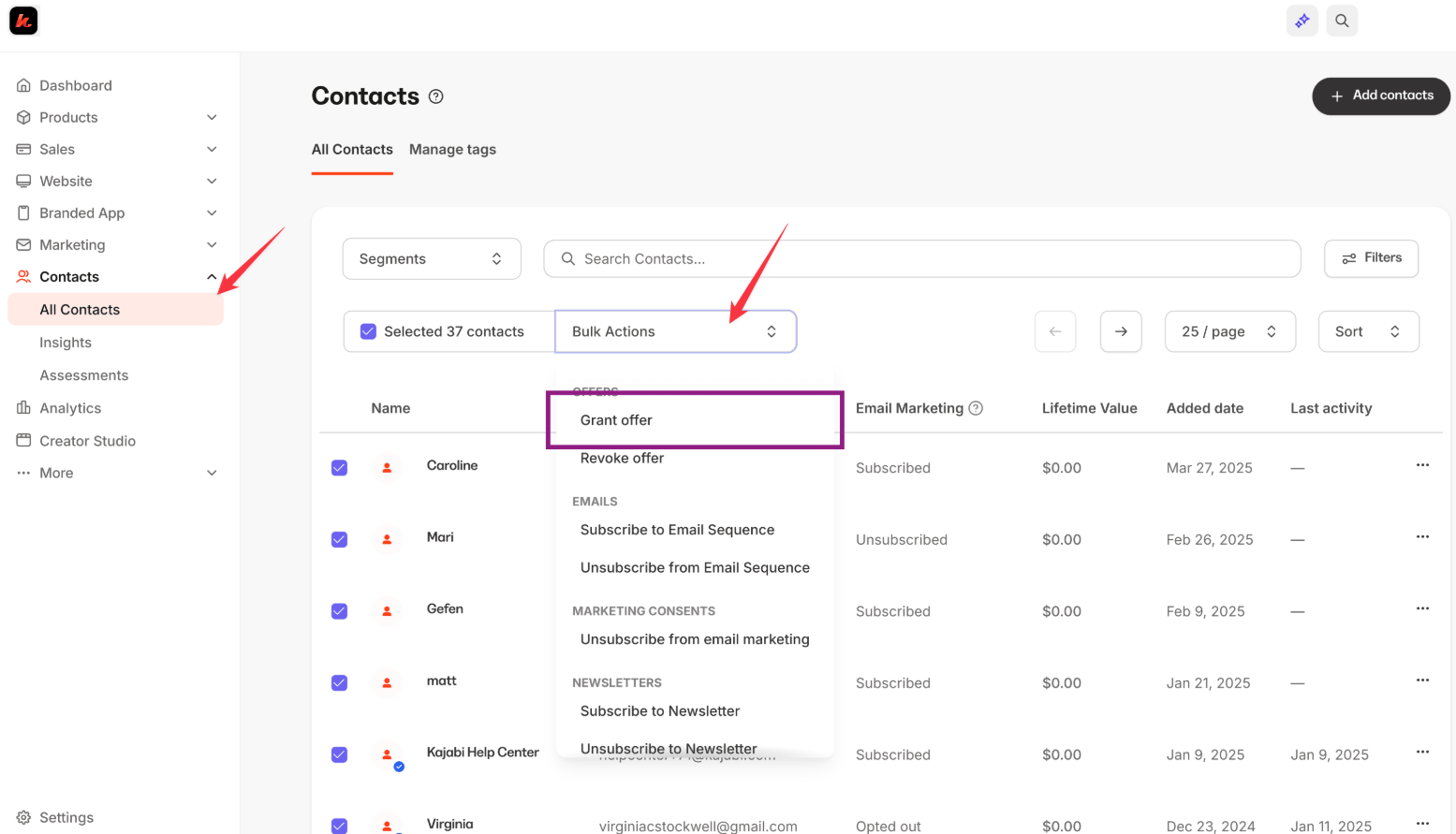
Another big advantage of Kajabi vs Skool is its email deliverability and analytics, which I find to be top-notch for a course platform.
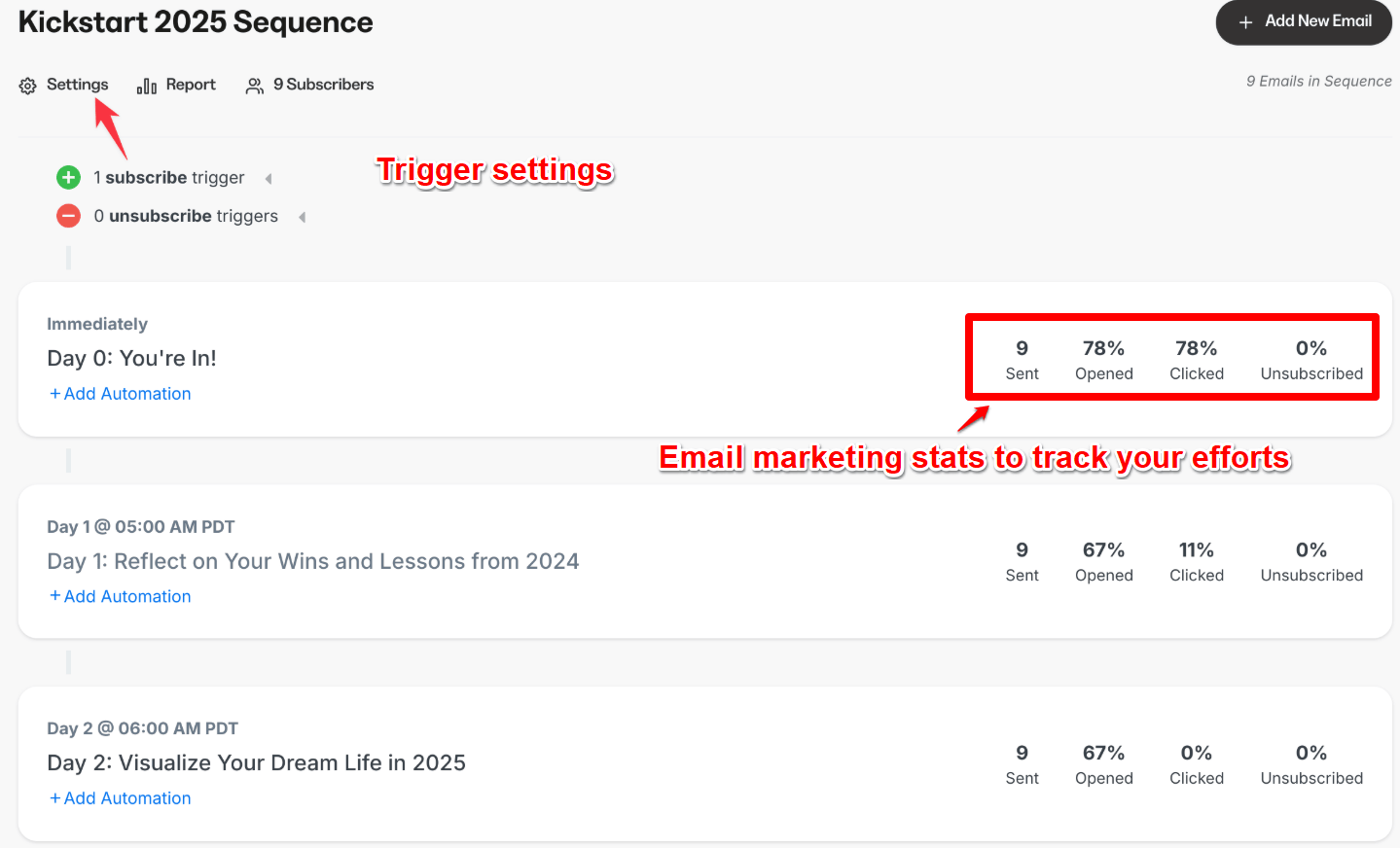
Helpful Resource: See all about that and more in my in-depth Kajabi email marketing guide here.
You also get sales funnels, landing pages, and opt-in forms you can customize quite extensively for your branding. This is supported by in-built automation, so it’s easier to turn your visitors into subscribers and subscribers into buyers from the same dashboard.
Compare that to just the handful of Skool’s capabilities:
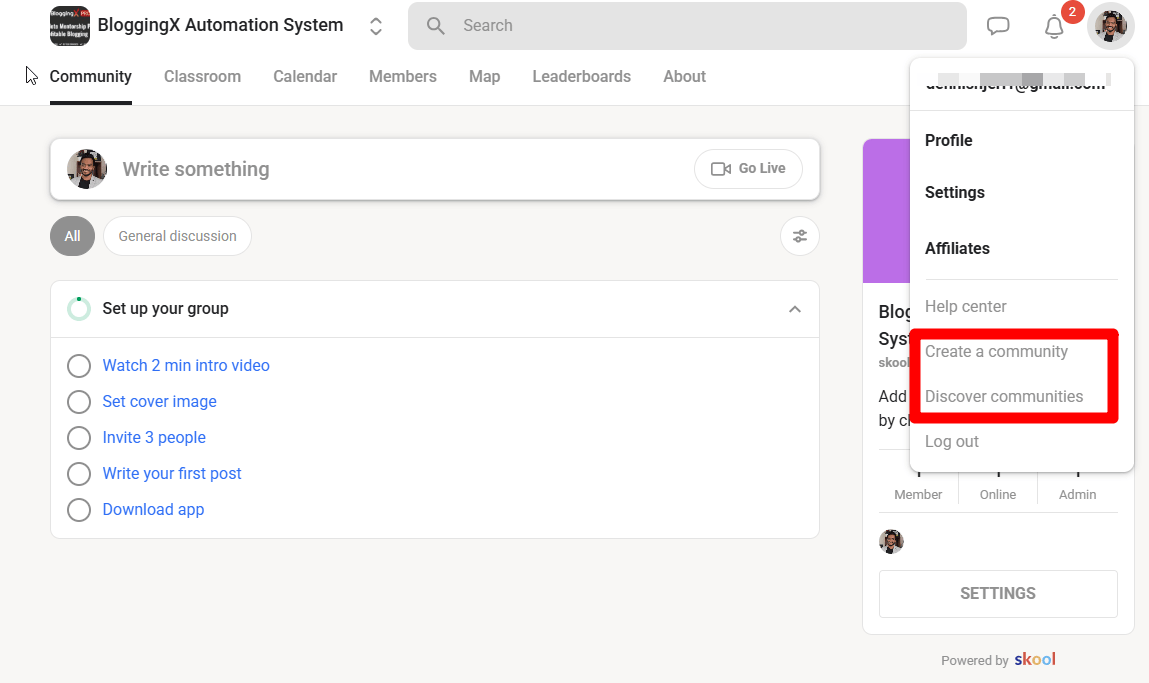
Now, you’d expect Kajabi to sacrifice depth by trying to cover so many areas, but I’ve found the opposite is true. Its capabilities go well beyond the basics.
Take Kajabi Podcasts, for example. It feels like a full product in its own right. You get built-in publishing, nurturing sequences, recordings, and conversion-focused tools to help you grow and monetize your audience.
<iframe allowtransparency=”true” title=”Wistia video player” allowFullscreen frameborder=”0″ scrolling=”no” class=”wistia_embed” name=”wistia_embed” src=”https://fast.wistia.net/embed/iframe/1q67lyhk9n” width=”400″ height=”225″></iframe>
It also goes much further on the website and sales sides.
Kajabi enables you to build a proper website (custom domain or Kajabi subdomain), branded landing pages, flexible checkout experiences, coupons, payment plans, and other conversion-focused sales tools that Skool simply does not match natively.
To go with its lightweight approach, Skool offers a couple of plugins to keep things simple.
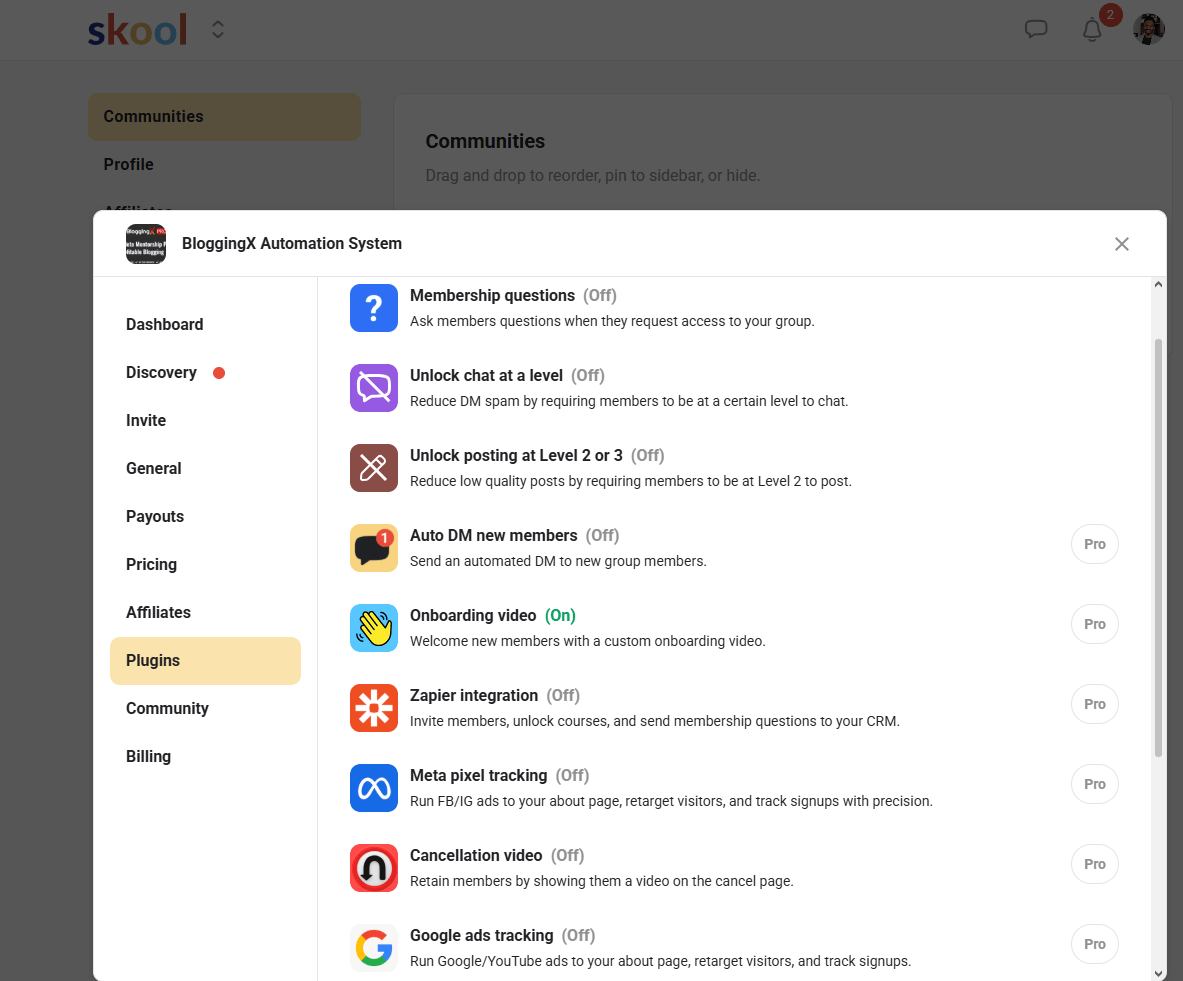
In contrast, you can use native and third-party automations seamlessly inside Kajabi, do extensive affiliate management, and run deeper business workflows under one roof.
That can be overkill if you are running a simple community and course, but it can save you a whole lot of time, money, and tooling fatigue as you grow beyond that.
🏆 Winner: Kajabi. Instead of just creating a course and hoping people find it, you’ll notice that Kajabi delivers more ways to attract traffic, capture leads, and sell your offers (and upsells) in a more scalable way. Skool, by contrast, is still much stronger as a community-first platform than as a true all-in-one business system.
Skool vs Kajabi pricing: Which one offers better value?
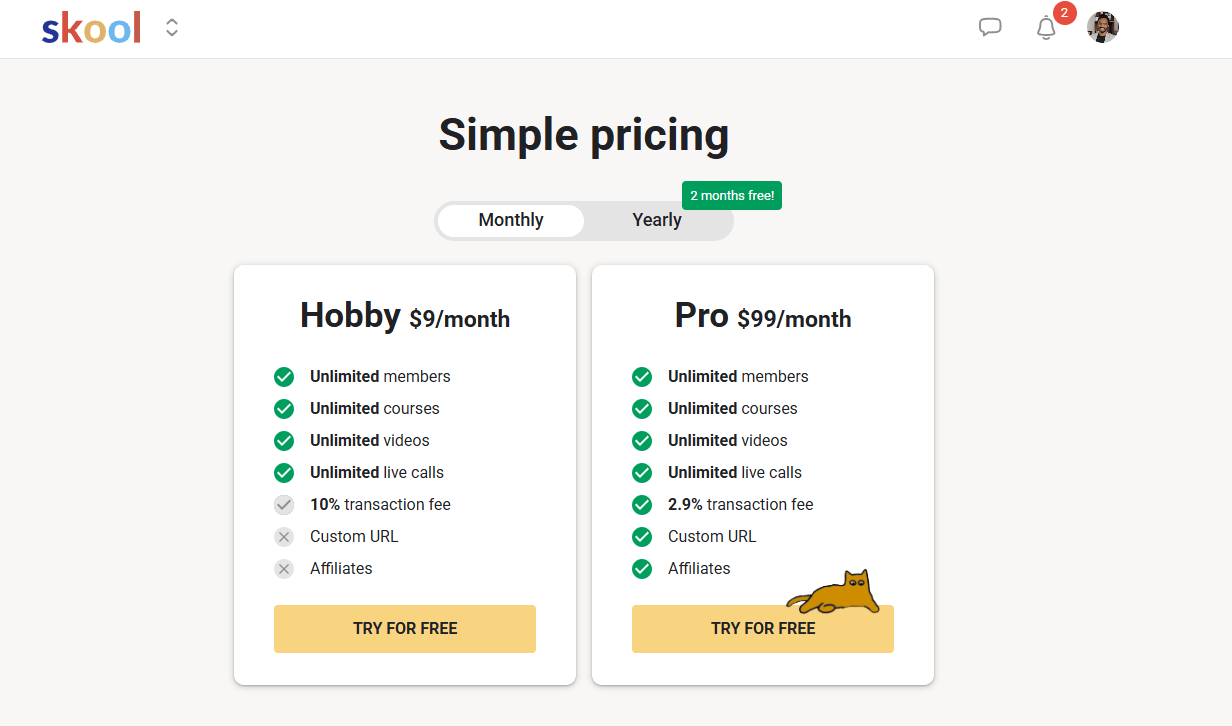
At first glance, Skool looks like the easier cost pill to swallow. Right now, it offers two plans: Hobby at $9/month and Pro at $99/month. Both include unlimited members, courses, videos, and live calls.
If you are just getting started, testing a course idea, or building a community-first offer without trying to run your whole business from one platform, Skool’s pricing feels refreshingly simple.
The catch is in transaction fees. On the Hobby plan, Skool takes 10% per transaction. On Pro, you give up 2.9% per transaction.
Kajabi, on the other hand, looks expensive right away, and there is no point pretending otherwise.
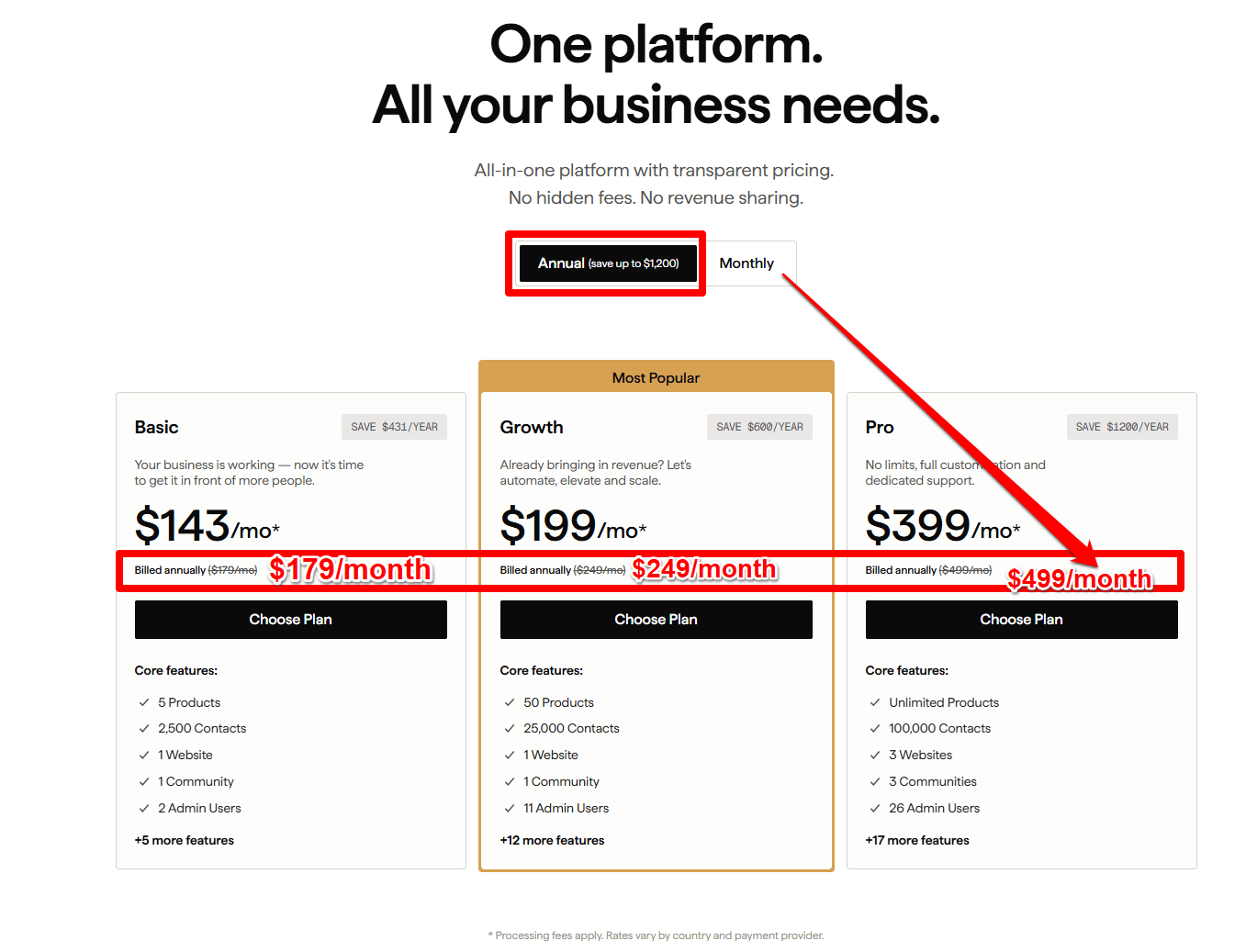
Pricing for Kajabi currently offers Basic at $179/month ($143/month billed annually), Growth at $249/month ($199/month annually), and Pro at $499/month ($399/month annually).
And yes, both Skool and Kajabi offer 14-day free trials, so you can test each platform before committing. If that’s too short, grab this extended 30-day free trial of Kajabi here at no extra cost to you. Or, try Skool for free here.
🤑 Kajabi also tends to run seasonal offers, especially around Black Friday, while Skool usually keeps pricing simple without major holiday deals.
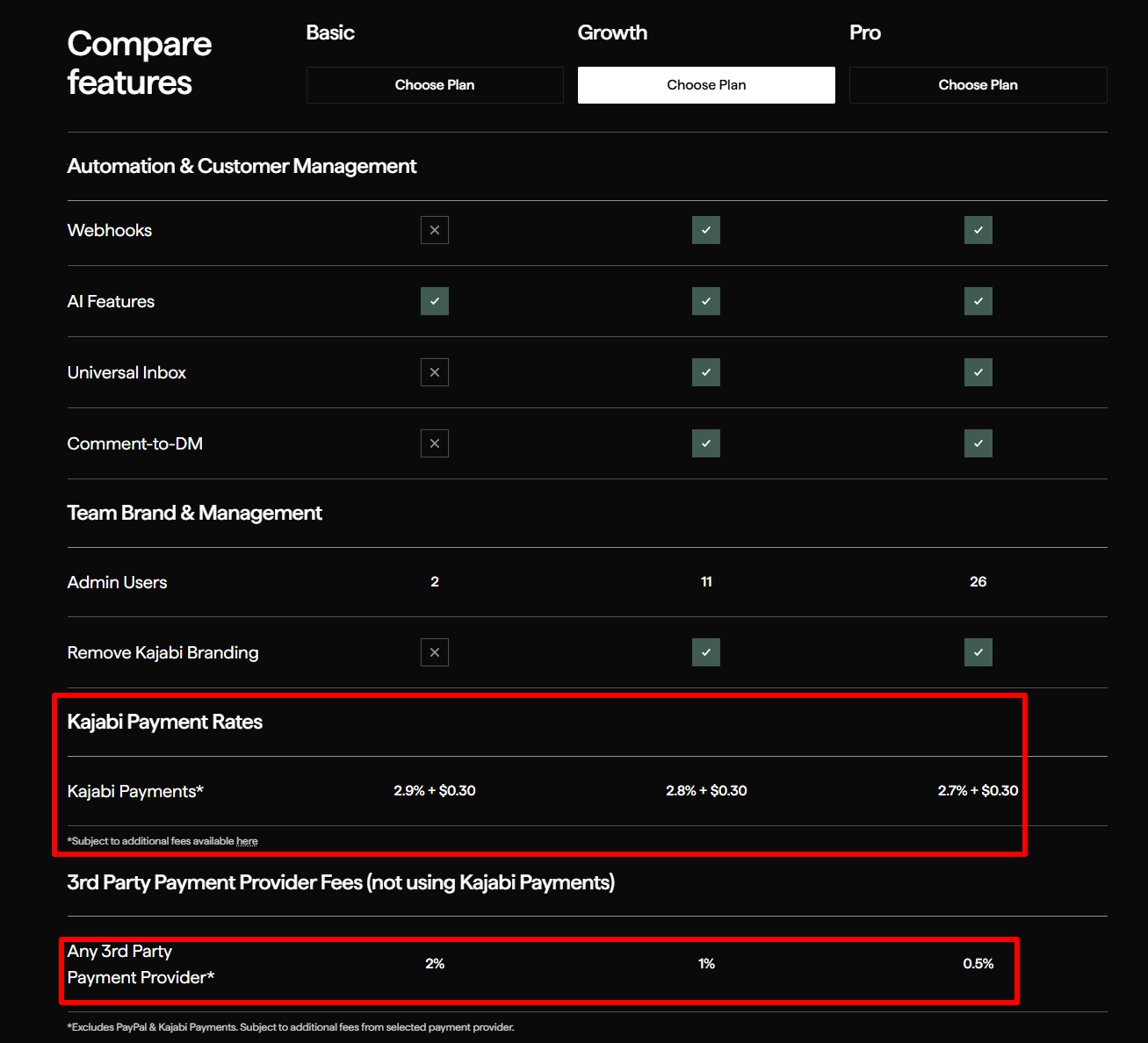
Processing fees still apply. If you use Kajabi Payments, the listed rates are 2.9% + $0.30 on Basic, 2.8% + $0.30 on Growth, and 2.7% + $0.30 on Pro. If you use another third-party payment provider, Kajabi adds a platform fee of 2% on Basic, 1% on Growth, and 0.5% on Pro (excluding PayPal and Kajabi Payments).
Still, I admit, Kajabi starts to make a lot more sense when you look at what that one subscription is actually replacing.
You are not just paying for course hosting. You are also getting a website builder, landing pages, email marketing, funnels, automations, checkout tools, communities, affiliate tools, and more in one connected system. Kind of reminds me of GoHighLevel (see my hands-on GoHighLevel vs Kajabi review here).
That all-in-one approach can save you money, yes, but also something just as valuable. The headache of stitching together a patchwork of tools and hoping they keep playing nicely with each other.
🏆 Winner: Is Kajabi more expensive than Skool? Compared to Skool’s monthly sticker price, absolutely. Compared to paying separately for email marketing, funnels, landing pages, a website builder, automation software, checkout tools, and community software? Not necessarily. Skool wins on low-cost entry. Kajabi wins on built-in depth.
Final verdict: Skool or Kajabi, which platform to choose?
Best for beginner course creators: Skool
Skool is the easier starting point. Its low monthly entry price, unlimited courses, community features, and cleaner setup make it less intimidating when you are still figuring things out.
Best for coaches: Kajabi
Kajabi’s native coaching product supports 1:1 and cohort-based or group coaching programs, built-in live video, native video hosting, session scheduling, and a more structured membership delivery than Skool currently offers.
Best for community driven learning: Skool
If your main goal is to build an active, social learning environment, complete with tiered discussions and gamification features that actually boost community engagement, Skool wins.
Best for creators who already use WordPress and email tools: Skool
Skool fits in nicely as the community building and course creation layer when you have a separate marketing stack.
Best for all-in-one online course businesses: Kajabi
Kajabi is simply the more complete online course creation platform, offering almost everything from a full-fledged course website and advanced sales funnels to mobile apps and automation tools.
Best for low-cost entry: Skool
Choose Skool if keeping initial costs low matters more than having every online business tool built in from day one.
Best for minimizing software sprawl: Kajabi
If you are tired of stitching together a complex funnel machine (multiple tools and subscriptions) and troubleshooting how they all work together, Kajabi makes a stronger case.
Best for built-in marketing tools: Kajabi
Pick Kajabi if you also want solid core built-in marketing tools, for funnel building, customizable landing pages, email marketing, and conversion-optimized checkout pages.
Best overall value for scaling a knowledge or expertise business in 2026: Kajabi
Kajabi costs more upfront, but it can offer better value over time if you actually use its broader toolset.
Either way, my experience with both platforms is that each is good for what it is built for. The real win comes from choosing the one that matches how you want to teach, sell, and grow. And you can try Kajabi or Skool for free below, before committing.