Ever wondered how some coaches build 6-figure businesses while others struggle to get their first client?
The secret isn’t better credentials or flashier websites.
It’s challenge funnels.
But it’s not the typical “5-day free challenge” everyone’s doing. I’m talking about unconventional approaches that break all the rules and generate massive results.
Today, I’ll show you 7 real examples from coaches who’ve cracked the code on challenge marketing.
👉 These examples build on proven strategies for creating online challenges that go viral.
What is a challenge funnel and why it works

A challenge funnel is a marketing strategy where you guide people through a structured experience over several days or weeks.
Think of it as a mini-course with a clear transformation promise.
Unlike traditional sales funnels for coaches, challenge funnels build trust through daily engagement before making any sales pitch.
Here’s why they work so well for coaching businesses:
- Build trust naturally: They position you as the expert without being pushy. When someone completes your 7-day productivity challenge, they’ve experienced your teaching style firsthand.
- Warm up cold audiences: They’re perfect for introducing yourself to new people. Someone who’s never heard of you becomes a raving fan after experiencing real results from your challenge.
- Create community momentum: They create a community effect. Participants support each other, which amplifies engagement and builds social proof.
- Set up natural sales opportunities: They set up natural upsells to your coaching programs or online courses.
The psychology is brilliant. People invest time and energy into your challenge, making them more likely to invest money in your premium offers.
How challenge funnels works
The typical challenge funnel follows a predictable pattern:
- Registration: Capture leads with an irresistible promise like “Get 10 new clients in 10 days” or “Build your morning routine that sticks.”
- Daily engagement: This is where challenges succeed or fail. You need consistent touchpoints through email, social media, or a private community. Many coaches use Kajabi (great for all-in-one automation) or ConvertKit (excellent for email sequences). For a comprehensive comparison of options, check out the best online course platforms.
- Community building: Participants need a place to share wins and struggles. This could be a Facebook group, Discord server, or Circle (perfect for engaged communities). You might also consider Skool for community building, which has become more and more popular with coaches lately.
- Strategic upsell timing: Most coaches wait until the final day to pitch. But the smartest ones weave value-driven offers throughout the entire challenge.
7 unconventional challenge funnel examples
Myron Golden – Make More Offers Challenge

While others run free challenges, Myron charges $97-$297 upfront for his Make More Offers Challenge.
This might seem counterintuitive, but it’s genius.
The paid entry creates immediate commitment. Participants show up consistently and engage deeply because they’ve invested money.
His challenge teaches business owners how to create irresistible offers, but the real magic happens in the upsells to his $18,000 mastermind program.
The paid model pre-qualifies leads. Only serious action-takers will pay hundreds for a challenge, making them perfect candidates for high-ticket coaching.
Why it works:
- Pre-qualifies serious buyers
- Creates immediate commitment through payment
- Sets premium pricing expectation from the start
- Attracts quality participants over quantity
Pedro Adao – 5-Day Challenge Model

Pedro turned challenges into competitive games.
His 5-Day Challenge uses points, leaderboards, and prizes for the most engaged participants. Think of it like gamifying your course completion strategies.
Participants earn points for:
- Completing daily tasks
- Engaging in the community
- Sharing progress on social media
This creates intense FOMO energy. Nobody wants to be at the bottom of the leaderboard, so engagement skyrockets.
Pedro’s challenges consistently see 80%+ completion rates because participants compete against each other, not just learn passively.
Winners get valuable prizes, but everyone gets exposed to Pedro’s premium programs throughout the challenge.
Why it works:
- Gamification increases engagement dramatically
- Creates social proof through leaderboards
- Builds community through friendly competition
- Higher completion rates lead to better results
Stu McLaren – Membership Challenge

Instead of teaching theory, Stu’s Membership Challenge pushes participants to launch a real membership site in 5 days.
This hands-on approach stands apart from typical challenges that only cover mindset or planning.
Participants take action by choosing their niche, setting up their membership site platform, creating initial content, and even getting their first members during the challenge.
This creates massive buy-in through tangible outcomes.
When someone launches a membership site using Stu’s methods, investing in his premium training to scale it feels like the logical next step.
Stu positions recurring income as the path to freedom, connecting deeply with coaches who want to stop trading time for money.
The immediate results make his high-ticket programs feel necessary rather than optional.
Why it works:
- Tangible outcomes create massive buy-in
- Participants experience real results immediately
- Positions recurring income as the ultimate goal
- Creates urgency around scaling what they’ve built
Shanda Sumpter – Cash Flow Challenge
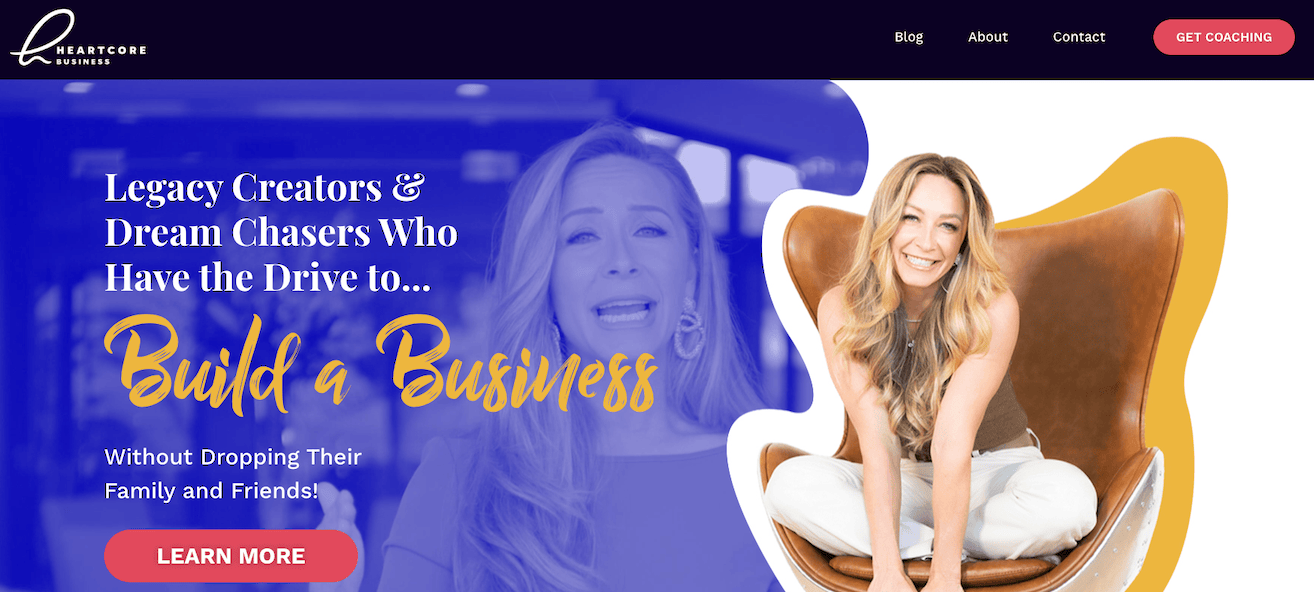
While other challenges focus on strategy or mindset, Shanda’s Cash Flow Challenge makes a bold promise: Bring in cash this week.
She provides daily sales scripts, teaches participants to spot immediate revenue opportunities in their network, and creates strong accountability.
This money-focused approach attracts coaches who need fast results. When you’re struggling financially, you don’t want another mindset course – you need cash flow now.
Participants often generate $1,000-$5,000 during the challenge itself. This immediate ROI makes her premium coaching programs feel like the obvious next step.
The challenge reframes how participants think about marketing their services, prioritizing immediate revenue over long-term brand building.
Why it works:
- Immediate money results create powerful testimonials
- Attracts cash-strapped entrepreneurs ready to invest
- Proves the mentor’s methods work in real-time
- Creates urgency around scaling successful tactics
Kathryn Jones – Design Hacking Challenge
Kathryn turned design from “making things pretty” to “boosting conversions.”
Her Design Hacking Challenge shows coaches and course creators how visuals directly drive sales funnel performance and help students complete your courses.
Participants learn how to tell conversion stories through visuals – something most coaches miss when building their online courses or sales pages.
The challenge positions design as a must-have for business success, not just decoration.
Kathryn wins by making design feel both important and doable for coaches who usually find it overwhelming.
When participants see their conversion rates improve right away, they naturally want her premium design programs.
Why it works:
- Reframes “boring” skills as essential business tools
- Connects visual design directly to revenue results
- Makes complex concepts feel achievable
- Provides immediate improvements participants can see
Tony Robbins & Dean Graziosi – Own Your Future Challenge

Tony and Dean created a hybrid challenge-summit format with multiple expert guests rather than running solo.
This builds massive credibility transfer. Participants get insights from an entire network of successful entrepreneurs, not just one coach.
Their summit-style format reaches larger audiences because each guest promotes to their own network.
The challenge covers mindset, marketing, and creating online courses, positioning their premium mastermind as the natural next step for serious action-takers.
This approach works well for coaches wanting to quickly establish authority by associating with recognized experts in their field.
Why it works:
- Leverages borrowed authority from multiple experts
- Exponential reach through guest promotion networks
- Creates comprehensive learning experience
- Positions premium programs as exclusive next level
Rachel Miller – Organic Audience Growth Challenge
While others teach complex funnels and paid ads, Rachel focuses on simple, organic growth methods.
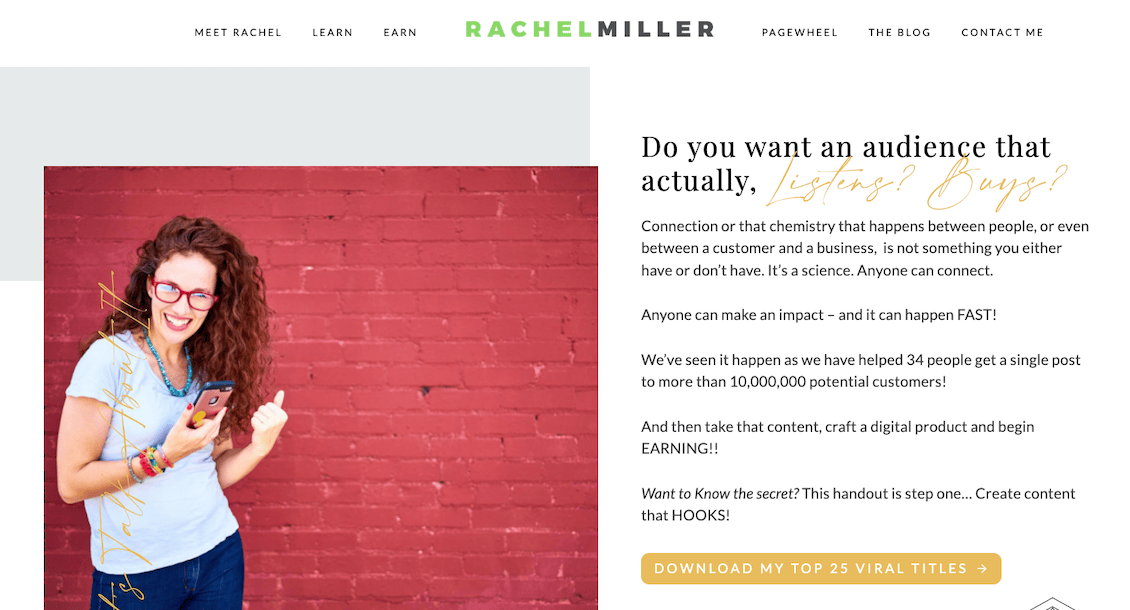
Her Low-Tech Organic Growth Challenge attracts overwhelmed entrepreneurs intimidated by complex marketing automation and advertising strategies.
Rachel teaches scrappy, beginner-friendly methods anyone can implement immediately without technical skills or advertising budgets.
Participants learn to grow their audience using:
- Simple content strategies
- Organic social media techniques
- Basic email marketing
This anti-overwhelm approach sets her apart from coaches promoting complex systems and expensive tools.
Her challenge leaves participants feeling empowered rather than confused, making them perfect candidates for her straightforward business growth programs.
Why it works:
- Anti-overwhelm positioning attracts beginners
- Simple methods create quick wins and confidence
- Differentiates from complex, expensive alternatives
- Builds trust through accessible, actionable advice
Key patterns of unconventional success
These successful challenge funnels share several important patterns.
- Paid challenges for higher engagement: Many charge for the challenge itself rather than offering it free. Myron Golden’s paid model proves that charging upfront can actually increase engagement and results.
- Specific, tangible outcomes: They emphasize specificity and measurable results. Stu McLaren’s participants don’t just learn about memberships – they actually launch one during the challenge.
- Money-focused promises: They promise immediate financial results. Shanda Sumpter’s cash flow promise attracts coaches who need immediate revenue, not long-term strategy.
- Gamification for completion: They use gamification and community energy. Pedro Adao’s leaderboard system creates friendly competition that dramatically improves completion rates.
- Micro-niche positioning: They focus on specialized, targeted content. Kathryn Jones didn’t teach general design – she taught design specifically for conversion optimization.
- Leveraged authority: They utilize hybrid authority models. Tony Robbins and Dean Graziosi’s summit approach borrowed credibility from multiple experts simultaneously.
These patterns work because they address the main problems with traditional free challenges: low engagement, poor completion rates, and weak conversion to premium offers.
When you charge for participation, create community competition, and promise specific outcomes, everything changes.
Your participants take the challenge seriously, complete the training, and see real results that make your premium programs irresistible.
How to apply these models to your coaching business
Start by choosing the approach that fits your audience and expertise.
- If you’re targeting serious, established coaches with budgets, consider Myron’s paid challenge model. Use a platform like Kajabi (excellent for payment processing and automation) to handle registration and delivery.
- For coaches who want high engagement, implement Pedro’s gamification approach. Tools like Skool (perfect for community engagement) can help you create leaderboards and track participation.
- If you’re teaching practical skills, follow Stu’s hands-on model. Instead of just talking about building sales funnels, have participants actually create one during your challenge
Focus on immediate, tangible outcomes rather than theoretical knowledge. People invest in results they can see and measure.
Consider partnering with other coaches in your niche for a summit-style challenge. This expands your reach and builds authority through association.
Most importantly:
👉 Choose a specific transformation promise. “Become a better coach” is too vague. “Get your first paying client in 30 days” creates clear expectations and measurable results.
Remember, the goal isn’t just to deliver value during the challenge. It’s to create such powerful results that participants can’t imagine not working with you further.
Conclusion
Challenge funnels are game-changers for coaching businesses, but only when you break the conventional rules.
Stop running generic free challenges that blend into the noise.
Instead, study these unconventional examples and adapt their strategies to your unique coaching approach.
Your 6-figure breakthrough might be just one challenge away.