Thinking about dropping out of college or quitting your job to blog full-time?
Blogging offers incredible freedom. You're your own boss, work remotely, and set your own schedule.
But it's not all easy.
By the end of this article, you'll understand what it takes to succeed as a professional blogger and make an informed decision about your future.
Ready to turn your blogging dreams into reality?
Let's dive in.
AI & 2026 Blogging Reality
AI is your co-pilot, not your replacement

AI can write blog posts now. So is blogging dead?
No. But here's what changed.
The bloggers crushing it in 2026 aren't fighting AI. They're using it to do what they already did, just faster.
Here's my actual workflow.
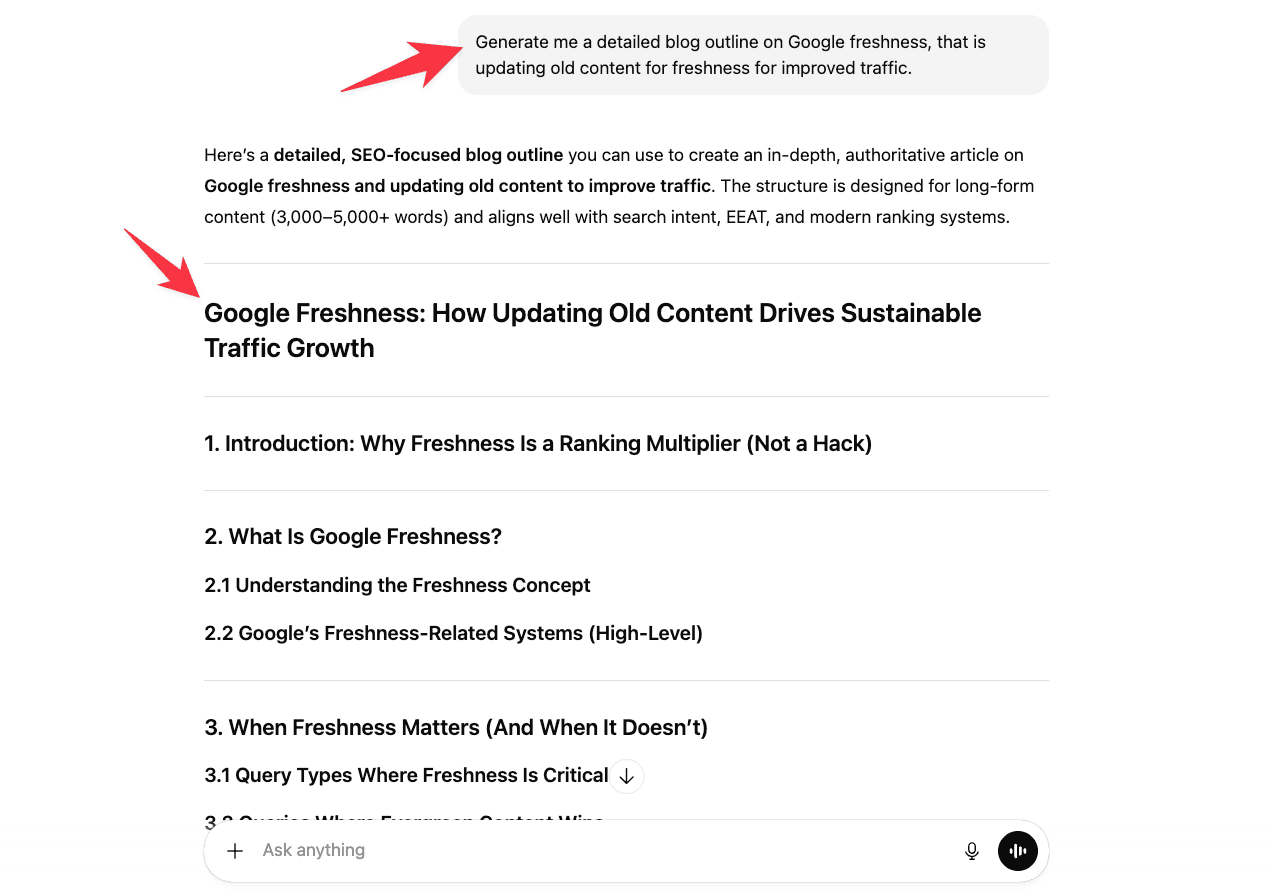
I use Claude or ChatGPT to pull research and generate a skeleton draft.
This cuts my research time from 3 hours to 45 minutes.
But that draft? It's bland.
No personality. No real insight.
So I rewrite about 60-70% of it.
I add the part AI can't fake: screenshots from tools I actually tested, specific results I got (like when I increased our organic traffic by +57.02% in 2 months updating old content for freshness), and honest takes on what works and what doesn't.
That's human-in-the-loop content. AI does the grunt work. You add the value.
🔥 Google's official stance?
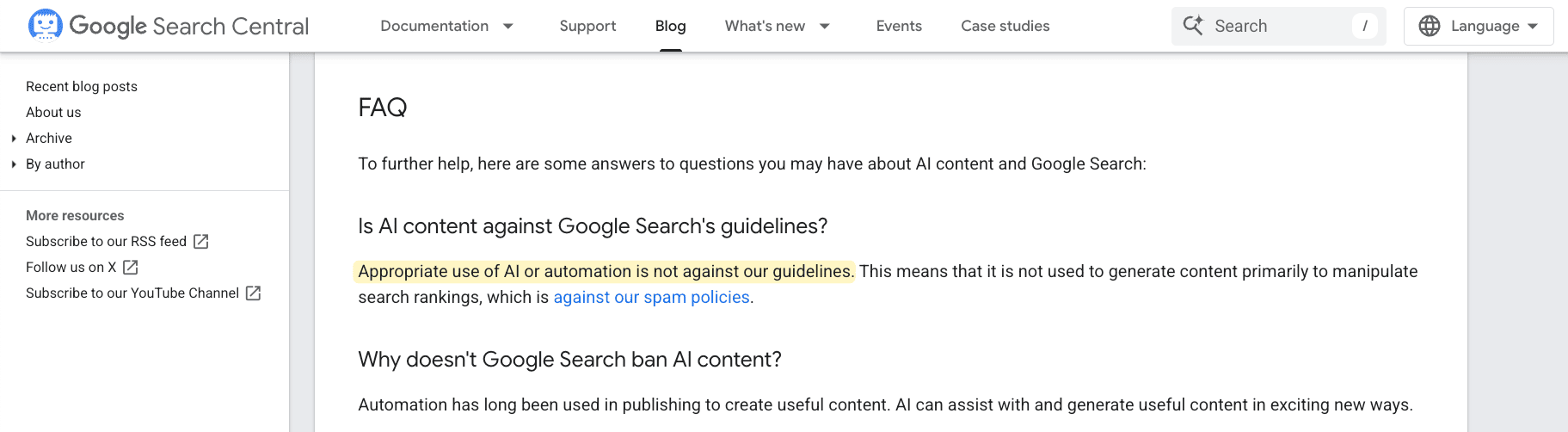
They don't care if AI wrote it.
They care if it's helpful.
But here's the reality: if readers can tell AI wrote it, they bounce. And Google tracks that.
The bloggers winning right now are editor-strategists.
They know how to prompt AI, recognize generic output, and inject personality and experience into every piece.
If you can't add something real to a topic (actual testing, personal results, unique perspective), don't write about it. There's already too much recycled content ranking nowhere.
Google's 2026 reality: What actually works
Let me be direct. If you're starting blogging now without understanding E-E-A-T, you're already behind.
E-E-A-T stands for Experience, Expertise, Authoritativeness, Trustworthiness.
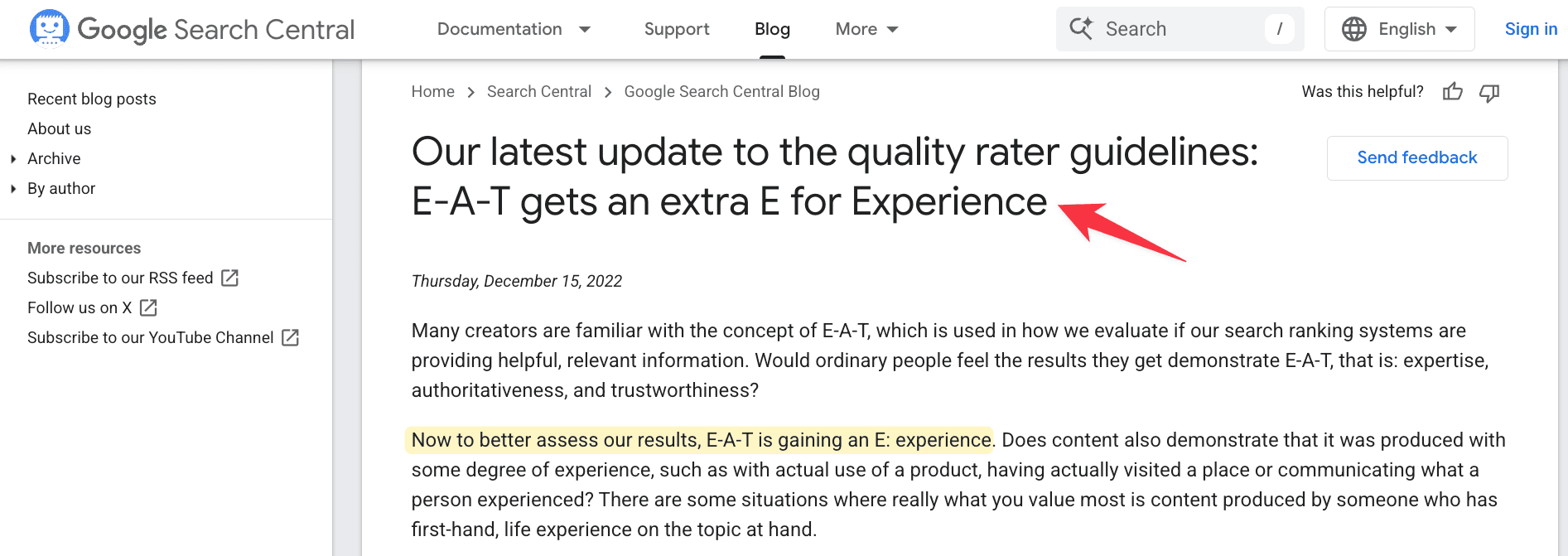
Google added that first E in 2022. By 2024, it became the main ranking factor.
What does this mean practically?
Generic "10 best X" posts don't rank anymore. Unless you've actually used those 10 things.
Then there's SGE (Search Generative Experience).
Google now answers simple questions directly in search results. "What is link building?" gets answered without anyone clicking your post.
But complex, specific queries still send traffic. "Best Hosting Provider" might not. But posts like this → "I’m Using Rocket.net for 5 Years (My Review)" absolutely does.
Volume of posts you publish is dead.
I'd rather publish 2 deeply researched posts per month than 10 surface-level ones.
The 2 deep posts get more traffic, more backlinks, and more conversions.
👉 If you can't demonstrate first-hand experience with what you're writing about, Google's algorithm will bury you. That's not theory – I've analyzed the data on AI-generated content and SEO.
I've watched it happen to competitors who scaled AI content without adding human expertise.
Writing skills evolved (you're an editor now)

You don't need to be an amazing writer anymore. But you can't be a bad editor.
Here's the skillset that matters in 2026.
You need to read an AI draft and immediately spot what's generic, what's wrong, and what's missing.
You need to cut 30% of the fluff AI always adds.
You need to inject your voice so it doesn't sound like everyone else's content.
But here's what AI is incredible at: structure.
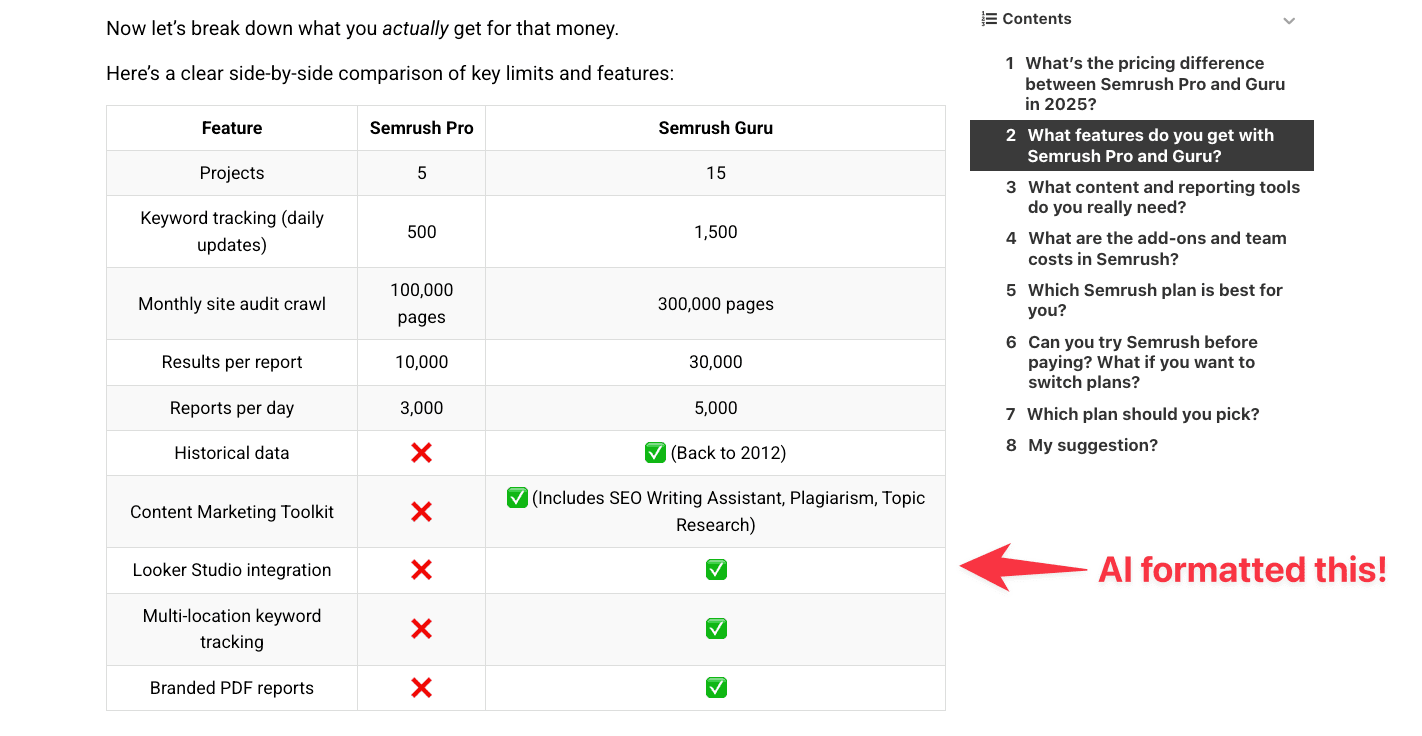
When I'm writing say a blog post, I feed AI my outline and it creates clean comparison tables. It pulls feature lists. It organizes information logically.
Then I rewrite the analysis sections completely. Because that's where the value is.
But if you hate writing? Blogging probably isn't for you. AI makes writing easier, not optional.
🔑 My approach: I write 1-2 hours daily. I use AI to speed up the boring parts (research, structure, tables) with proven ChatGPT prompts. I write all the opinion and analysis sections myself. That's the workflow that scales.
Platform & distribution strategy
Adaptability isn't optional anymore
Bloggers who stuck to 2019 tactics got crushed in 2023-2024.
They published 50 thin posts monthly, bought backlinks, and used spinners.
Google's helpful content update wiped them out.
I survived because I adapted early.
In early 2023, I noticed Google favoring longer, detailed posts. So I cut publishing from 20 posts monthly to 8, but tripled research depth.
When competitors lost 60% traffic in September 2023, mine stayed flat.
Here's what you need to adapt to:
- Use AI tools. Without them, you're 3x slower than competitors. But AI alone creates generic content with no edge.
- Go multi-channel. I publish on YouTube, send a newsletter, and post on LinkedIn.
The blog handles SEO. YouTube drives engagement. The newsletter builds direct relationships.
YouTube vs blogging: Do both strategically
Here's the truth: YouTube can be more lucrative and you get results faster than blogging.
You can hit monetization in 6-12 months if you're consistent.
Blogging takes 1 year to build serious traffic.
So why blog at all?
Here's what I do: I create long-form videos first, then repurpose them into blog posts.
The video becomes my primary content.
I script it, record it, edit it, and publish it on YouTube.
That gives me video SEO, engagement metrics, and a platform that's growing faster than traditional blogging.
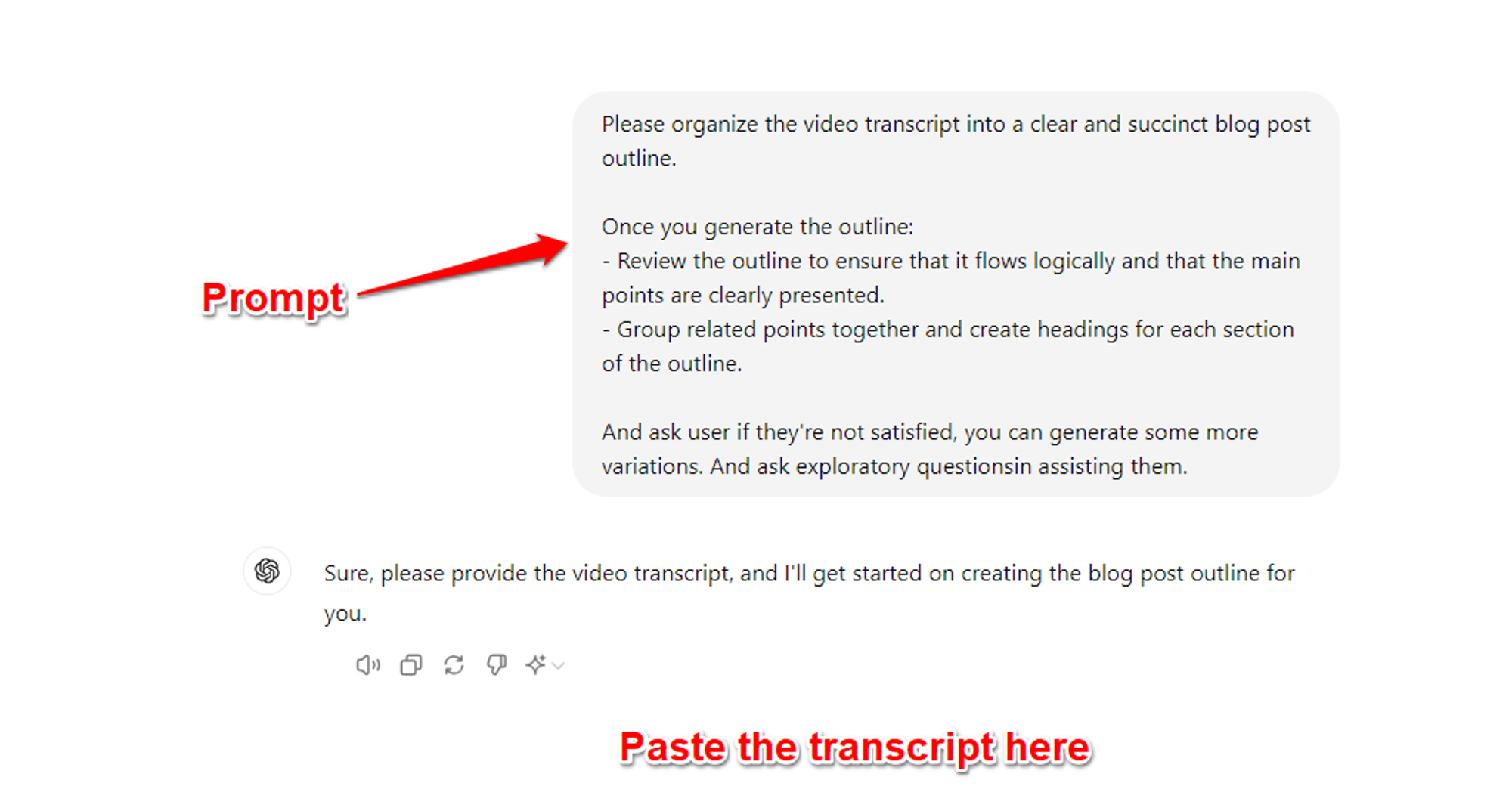
Then I take that video transcript and turn it into a blog post.
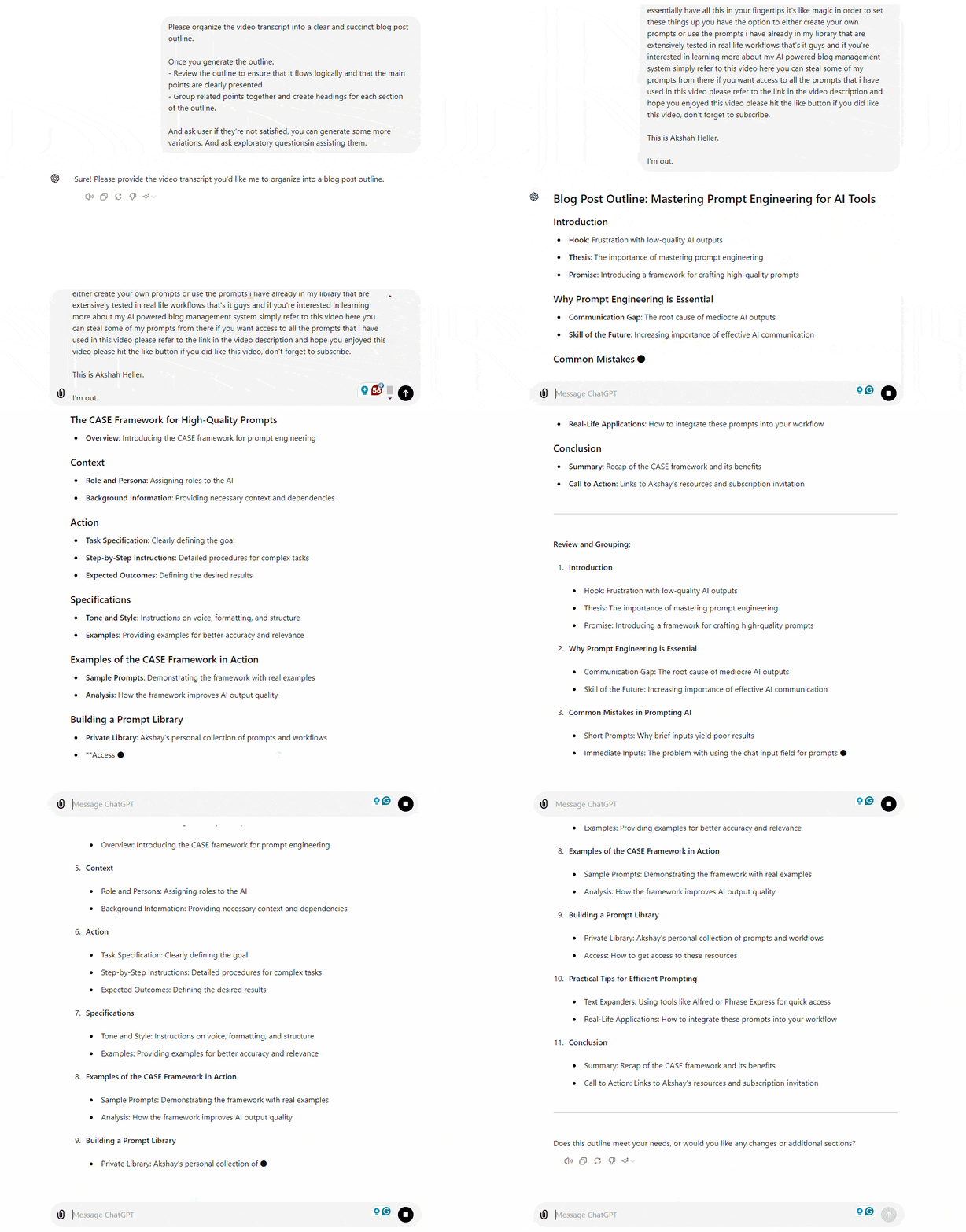
Not just copy-paste. I restructure it for reading using AI.
This workflow solves the "YouTube vs blogging" question.
You don't have to choose.
You do both, but the video comes first because it's harder to create and reaches people who prefer video content.
One piece of research. Two pieces of content. That's how you maximize your time in 2026.
👉 Also read: How to Repurpose YouTube Videos to Blog Posts
Marketing skills aren't optional
You can write the best content in the world. If no one sees it, it doesn't matter.
Marketing is 50% of blogging. Maybe more.
Here's what you actually need to learn.
Email marketing is non-negotiable.
You have 8,000 subscribers. When you publish a new post, 400-600 people click through in the first 24 hours. That initial traffic signals to Google that it's valuable.
And also, talking of marketing:
SEO isn't just keywords anymore.
It's understanding search intent, building topical authority, and creating content clusters through internal linking. When I target "blogging tips," I need 15-20 supporting posts on related topics.
And funnel building.

Most bloggers never think about this. You can have a free email course that converts blog readers into subscribers at 12%.
Without that funnel, you’d have 60% fewer subscribers.
Passion is your fuel (money won't sustain you)

Let me be honest. If you're only starting a blog because you saw someone making $10,000 per month, you'll quit within 6 months.
There are 2 types of people who start blogging.
- Those passionate about the money.
- Those passionate about the topic.
The first group quits when they hit month 6 with $200 in earnings.
The second group keeps going because they'd write about this stuff anyway.
I didn't make a single dollar in my first 2 years of blogging. Zero. I wrote on a free Blogger platform about software I used and techniques I learned. I did it because I was obsessed with figuring this stuff out.
That passion is what got me through the hard part.
When you're passionate about your niche, you naturally consume information about it. You're not forcing yourself to research. You're genuinely curious.
🔥 And here's the thing: passion shows in your content. Readers can tell when you actually care versus when you're just chasing affiliate commissions.
If you're not hungry for information in your niche, blogging will feel like torture.
Choose a topic you'd actually enjoy reading about, even if you weren't blogging. I break down the complete process of choosing a blogging niche you won't regret later.
This isn't overnight success (AI doesn't change that)
People think blogging is a get-rich-quick scheme. Publish some posts, traffic shows up, Google pays you.
That's not how it works.

Blogging requires patience, dedication, and smart work.
The timeline hasn't changed much even with AI.
You still need 12-18 months to build real traffic. AI speeds up content creation, but it doesn't speed up Google's trust-building process.
Here's the reality:
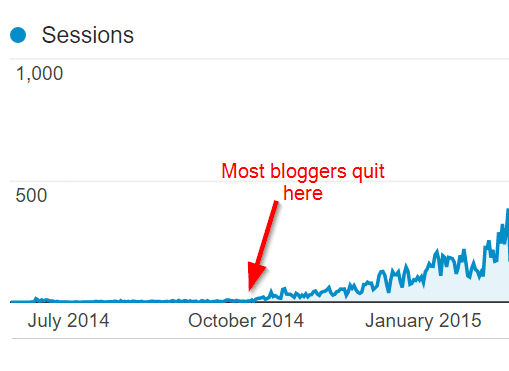
- Months 1-6: You'll get almost no traffic. Maybe 100 visitors per month total.
- Months 6-12: Traffic starts trickling in. You might hit 1,000-2,000 visitors per month.
- Months 12-18: This is where it compounds. You could hit 10,000-20,000 visitors per month if you're doing it right, implementing strategies from my 27+ ways to increase blog traffic.
I monitor my blog's progress weekly.
But I don't panic over short-term dips. I look at 90-day trends.
The bloggers who quit are the ones waiting for outcomes instead of loving the process. If you enjoy the research, the writing, the strategy, patience comes naturally.
🚧 Don't expect your first $1,000 month before month 12. And don't expect your first $10,000 month before month 24-36. Those timelines are realistic for most niches.
Self-motivation and consistency are everything
You're your own boss as a blogger. That sounds amazing until you realize no one is making you work.
Self-motivation is the difference between bloggers who make it and bloggers who don't.
You need to set targets and hit them even when you don't feel like it.
Here's what works for me.

I set quarterly traffic goals and monthly publishing goals.
This quarter: publish 12 posts, hit 50,000 monthly visitors.
I break that into weekly targets. 3 posts per month. 1,000 new visitors per week.
Without clear targets, you drift.
You publish randomly.
You lose momentum.
Consistency matters more than intensity.
Publishing 2 posts per week for 12 months beats publishing 5 posts per week for 3 months and then stopping.
Set a publishing schedule and stick to it.
Even if a post isn't perfect, ship it. You can always update it later (I do this constantly).
Time management when you're your own boss

Working from home as a blogger can make you lazy.
No commute. No boss. No fixed schedule.
That freedom destroys some people.
Here's what works.
Fix a work schedule. I work 9am-2pm daily, Monday through Friday. That's 25 hours per week.
Early on, I worked 10-15 hour days because I had more time than money.
But now?
I batch similar tasks. Monday is writing. Tuesday is client work. Thursday is video production.
Batching saves mental energy.
Create a dedicated workspace.
I have a desk. When I sit there, I'm working. When I leave, I'm off.
That boundary matters.
Prioritize tasks every day. I make a list each morning: 3 must-do tasks, 3 nice-to-do tasks.
The must-dos are non-negotiable.
Without discipline, you'll waste entire days scrolling Twitter and calling it "research."
Business fundamentals
Financial stability: Your runway matters

Before going full-time with blogging, make sure you have a financial cushion or backup plan.
How much runway do you need?
Ideally 12-18 months of living expenses saved beyond the initial cost to start a blog.
If you spend $2,000 per month, have $24,000-$36,000 saved before quitting your job.
That might sound like a lot.
But blogging income ramps slowly.
You don't go from $0 to $5,000 per month overnight.
It's more like $0 → $200 → $800 → $2,000 → $5,000 over 18-24 months.
For me, financial stability wasn't a huge concern.
I dropped out of engineering school and had time to grow my blog while living with minimal expenses.
But if you have rent, a family, or other obligations, you need that runway.
The alternative?
Keep your job and blog on the side until your blog income replaces 50-75% of your salary. Then make the jump.
Don't put yourself in a position where you need your blog to make money in 3rd month.
Multiple income streams protect your downside

Never rely on a single blog for all your income.
And never rely on a single income source within that blog.
Diversification protects you when things go wrong.
And things will go wrong.
Google updates tank your traffic. An affiliate program shuts down. Ad rates drop.
Here's my income mix:
- Affiliate commissions: 45% (built through a strategic affiliate marketing funnel and high-converting product reviews).
- Display ads: 25%.
- Sponsored content: 15%.
- Consulting and services: 10%.
- Digital products and courses: 5%.
If my affiliate income disappeared tomorrow, I'd still have 55% of my revenue. That's survivable.
Also, don't just rely on one blog.
I have 2 content sites. If one gets hit by an algorithm update, the others keep generating income.
And work on other skills beyond blogging.
Marketing, funnel building, email copywriting, video editing.
These skills create income opportunities outside your blog and position you for other profitable online business models.
Networking builds real opportunities

The best opportunities in blogging don't come from Google. They come from relationships with other creators.
Here's how you can actually network.
Join niche Facebook groups and Slack communities.
Message people whose content you genuinely respect. Don't pitch. Just start conversations and build relationships.
And treat social media as networking, not just distribution.
Use Twitter and LinkedIn to connect with peers, not just broadcast your content.
🔥 The bloggers who isolate themselves and just grind content never build real momentum. The ones who actively network get opportunities that 10x their growth.
Spend 20% of your time on relationship building.
It compounds just like your content does.
Build for the long-term (ethics matter)

I've seen too many bloggers take shortcuts that work for 6 months, then destroy everything long-term.
Private blog networks. Spam link building. Article spinning. AI content farms.
These tactics might boost traffic temporarily. Then Google catches you and you lose it all.
I've watched competitors do this. They'd rank fast, make quick money, then vanish when the next algorithm update hit.
Don't accept every sponsored post just because it pays well.
If the product is trash, promoting it hurts your credibility.
I've turned down thousands in sponsorships because the products didn't deliver value to my audience.
Blogging isn't dying.
Content consumption has exploded.
There are niches with almost no quality content yet. The demand is there.
But the bloggers who'll succeed in the next 5 years are building real brands.
They're creating genuinely helpful content. They're earning trust, not just traffic.
To sum it up
If you're thinking about dropping out of college or quitting your job to pursue blogging full-time, weigh the decision carefully.
Blogging can be rewarding, but it's not for everyone.
You need financial runway, strong time management, genuine passion for your topic, and the ability to adapt constantly.
You need discipline, consistency, and the patience to stick with it when you're not seeing results yet.
You also need to understand how to use AI effectively while maintaining the human expertise that makes your content valuable.
Also, it’s not a get-rich-quick scheme.
It can take 18-24 months to build sustainable income.
The decision to go full-time is personal. It depends on your circumstances, goals, and risk tolerance.
Consider all the factors carefully and make the choice that's right for you.
Good luck!