Imagine making $1,000s in two weeks.
Without filming a single video lesson.
Without even finishing your course outline.
Sounds impossible right! It’s not.
Many course creators across every niche are discovering something powerful: the money isn’t in the course creation – it’s in the pre-sale.
Ready to learn how the pros do it?
The kind of strategies that generated $62,544 in pre-sales for a brain health course, or helped a creative agency owner bank $30,000 before writing a single lesson.
Let’s dive in!
Why pre-selling beats traditional course launches
Most course creators do things backwards.
They spend months creating content. Build fancy sales pages. Record hours of video. Then launch to crickets.
Here’s the brutal truth: 67% of online courses never make back their creation costs. That’s because creators fall in love with their ideas instead of validating them with real money.

Pre-selling changes everything.
You get validation and cash flow at the same time.
When someone pays you $497 for a course that doesn’t exist yet, that’s not just revenue. That’s proof your idea works. It’s market research with a guaranteed ROI.
But the benefits go deeper than just validation.
- Cash flow freedom. No more wondering if you’ll recoup your course creation costs. The money’s already in your bank account.
- Reduced risk. If your pre-sale flops, you’ve saved yourself months of wasted effort. Pivot or refund – either way, you’re not out thousands of hours.
- Better content. When paying customers are waiting for your course, you create with purpose. Every module has to deliver real value because real people paid real money for it.
👉 People value what they pay for. A customer who pre-bought your course at $497 will engage more than someone who got it for $97 after launch.
Building your pre-sell audience
Here’s what most gurus won’t tell you about pre-selling: audience size doesn’t matter nearly as much as audience engagement.
Your pre-sell audience needs three things:
- They know who you are: They’ve seen your content, heard your voice, understand your perspective.
- They trust your expertise: You don’t need to be the world’s #1 expert. You just need to be further ahead than they are on the path they want to walk.
- They have the problem you solve: Your audience needs to be actively experiencing the pain your course promises to fix.
Every valuable piece of content you share moves people through this trust-building process.
Ellen Yin mastered this approach.

Before launching her signature course, she spent months sharing transparent income reports, practical business tips, and behind-the-scenes content.
When she opened pre-sales, her audience already knew her, trusted her advice, and understood exactly how her course could help them.
The magic number for pre-selling isn’t about list size. It’s about having at least 100 people who actively engage with your content and trust your expertise enough to take a financial risk on your promises.
🔑 Start building that core group today. The pre-sale success follows naturally.
Advanced pre-selling strategies
The difference between a $2,000 pre-sale and a $50,000+ pre-sale isn’t luck.
It’s strategy.
These 7 approaches represent the most effective methods used by creators who consistently generate significant pre-sale revenue.
Each builds on the previous one, creating a complete system for course validation and monetization.
The social validation method
Before you write a single sales page, test your idea where your audience already hangs out.
This strategy leverages social proof and real-time feedback to validate course concepts before you invest serious time in creation.
The key is asking the right questions in the right way.
Ryan Kulp mastered this on Twitter.

Instead of announcing “I’m creating a course,” he shared a detailed course outline and asked his followers a direct question: “Would you pay $200 for this?”
The responses told him everything he needed to know. People weren’t just saying “yes” – they were asking when they could buy it.
That single tweet generated enough validation that Ryan felt confident creating a pre-sale page.
Within 24 hours, he’d made $10,000. Two weeks later, he’d hit $20,700.
💡 The psychology works because public commitment increases follow-through. When someone says “I’d buy this” in a public forum, they’re more likely to actually purchase when you offer it.
But here’s the crucial part: Ryan didn’t just ask “would you buy this?” He shared specific details. The learning outcomes. The problem it solved. The format it would take.
Vague concepts get vague responses. Specific offers get buying decisions.
The waitlist building strategy
Smart pre-sellers don’t just launch – they build anticipation first.
Ellen Yin turned waitlist building into an art form.
Months before opening course enrollment, she started mentioning an upcoming program in her content. Not selling it – just acknowledging it was coming.
But she didn’t stop there.

She created a dedicated waitlist landing page with one clear promise: waitlist members would get first access and exclusive early-bird pricing.
🔑 The psychological trigger here is loss aversion. People hate missing out on good deals more than they love getting them. By joining the waitlist, subscribers felt like they were securing their spot for something valuable.
When Ellen finally opened pre-sales, her waitlist was primed and ready.
Her course generated six figures in revenue, with a significant portion coming from pre-sales to waitlist subscribers who’d been eagerly waiting for their chance to buy.
The strategy works because it separates interest-building from selling. By the time you pitch your course, the desire is already there.
The outline-first presale
Most creators think backwards about course creation. They believe they need finished content before they can start selling.
Matt Kohn proved them wrong when he generated $30,000 in presales without creating a single lesson.
Here’s how he did it:
- He created a detailed outline with specific learning outcomes, practical exercises, and transformation promises – not just module titles.
- He built a sales page around the outline focusing on what students would be able to do after the course, not what content they’d consume.
- His promise: “By the end of this program, you’ll have a systematic approach to landing $5,000+ creative projects, a portfolio that attracts premium clients, and the confidence to charge what you’re actually worth.”
Notice what’s missing? No videos, worksheets, or module counts. The pitch centered entirely on transformation.
👉 This approach works because people don’t buy courses – they buy outcomes. When your outline clearly demonstrates the journey from their current frustration to their desired result, the specific delivery method becomes secondary.
Matt’s $30,000 presale validated both the concept and pricing.
More importantly, it gave him direct feedback from paying customers about what they truly wanted.
With these insights, he created content perfectly matched to market demand.
The finished course exceeded expectations because it addressed actual customer needs, not assumptions.
The content-to-course funnel

The most sustainable pre-selling strategy doesn’t feel like selling at all.
Instead of pitching courses out of nowhere, smart creators use valuable free content to naturally introduce their paid programs.
The transition feels organic because it solves a problem the free content identified but couldn’t fully address.
This strategy works through a 3-step process:
- Identify pain points through content creation
- Provide partial solutions for free
- Offer complete solutions through your course.
Let’s say you’re teaching email marketing.
Your free content might cover subject line psychology, list segmentation, or automation mistakes.
But it’s just one piece of profitable email marketing. You also need list building, sequence optimization, and conversion tracking.
The course pre-sale becomes the logical next step.
You’re not interrupting their learning journey – you’re extending it.
🔑 Consistency is key. One blog post won’t generate pre-sales. But 6 months of valuable content creates an audience that trusts you to deliver transformation. Focus on creating evergreen content that continues attracting potential customers long after you publish it.
The webinar launch system
Nothing converts cold traffic into paying customers faster than a well-crafted webinar.
If you’re new to this strategy, learning how to make webinars engaging is crucial for pre-sale success.
Kat Norton proved this when she used webinars to launch her Excel training course.
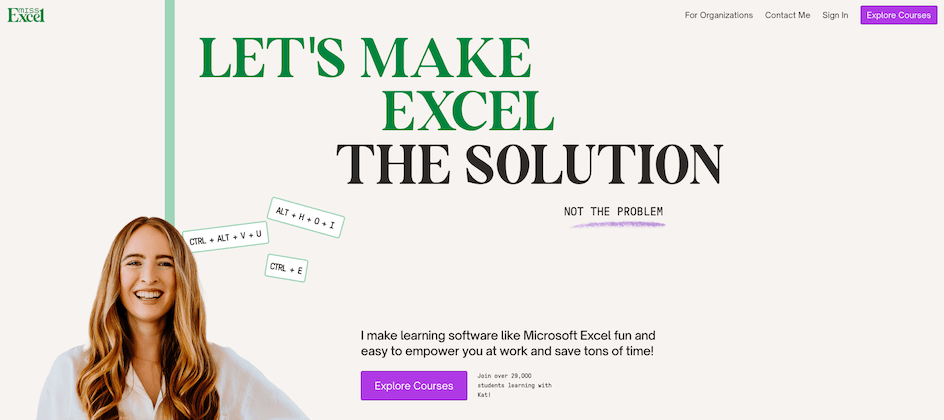
Starting in November 2020, she was able to quit her consulting job by January 2021 thanks to course revenue generated primarily through webinar pre-sales.
Here’s why webinars work so well for pre-selling: they combine education with demonstration in real-time.
The format follows a proven structure:
- Teach something valuable
- Diagnose the bigger problem
- Position your course as the complete solution.
Kat’s webinars taught genuinely useful Excel tricks her audience could implement immediately.
But each technique also revealed how much more they could accomplish with proper training.
But here’s the crucial element: Kat offered exclusive deals for webinar attendees only.
The course would cost $497 after launch, but webinar participants could pre-order for $297 with bonus resources.
The strategy scales too. Each webinar generates immediate pre-sales while building an audience for the next one.
The partnership amplification method
Your audience has limits. Your partners’ audiences don’t.
Ellen Yin leveraged affiliate partnerships to expand her pre-sale reach beyond her own audience.
She collaborated strategically with creators who served her target market but weren’t direct competitors, essentially building an affiliate marketing funnel that amplified her reach exponentially.
These partners promoted her pre-sale to their lists in exchange for commissions.
She also created a complete promotional toolkit for her affiliates:
- Email templates
- Social media graphics
- Detailed talking points
- Early access to course materials so partners could experience the content firsthand
This approach generated authentic enthusiasm instead of generic endorsements.
Timing matters too!
Ellen contacted potential partners during her waitlist phase, not at pre-sale launch. This gave partners time to plan promotion and build anticipation with their audiences.
When pre-sales finally opened, Ellen had a network of trusted partners simultaneously promoting to their engaged audiences.
The result?
She multiplied her effective audience size by 10x while maintaining the trust and credibility essential for pre-sale conversions.
🔑 Partnership amplification works because it combines your course expertise with established relationships other creators have built with your target market.
The authority-driven presale
Expertise in your field lets you charge premium prices for course pre-sales.
Dr. Uma Naidoo proved this by generating $62,544 in presales for her brain health course before full launch.
The authority approach differs from other pre-selling methods by leading with credibility instead of relationship building.
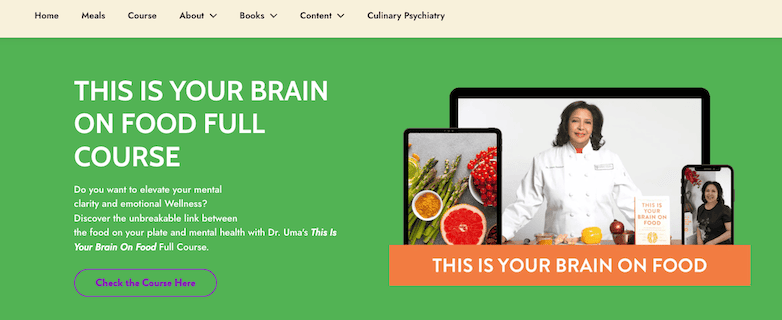
Dr. Naidoo’s medical credentials and published research established instant authority on brain health.
Her pre-sale wasn’t asking people to trust an unknown creator – it was offering access to proven expertise.
But credentials alone don’t guarantee pre-sale success.
The offer must still solve a pressing problem and promise clear transformation.
Her course positioned brain health as the foundation for everything her audience valued:
- Better focus
- Improved memory
- Sustained energy
- Mental clarity
The messaging highlighted exclusivity: “I can only work with 50 people in this intensive program due to the personalized attention each participant receives.”
This approach justified premium pricing while creating urgency.
🔑 When a recognized authority offers limited access, people act quickly.
Instead of just social media and email, Dr. Naidoo leveraged speaking engagements, podcast interviews, and media appearances.
Each platform reinforced her expertise while introducing her course to new audiences already primed to value authority-based solutions.
Conclusion
Pre-selling isn’t just a financing strategy – it’s the ultimate market validation tool.
The most successful course creators secure sales before full launch by focusing on transformation promises rather than completed content.
Whether through waitlist building, detailed outlines, webinars, or authority positioning, they all validate demand before investing in creation.
The key takeaway? Be specific about the transformation you offer, validate your concept with real buyers, and leverage your unique expertise.