Your calendar is fully booked.
Back-to-back sessions. Client after client.
But when you check your bank account?
The numbers don’t match the hustle.
You’re trading time for money, and there’s a hard ceiling on how many hours you can work.
Marcus Chan, founder of 6 Figure Sales Academy, felt this exact pain. He was stuck at $30K-$50K per month until he built a proper sales funnel. Just 2 months later? He hit $100K. Then $840,000 in just 7 weeks.
That’s the power of a coaching funnel that works while you sleep.
This post breaks down the exact 6-step system to build a coaching funnel that scales past $100K without burning out.
Step 1: Define your ideal client avatar (micro-segments)
Most coaches write for everyone and get ignored by everyone.
The fix?
Micro-segmentation.
Don’t target “people who want to lose weight.” Break that down into specific groups. Each group has unique pain points, objections, and reasons to buy.
Here’s an example.
A weight loss coach could segment into corporate professionals who stress eat, new moms dealing with post-pregnancy weight, or athletes optimizing performance.
See how different those are?
Same goal (weight loss), but totally different angles.
Tony Robbins’ coaching program cut their cost per booked call by 57% (from $340 to $146 per call) by refining their ad angles to target specific segments.
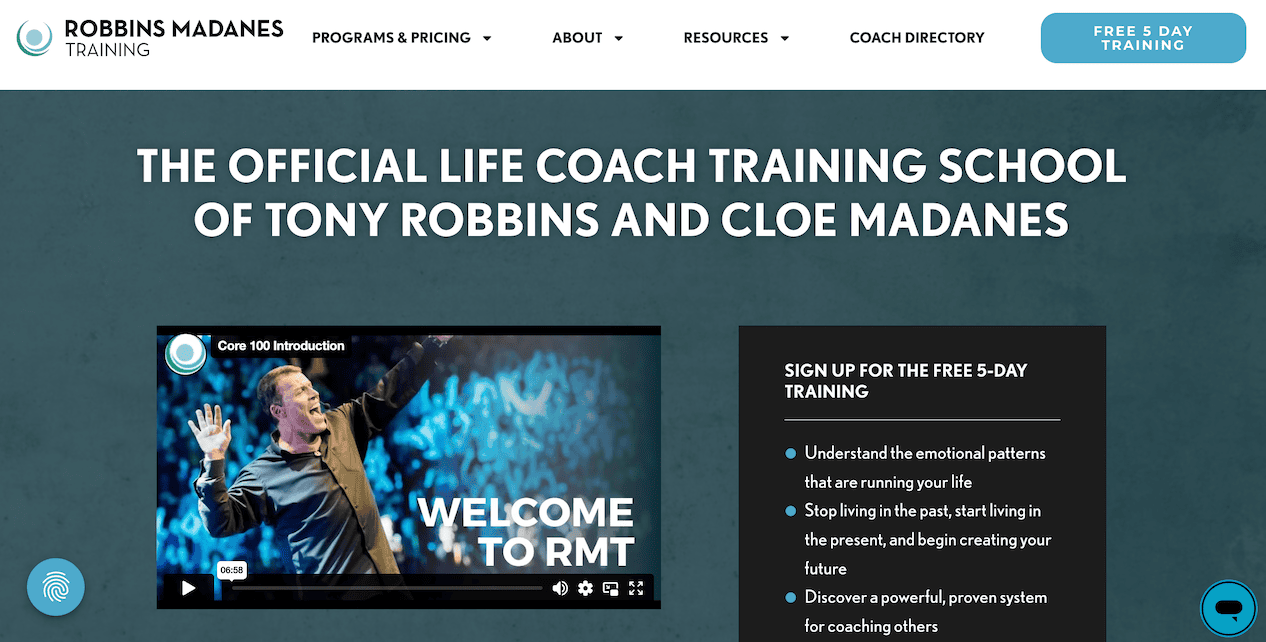
They didn’t change the offer. They just got more specific about who it was for.
When you speak to everyone, you speak to no one. Generic messaging gets ignored.
But when someone reads your headline and thinks, “Wait, this is literally me,” conversion rates go through the roof.
Research shows 60% of coaching clients are professionals aged 30-50. But that’s still too broad. You need to go deeper.
Here are the action steps:
- Map out 2-3 micro-segments
- Write down their biggest pain point for each segment
- Identify where they spend time online
- Document their main objection to hiring a coach (this becomes your messaging hook)
Once you’ve got your segments defined, you can create tailored lead magnets for each one.
Step 2: Create lead magnet fragments for each segment
One-size-fits-all lead magnets are dead.
You can’t offer a generic “5 Tips” PDF and expect high-quality leads anymore. Your audience is too sophisticated for that.
Instead, you need lead magnet fragments. Different magnets for different segments.
Quiz funnels work especially well because they segment people automatically while they think they’re just getting personalized advice.
Fitness coaching brands like MadMuscles and Freeletics built entire businesses on quiz funnels.
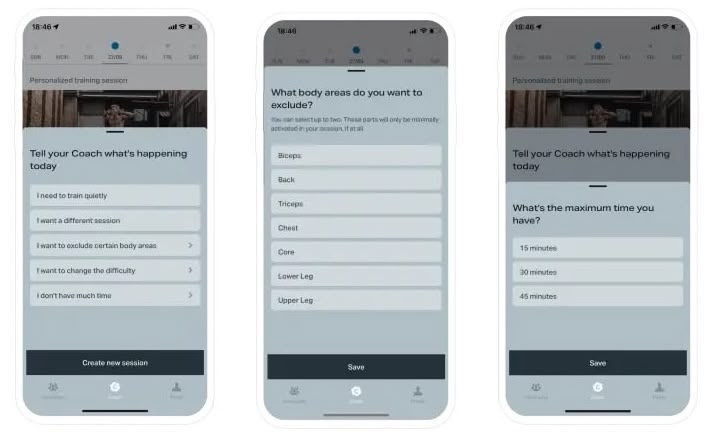
Someone takes the quiz, gets their “personalized plan,” then hits a checkout page. Conversion rates are insane because the offer feels custom-made for them.
Research shows lead magnets can generate 766% more leads than generic opt-ins. But the lead magnet needs to solve ONE specific micro-problem for ONE specific segment.
Here are the action steps:
- Pick your primary segment from Step 1
- Create ONE lead magnet for their biggest pain point
- Keep it actionable and quick (under 10 minutes or 3 pages)
- Focus on giving a quick win, not teaching everything
Now you’ve got your segments defined and lead magnets created. Next, you need the platform to host your funnel.
Step 3: Select your coaching platform and funnel builder
Most coaches hit a wall here. Too many platforms. Too many features to compare.
Let me break it down.
You’ve got 3 main options based on your budget and how much control you need.
| Platform | Starting price | Key features | Best for |
| Kajabi | From $179/month | All-in-one: funnels, email automation, course hosting, community (gamified), checkout, affiliate program, website builder | Coaches ready to scale past $100K who want everything in one place |
| Systeme.io | Free plan available; Paid from $17/month | Funnels, email marketing, LMS, automation, webinars, affiliate program. Free plan includes 3 funnels and unlimited emails | Budget-conscious coaches testing their funnel or just starting out |
| Skool | From $9/month | Community-first platform with gamification (leaderboards, levels, challenges). Requires separate funnel builder like WordPress + CartFlows | Coaches prioritizing community engagement and retention |
⚙️ The platform you choose matters less than actually building your funnel. Don’t spend 3 weeks researching. Pick one based on budget, commit for 90 days, then optimize. Analysis paralysis kills more coaching businesses than bad platforms ever will.
Option 1: All-in-one (Kajabi)
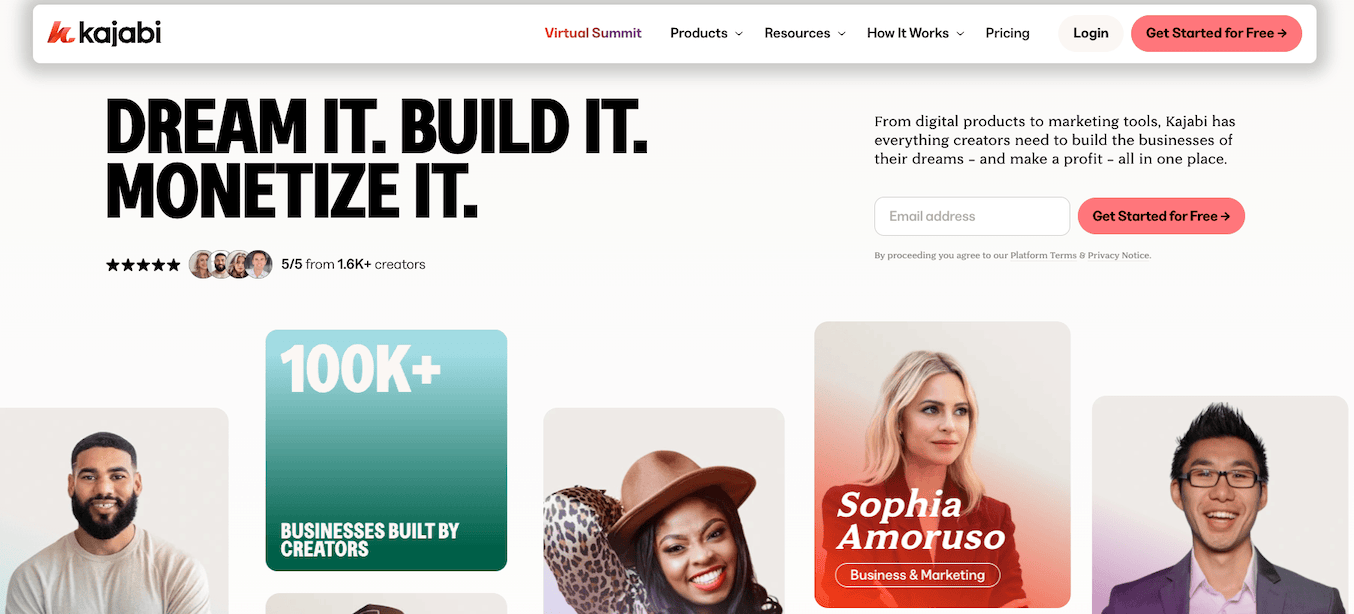
If you want everything in one place and don’t mind paying for it, Kajabi is your best bet.
You get funnels, email automation, course hosting, community features through Vibely, gamification, website and funnel builder, checkout pages, and a built-in affiliate program.
The catch?
It starts at $179/month, and the basic plan limits you to 5 products. If you’re just starting out, that might feel quite restrictive.
But if you’re serious about scaling past $100K and want a platform that won’t hold you back, Kajabi handles it all. No need to piece together 5 different tools.
Option 2: Budget-friendly all-in-one (Systeme.io)
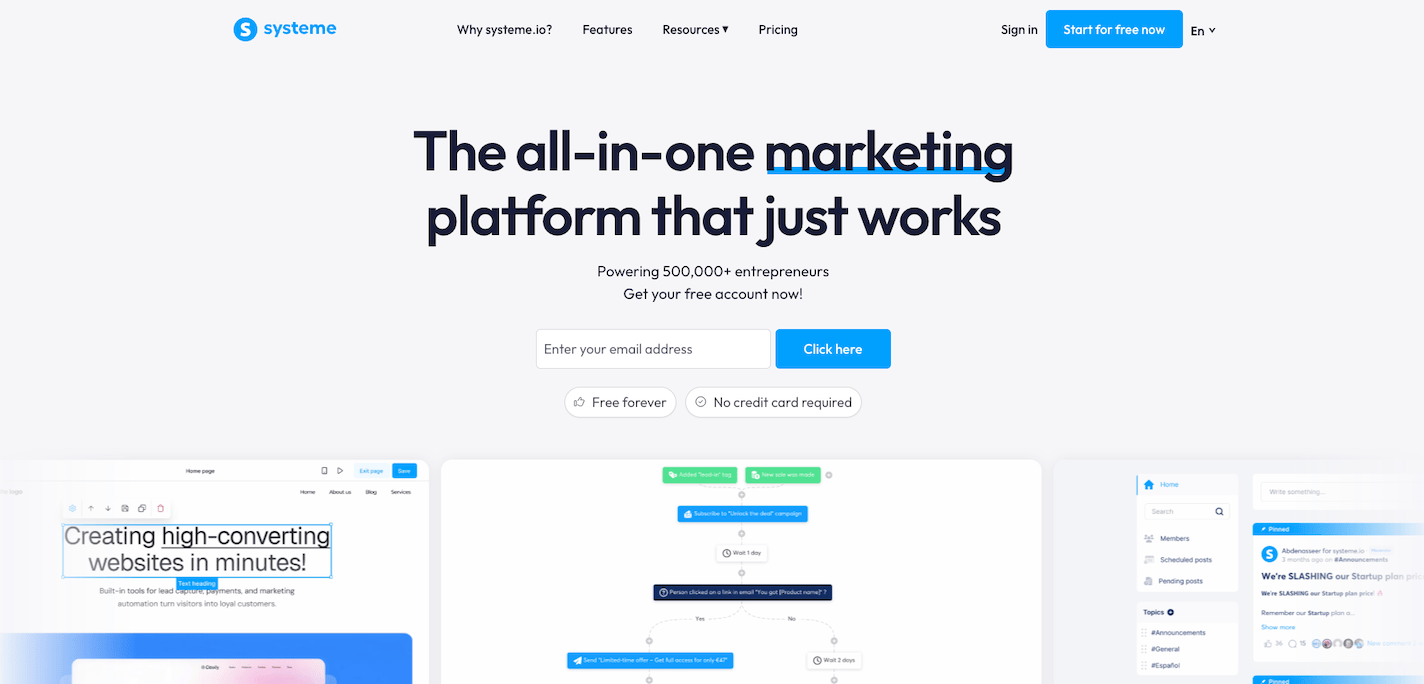
If budget is tight, Systeme.io gives you incredible value.
The free plan includes 3 funnels, unlimited emails, and unlimited students.
The paid plan costs $47/month and includes webinars (most platforms charge $100+ for this feature alone).
You get funnels, email marketing, a learning management system, automation, webinars, and an affiliate program. Everything you need to scale your coaching business.
The downside?
The page builder is basic compared to Kajabi. You won’t have as much design flexibility. And integrations are limited, so you’ll need Zapier to connect other tools.
But if you want to test your funnel without spending $1,000+ on software, Systeme is tough to beat. Check out my full Systeme.io review for more details.
Option 3: Community-centric (Skool + WordPress/Elementor)
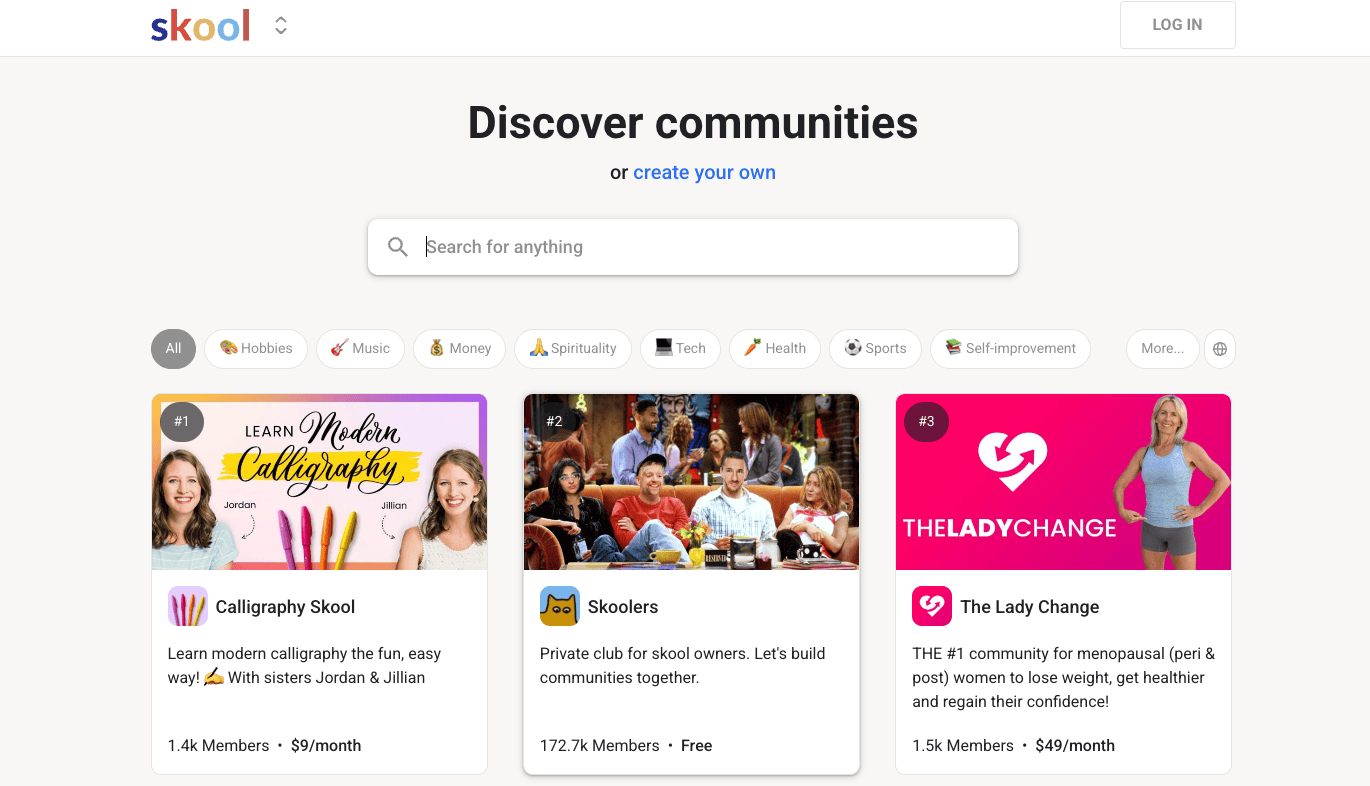
If building a tight community is your main strategy, consider Skool.
Skool is gamification-first. Leaderboards, levels, challenges. It’s designed to keep your community engaged.
But you’ll need to build your actual funnels somewhere else.
Now!
- Decide your budget (free/low-cost vs. premium)
- Pick your priority (all-in-one simplicity vs. community focus vs. design control)
- Start with ONE platform and commit for 90 days before switching
Once your platform is set up, you need to choose which type of funnel to build.
Step 4: Choose the right funnel type for your coaching model
Different funnels work for different situations.
A $97 course needs a completely different funnel than a $5,000 coaching program. And the funnel that converts corporate clients looks nothing like one for wellness coaching.
Here are 5 proven funnel types with real case studies showing what works.
Live webinar funnel
Best for selling $1K to $5K coaching programs.
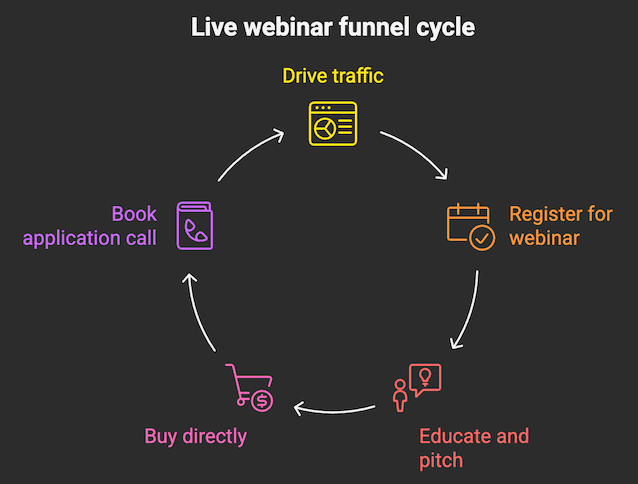
Here’s what you need to do:
- Create content piece that drives traffic to webinar registration.
- Educate in webinar & pitch your offer.
Attendees either buy directly or book an application call.
The key?
Your webinar needs to deliver massive value. Don’t just pitch. Teach something useful, then position your coaching as the natural next step.
Book-a-call funnel
This is the breakthrough funnel for high-ticket coaching.
Eddy Miranda tried selling his coaching with a traditional sales page. He was getting 3 sales per week. Decent, but not scalable.
Then he ditched the sales page completely and implemented a “book a call” funnel.
Result? 4 sales per DAY. Monthly recurring revenue increased by over $100K.
The difference?
Instead of asking people to buy cold, he qualified them first through an application, then closed them on a call. This works because high-ticket buyers want to talk to someone before dropping $3K+.
📞 Book-a-call funnels work best when you’re selling $2K+ offers. Below that price point, the cost per booked call often exceeds your profit margin. For offers under $2K, use webinar or evergreen funnels instead.
Quiz funnel
Perfect for personalization and automatic segmentation.
Here’s how it works:
- Someone takes your quiz
- They get personalized results based on their answers
- They see an offer that matches their specific answers
Fitness coaching brands like MadMuscles and Freeletics built their entire business on quiz funnels as I told you.
You answer questions about your fitness goals, current level, and timeline. The quiz calculates your plan, then shows you a checkout for your “custom program.”
🔑 Conversion rates are high because people feel like they’re getting something made just for them, not some generic program.
Product launch funnel
When you’re launching something new, this is the funnel to use.
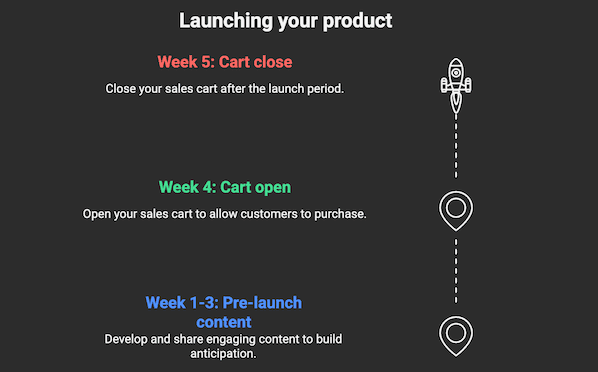
With this, you’ll be building anticipation with a content series before the cart opens. Then create scarcity with a limited-time offer and use early-bird bonuses to reward fast action.
Joshua Lisec, a ghostwriter and coach, generated $250,000 in just 14 days using a launch funnel for his hybrid coaching program.
The secret?
He didn’t just open the cart and hope for sales. He spent weeks pre-framing the offer with valuable content, building desire before the doors even opened.
Evergreen funnel
This is the “set it and forget it” option.
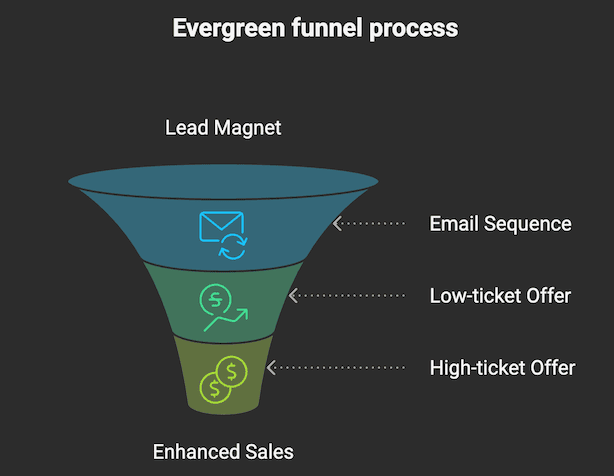
In this, free resource leads to email nurture sequence. You’ll be nurturing in sequence pitching a low-ticket offer ($47-$197). Low-ticket buyers get upsold to high-ticket coaching.
Gillian Perkins went from $0 to $100K in one year using this exact funnel. She eventually scaled it to $10K+/month in passive income while traveling Europe for 2 months.
The beauty of evergreen?
It runs 24/7. You’re not tied to launch dates or live webinars. But you need a solid email sequence that converts cold traffic.
For a deeper breakdown of these funnels with more examples, check out my guide on the 5 best sales funnels for coaches.
Here are the action steps:
- Match your funnel type to your offer price ($500 vs. $5,000 need different funnels)
- Consider your time commitment (evergreen vs. live webinars)
- Pick ONE funnel type and build it completely before testing others
Now that you know which funnel to build, let’s talk about the landing page that actually converts.
Step 5: Build your high-converting funnel landing page
Your landing page makes or breaks your funnel.
You can have perfect traffic and a great offer, but if your landing page fails to convert, you’re losing money.
Here are the exact sections you need.
Hero section
This is what people see first. You have 3 seconds to grab their attention.
Your headline needs to address ONE specific pain point. Not a generic benefit. A pain point that makes your ideal client think, “That’s exactly my problem.”
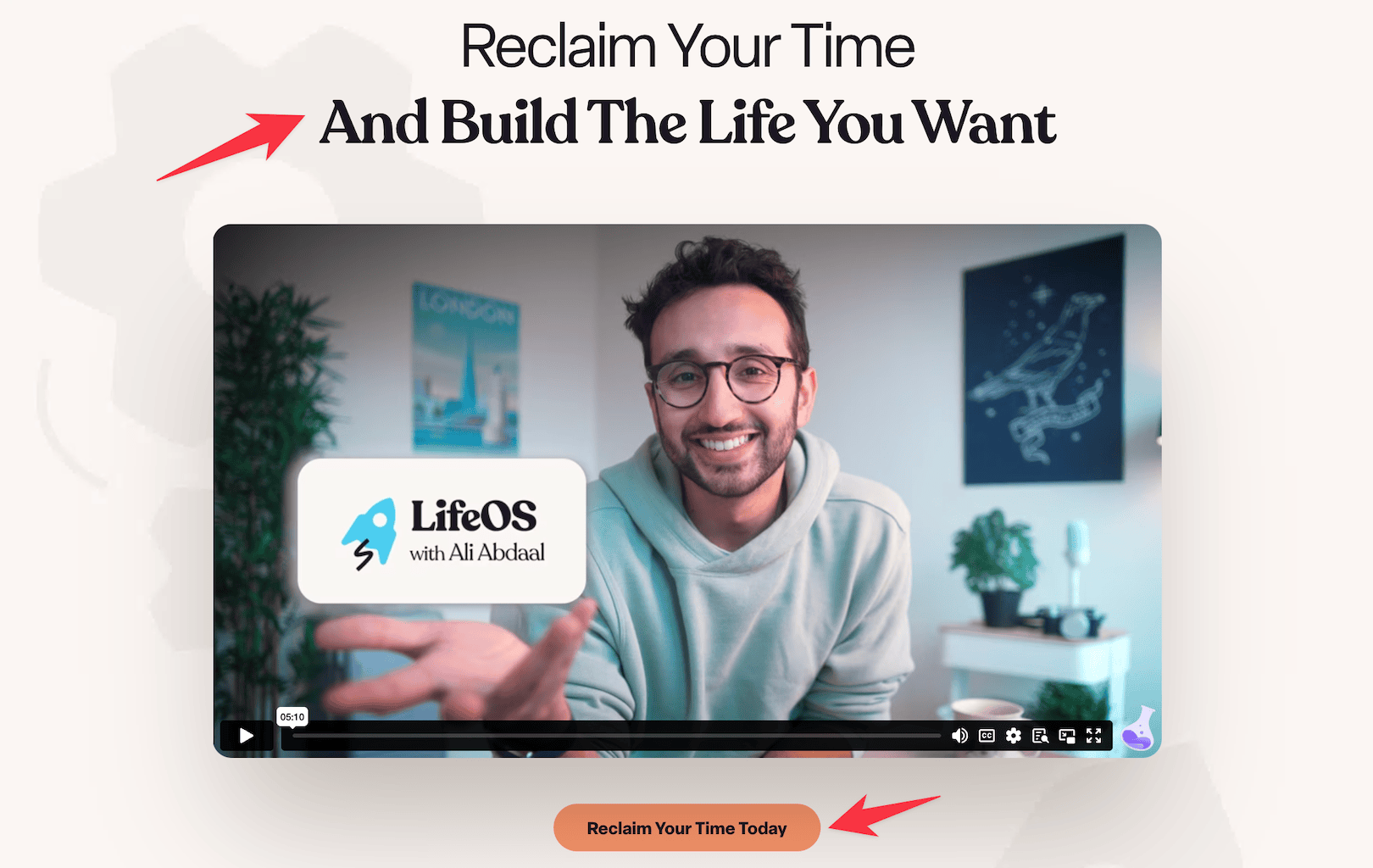
Bad headline: “Take Control of Your Time. Make Progress On Your Goals.”
Good headline: “Reclaim Your Time And Build The Life You Want”
See the difference?
Use a subheadline to promise the transformation.
Then add a clear CTA button that tells them what happens next. “Save My Spot” and “Get Started” work better than “Register” or “Submit.”
You can also use power words like “Without,” “Even If,” “Finally.” They acknowledge objections while promising results.
🎨 Your landing page headline is the single highest-leverage element to test. A headline change alone can double your conversion rate. Test 3-5 variations focusing on different pain points before optimizing anything else.
Proof and authority section
You need to show you’re credible before someone hands over their email.
List your credentials, but keep it brief.
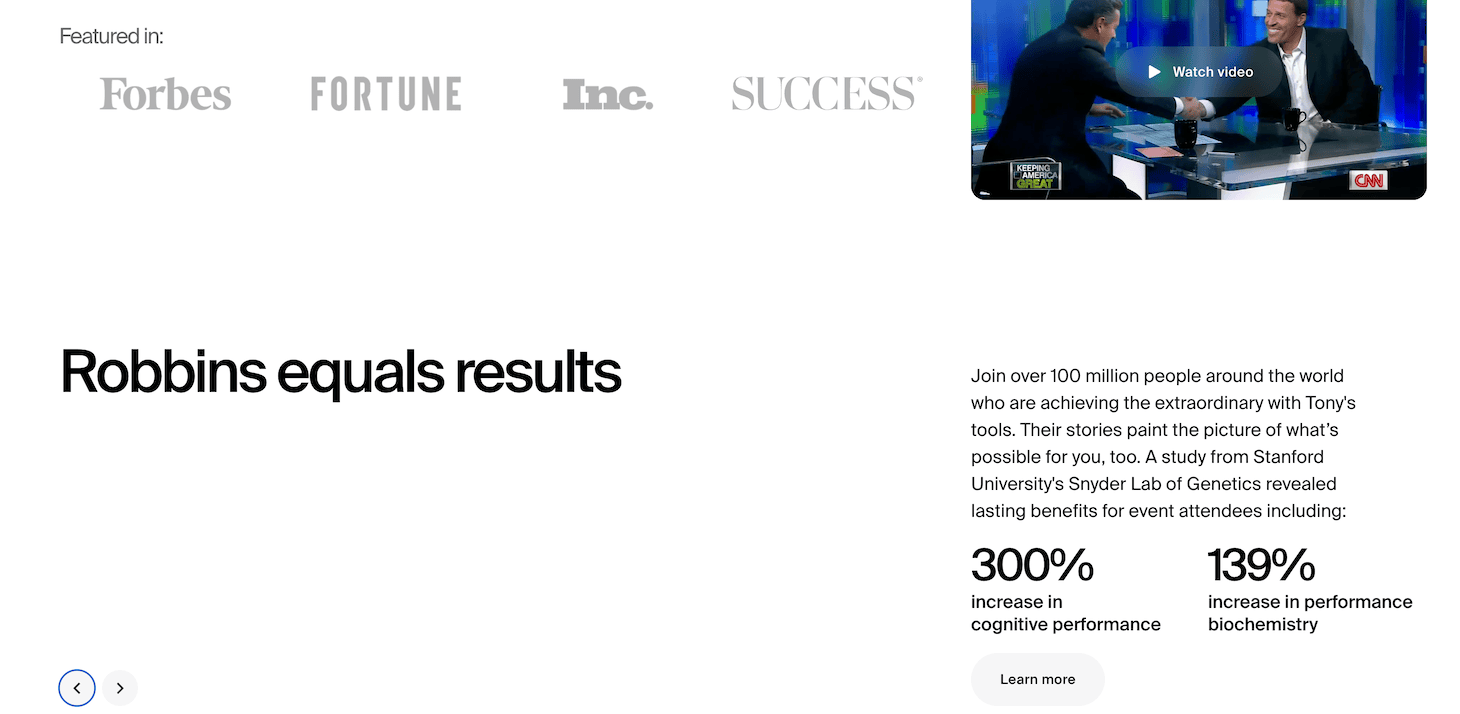
Add media mentions and certifications if you’ve got them.
But the strongest proof?
Social numbers like “Helped 500+ coaches hit 6 figures.”
Tony Robbins’ coaching program got a 308% return on ad spend by focusing heavily on brand authority in both ads and landing pages. Authority works.
Or, another example:
Marcus Chan’s sales funnel kept an 84.5% profit margin by getting these trust elements right. Small tweaks to how you show proof can change your conversions completely.
What you’ll learn section
In this section, you need to tell what readers will actually learn. Write it in 3 to 5 bullet points.
But don’t just list features.
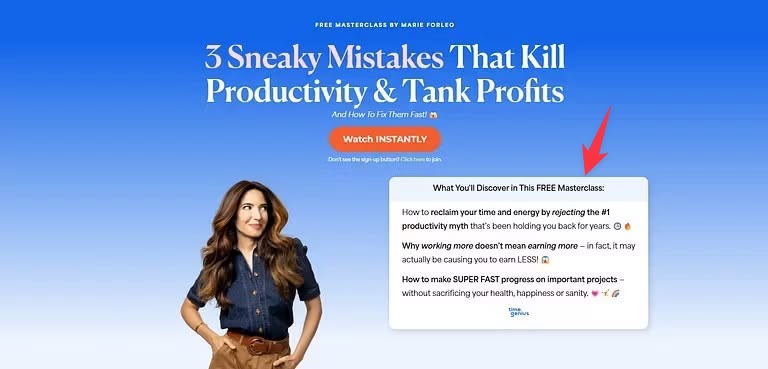
Focus on outcomes.
🔑 Include mini-objection handlers in your bullets. If your audience worries about time, add “in just 15 minutes a day.” If they worry about tech skills, add “even if you’re not tech-savvy.”
Testimonials section
Authority testimonials are what separate you from everyone else.
Here’s the thing: 75% of clients expect coaches to be certified or have some form of credibility. Authority testimonials solve this problem instantly.
Don’t use random client testimonials.
Instead, feature testimonials from people your audience already knows and respects. Industry leaders. Well-known entrepreneurs. Experts in adjacent fields.
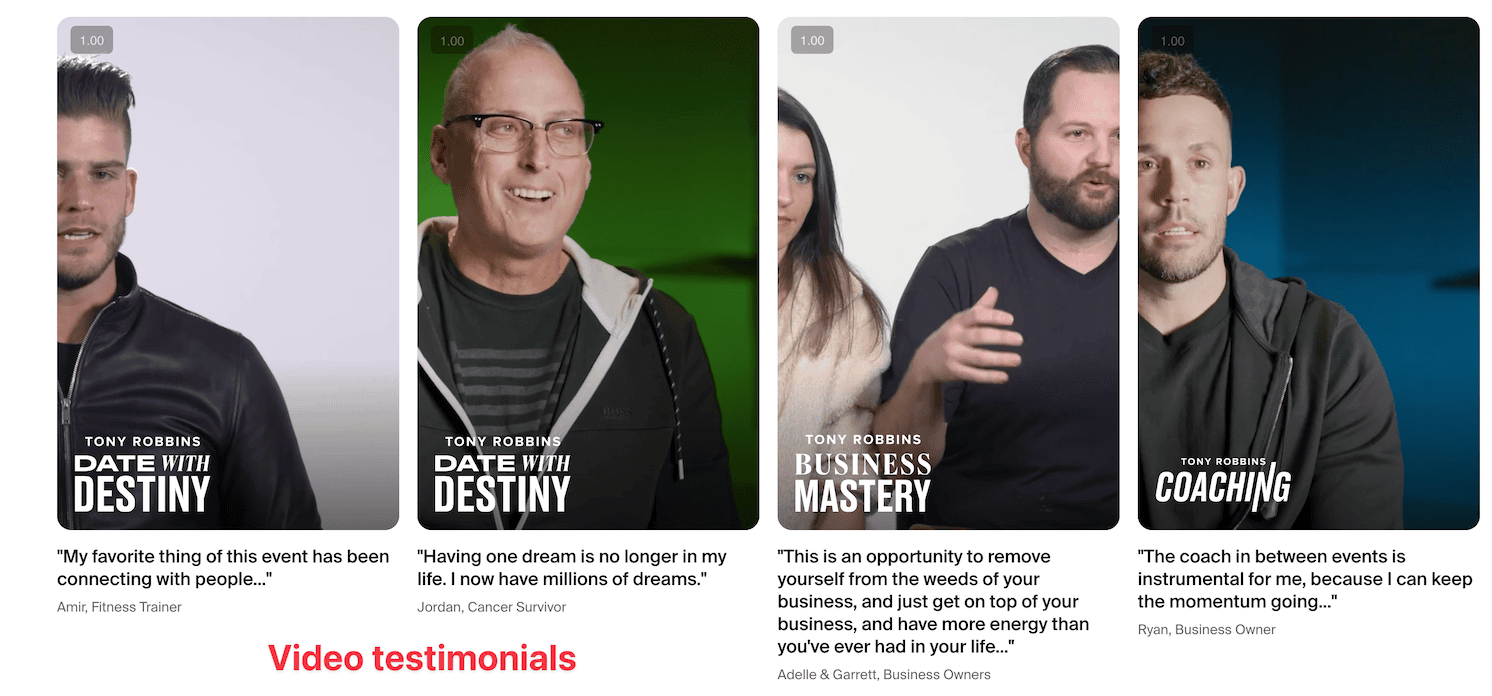
Video testimonials convert better than text. But if you only have text, include specific results. “$50K in 60 days” beats “really helpful.”
Photos, full names, and titles add credibility. Anonymous testimonials don’t work anymore.
Urgency and scarcity section
Time limits and seat caps work because they push people to act now instead of later.
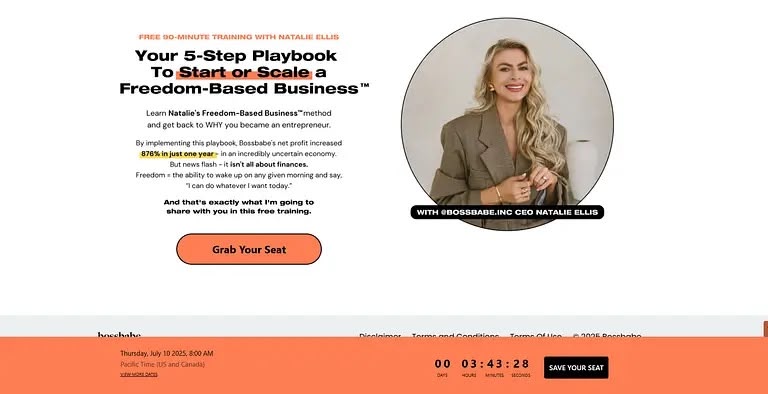
If you’re running live webinars, add a countdown timer. Say “Only 50 spots available” if that’s actually true. Don’t fake scarcity. People can tell, and it destroys trust.
For evergreen funnels, you can use seat limits that reset each week or month. “3 spots left this month” is a gentler way to create urgency without being pushy.
Final CTA
Put your CTA at the bottom one more time.
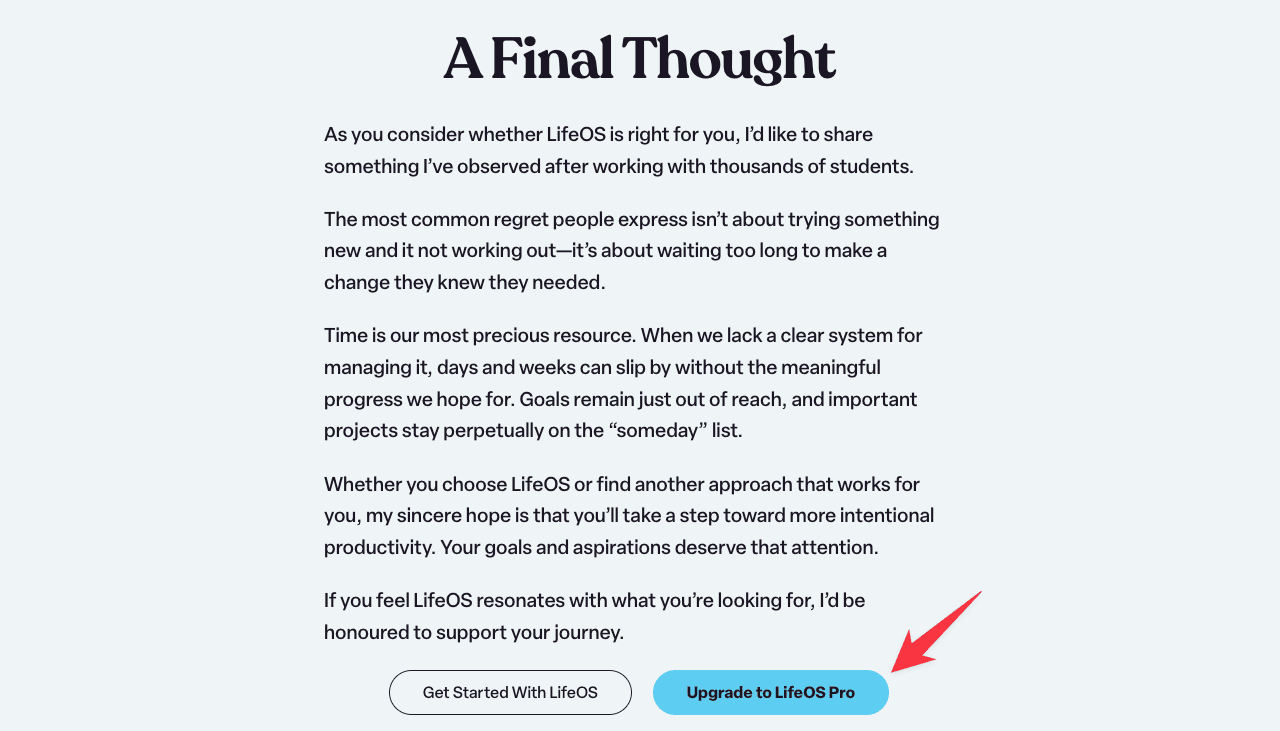
Make it easy. Say things like “100% Free,” “No credit card needed,” or “We protect your privacy.”
Now, here are the action steps:
- Write a pain-point headline (not a generic benefit)
- Get 2-3 authority testimonials if possible (or work toward them)
- Add a countdown timer for limited-time offers
- Test one element at a time (don’t change everything at once)
You’ve got your platform, your funnel type, and your landing page. Now you need to drive traffic to it.
Step 6: Drive traffic to your funnel (the strategic channel decision)
Most coaches waste time and money here.
They post everywhere.
LinkedIn, Instagram, TikTok, YouTube, Twitter.
They’re scattered, inconsistent, and wonder why nothing’s working.
Stop.
You need ONE primary channel that matches your offer price and audience.
For $2K+ coaching programs, you’ve got 2 real options: LinkedIn or YouTube.
LinkedIn works when:
- You’re selling to corporate clients or executives (B2B coaching)
- Your ideal clients are decision-makers with budget
- You’re in business transformation, leadership, or career coaching
87% of B2B marketers use LinkedIn. It’s where professionals with real budgets spend their time.
YouTube works when:
- You need to warm cold traffic before they’ll invest thousands
- Your coaching requires demonstrating deep expertise
- You’re building a personal brand beyond just coaching
Here’s why YouTube beats short-form content for high-ticket coaching.
Long-form videos (10-20 minutes) create what’s called a parasocial relationship. Someone who watches 15 minutes of your content trusts you 10x more than someone who saw a 30-second reel.
🎥 YouTube’s algorithm favors watch time over views. A 15-minute video with 100 views and 80% retention will outperform a 2-minute video with 1,000 views and 20% retention. Focus on depth, not virality.
Conclusion
You now have the 6-step blueprint coaches use to scale past $100K without burning out.
Here are the steps:
- Micro-segment your audience.
- Create targeted lead magnets.
- Pick your funnel.
- Build a high-converting landing page.
- Choose your content platform.
- Drive strategic traffic.
A properly built funnel works while you sleep, qualifies leads automatically, and scales without adding more hours to your day.
Start simple. Don’t overengineer this.
Pick ONE funnel type. Pick ONE platform. Pick ONE traffic channel.
Build it completely. Test it for 90 days. Then optimize.
The coaches who scale past $100K aren’t the ones with the fanciest funnels. They’re the ones who pick a system and execute it consistently.
Now it’s your move.
Ready to build your funnel? Start with Kajabi if you want all-in-one, Systeme.io if budget matters, or Skool if community is your focus.