Imagine spending a week creating the most useful guide on your topic. You cover all the right angles. You take screenshots to provide proof and walk-throughs. You even answer questions competing guides barely touch.
Then you ask an AI search tool a question you think your guide answers perfectly.
It cites three other websites.
Yours isn’t there.
Now what? Do you publish more, rewrite everything, or start sprinkling “GEO” into your content calendar?
In this guide, we’ll cover 10 practical ways to improve your chances of being discovered and referenced in AI answers. You’ll learn what could be keeping you out, and which content improvements you’ll want to prioritize.
We’ll also look at how to measure whether your efforts are paying off.
What does it mean to optimize your website for AI search?
It’s about making your website a source worth referencing and recommending when people search for topics you cover.
Start by treating AI visibility as three separate outcomes:
- Getting your brand mentioned in AI answers.
- Getting your pages cited as sources.
- Getting someone to click through to your website.
Each matters, but a mention alone doesn’t bring a reader to your blog or a subscriber to your email list.
Optimizing your website helps search-based assistants find, understand, and reference your content in relevant answers.
And you’re going to hear two related terms:
- Generative engine optimization (GEO) focuses on visibility in AI-generated responses.
- Answer engine optimization (AEO) focuses more broadly on making content useful for direct answers.
The terms overlap. Both involve making your content useful beyond a traditional list of search results.
Here’s where to start.
1. Audit where your website appears in AI answers now
Before rewriting anything, find out whether AI search tools already mention your website. Better yet, see what they say about it.
According to AI strategist Dr. Samantha North, start by asking questions.
Specifically, use different AI tools (like Perplexity, ChatGPT Search, and Google AI Mode) to ask questions about your brand, products, audience, and competitors.
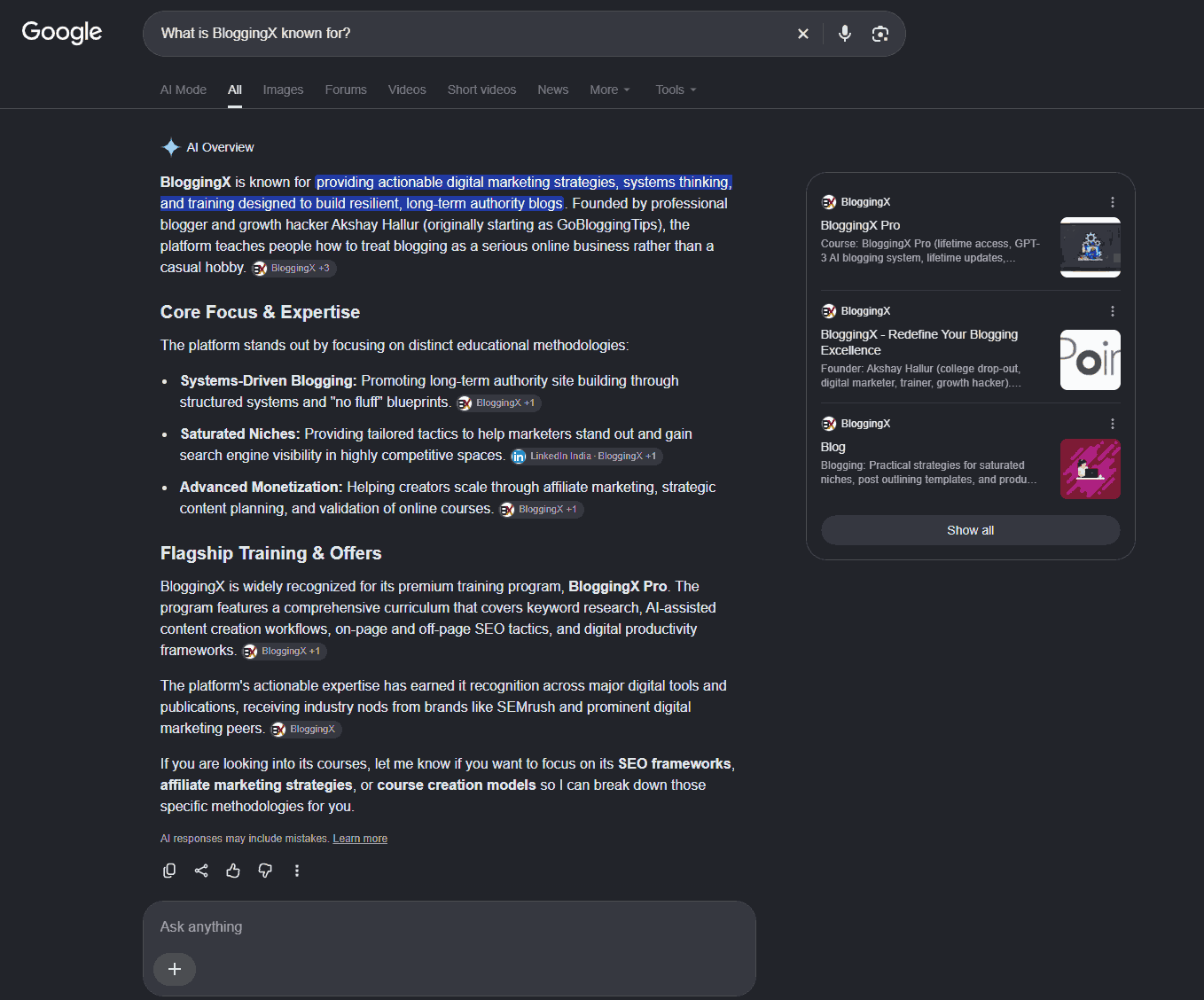
She recommends you try two types of questions.
- Branded: For example, “What is [your website name] known for?” This checks how AI tools describe your brand to others.
- Nonbranded: For BloggingX’s example, I can ask, “Which independent websites test and review online community platforms?” This checks whether my site appears without me naming it outright.
Start with 5-10 questions relevant to your content and audience.
Then run them across two or three search-based assistants.
After that, record the date, brand mentions, cited URLs, competing websites, and inaccurate descriptions in a spreadsheet.
You’ll also want to repeat these checks. The goal here is to notice a pattern instead of judging your AI visibility based on a single response.
Use Semrush One’s Prompt Tracking to monitor selected questions across ChatGPT Search, Google AI Mode, and Gemini, inspect cited sources, and compare your visibility with competitors.
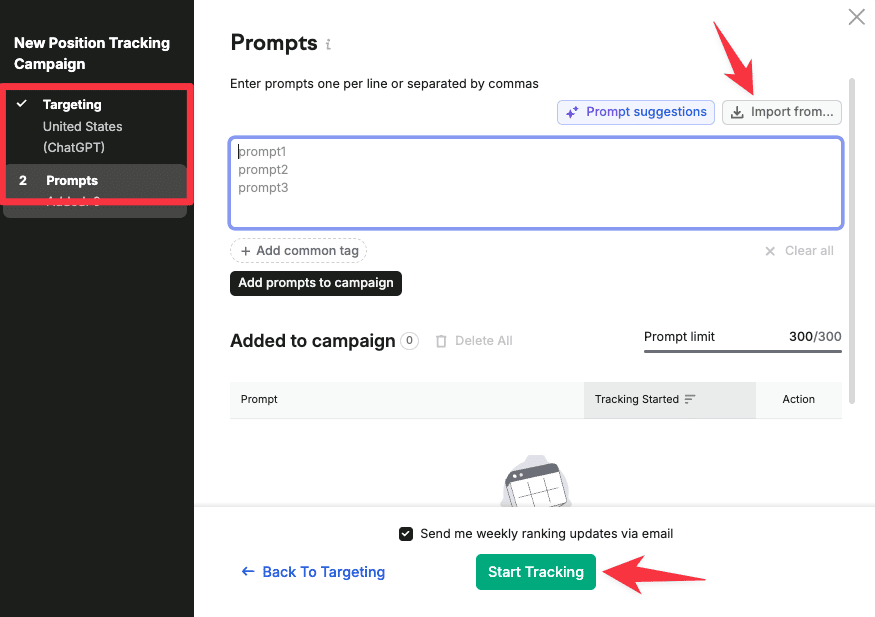
You can also outright ask the tool why your website wasn’t included. Then treat its explanation as a lead to investigate, not solid proof of how the tool selected its sources.
Explore Semrush 14-day free trial
2. Remove the technical barriers that keep your content out
For example, one of your articles might still carry a noindex instruction after a website migration or content update. That tells the search engines not to index it.
Google says a page must be indexed and eligible to appear with a search snippet to qualify as a supporting link in AI Overviews or AI Mode. So, try this, starting with your crucial pages:
- Check indexing: Use Google Search Console’s URL Inspection tool to investigate excluded pages.
- Review access: Ask your developer or hosting provider whether robots.txt rules or firewall settings accidentally block relevant crawlers.
- Review snippet restrictions: Check whether settings such as no-snippet unintentionally limit how your content can appear.
- Check your content’s availability: Keep important explanations in readable text, rather than only in images.
If you want, use a tool like Semrush to catch many of the issues that are easy to miss or assume. Picture these:
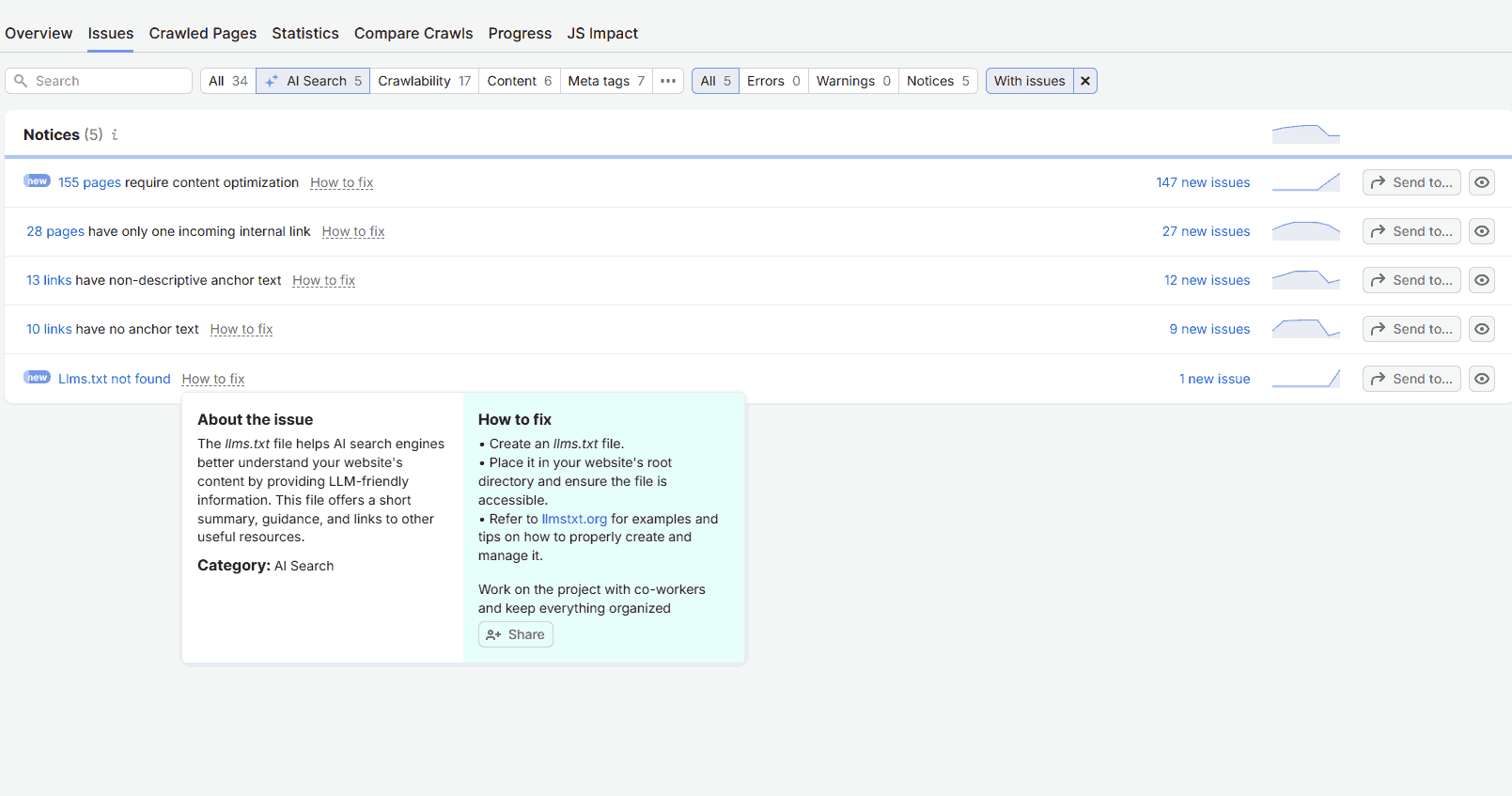
Also, distinguish search access from AI training. OpenAI, for example, lets you allow OAI-SearchBot for search while blocking GPTBot for model training. These controls are independent.
Fixing access makes your content eligible for discovery.
3. Research the questions behind your target keywords
Google explains that AI Overviews and AI Mode may use query fan-out. Query fan-out is the process an AI search tool uses to run multiple related searches across subtopics and sources to develop a comprehensive answer.
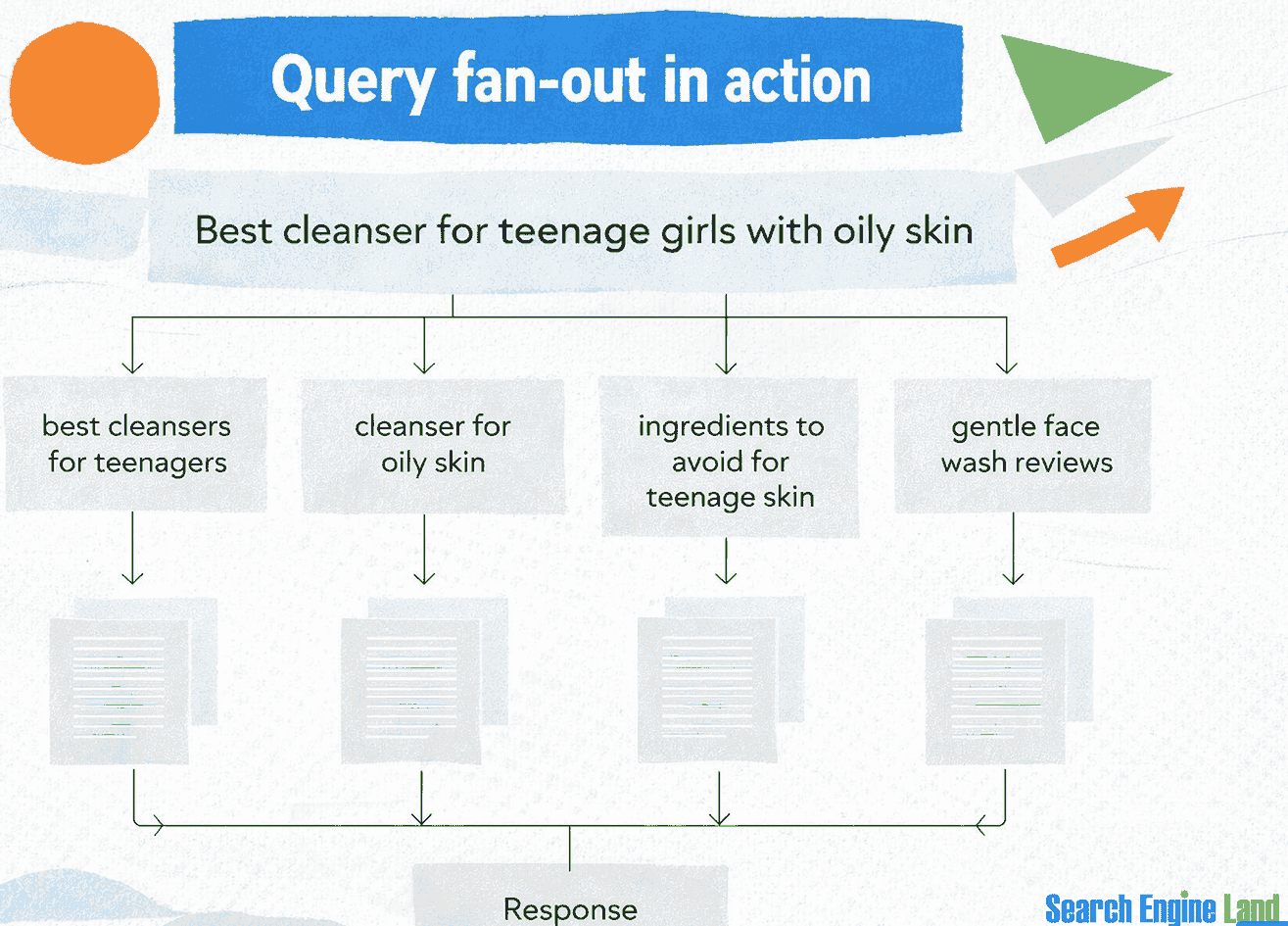
That gives us a practical reason to explore the decisions behind someone typing a certain query.
Start with a target topic, then gather questions from:
- Search Console: Note the queries that already bring people to your website.
- Keyword research: Look for related searches, long-tail keywords, and question-based variations. You can use a robust keyword research tool like Semrush for that. It’s free for 14 days here.
- Real conversations: Dig into comments, customer support requests, and sales questions. You can also explore public discussions on competitors’ platforms or review sites to uncover real customer concerns that keyword tools might miss.
Then group those questions by the decision they help the searcher make.
In our case at BloggingX, someone might search for “the best online community platform in 2027.”
But what does “best” actually mean to this person?
- A platform that lets them sell courses?
- One that supports free and paid memberships?
- The cheapest option?
- One without transaction fees?
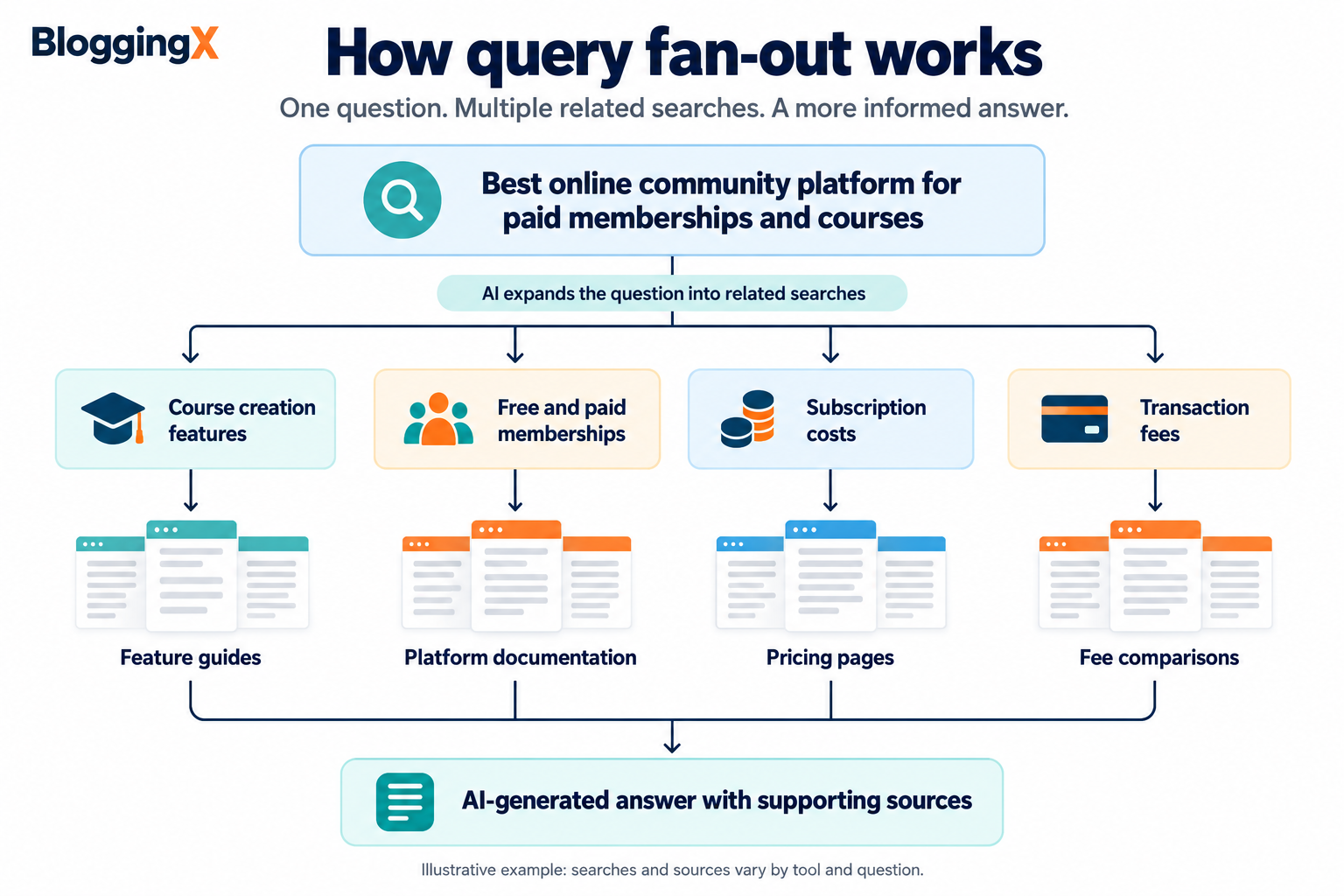
Their priorities help determine whether what community platform best fits their needs.
These questions also give you useful subtopics for your comparison. Group related questions together, and let them shape your content alongside the keyword.
That’s what meeting search intent involves: understanding the decision behind the query and giving your readers all the possible information they need to make it.
4. Give each important question a clear, supported answer
Once you know what your readers are asking, answer the question early. Don’t make them dig through five paragraphs to find your answer.
For example, use a descriptive heading. Then explain the evidence and any conditions that could change the answer.
Say you run a home-improvement blog. Using a heading like “Painting considerations” tells your readers very little.
Instead, try “How much paint do I need for a bedroom?” This is more specific, and honestly, more interesting because it gives the section a clear purpose. It also tells your readers exactly what they can look forward to learning.
This gives the section a much clearer purpose, and tells readers (and AI tools) exactly what they’ll learn.
Follow that up with a worked example based on room dimensions, the number of coats you applied, and the paint’s stated coverage. Go further and explain how doors, windows, or surfaces needing extra coats could change the estimate.
You’ll also want to choose a format that makes the information easy to scan (for SEO/GEO/AEO tools) and understand (for real people):
- Use tables to compare paint quantities across room sizes.
- Try numbered steps for measuring walls and calculating quantities.
- Short paragraphs are great for explaining assumptions and exceptions.
Clear formatting can help your content appear in AI citations.
5. Publish evidence that other websites cannot simply repeat
Use original evidence, such as the results of an actual experiment, survey, or use case you ran.
Google’s review guidance, for example, encourages you to explain why a product suits a particular use case based on performance measurements.
Let’s say you run a gardening blog and want to compare three self-watering planters.
Picture this:
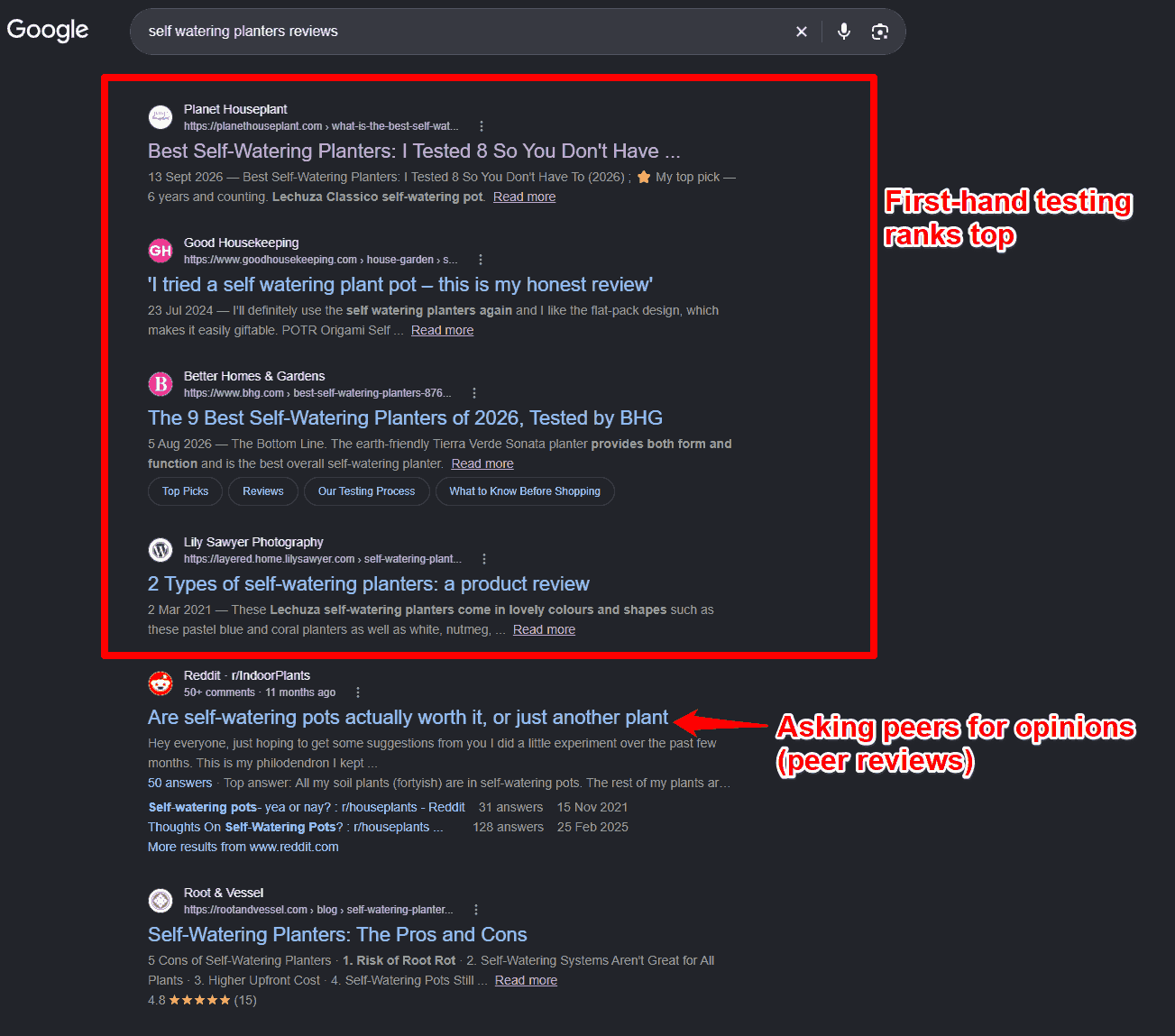
The same sites (with the addition of a YouTube video) are cited by Google AI Mode for the keyword “self watering planters reviews”:
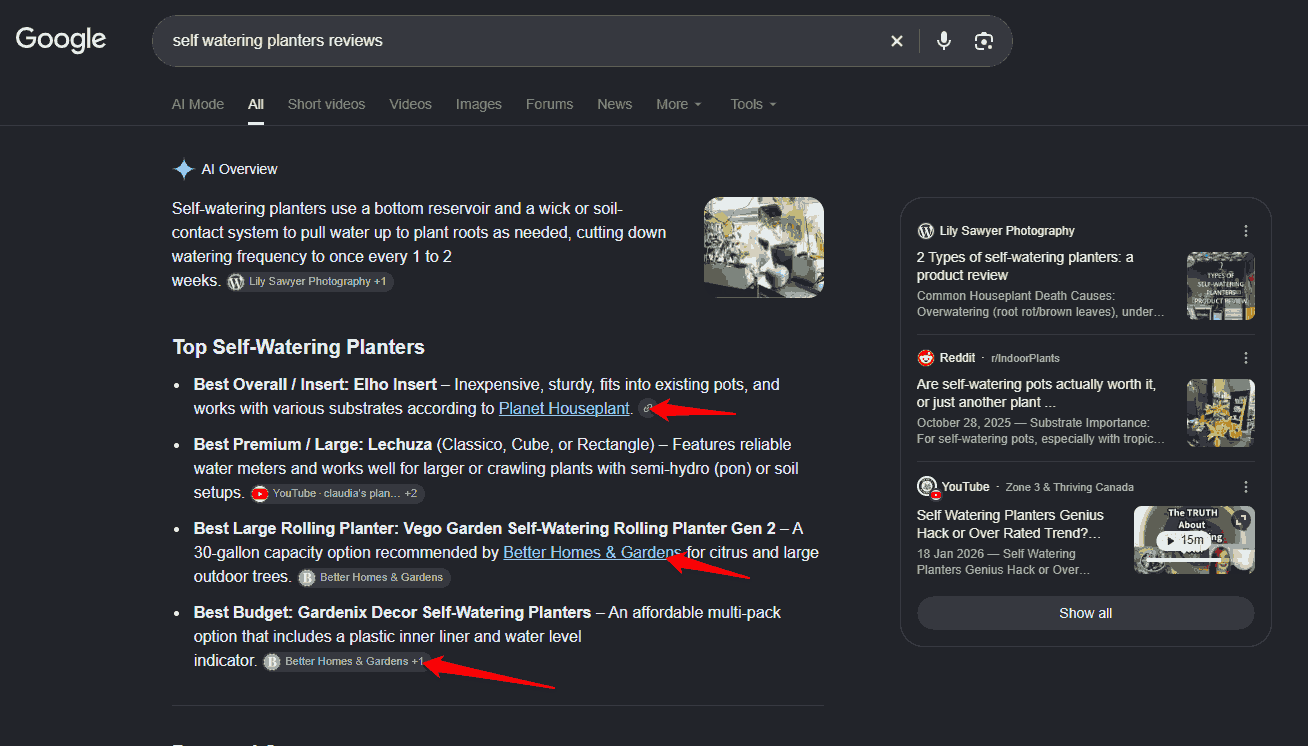
What this means is that, instead of summarizing the planters’ product descriptions, grow the same herbs in each. Track how often you refill the reservoirs, photograph their progress, and document problems such as leaks or uneven watering.
If you can do it in video, that works too.
The payoff is that you’ll have something helpful to explain based on actual testing. That includes insights such as which planter worked best under your test conditions.
Make those conditions clear. Note the soil, sunlight, test duration, and any differences that could affect the results.
Yes, not everyone will get the same outcome as you did, but they’ll go into it with a vivid idea of what to expect (or not).
Beyond product testing, other forms of original evidence you can use include:
- Expert interviews explaining how someone solved a specific problem.
- Surveys with a clearly described sample and method.
- Case studies showing the starting point, the changes made, and results.
All this gives AI tools, readers, and other publishers a reason to reference your work.
6. Connect related pages into a useful topic cluster
Your reader’s next question may need more depth than the main article can offer. In that case, give it its own article. Then make that article easy to find.
A topic cluster connects a central guide with supporting pages that explore specific questions in more detail.
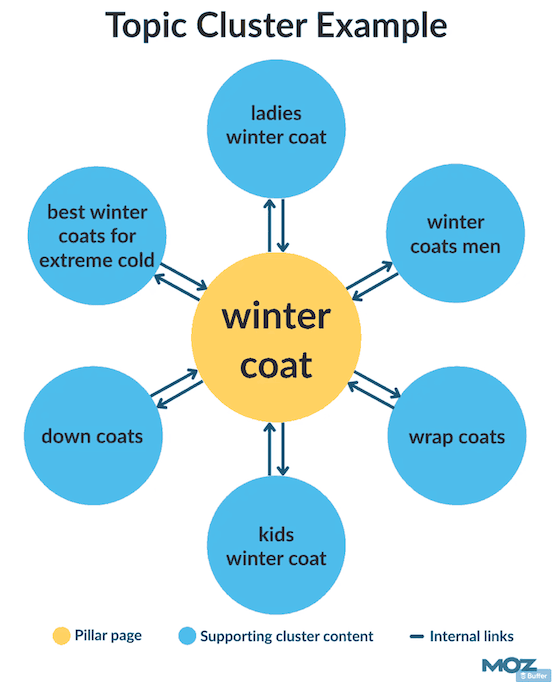
Let’s try a different example from Moz.
Let’s say you run a photography website.
Your central or pillar guide, “Photography for Beginners: A Guide to Taking Better Photos,” could introduce camera settings, lenses, and lighting, then link to more detailed tutorials such as:
- How to set your camera’s shutter speed for brighter photos
- How to choose your first camera lens
- How to take clear photos in low light
Each tutorial answers a distinct question. You then link to these supporting articles from your pillar guide, and link back to the guide from each tutorial. And where useful, link related tutorials to one another so your readers can easily explore their next question.
Remember to use descriptive link text, such as “how to choose your first lens,” so readers know what to expect when they click through.
Careful, though. If three articles answer essentially the same beginner camera question, you’ll want to combine them into one stronger guide instead of repeating the same thing.
Bing explains that near-duplicate pages can make it harder for search and AI systems to select the intended URL.
7. Make your brand and authors easy to verify for EEAT reasons
Give AI search tools and people enough information to check your credibility for themselves.
Publish accurate bylines, author information, and explanations of who and how you created your content. These details help readers and AEO tools assess E-E-A-T (experience, expertise, authoritativeness, and trustworthiness).
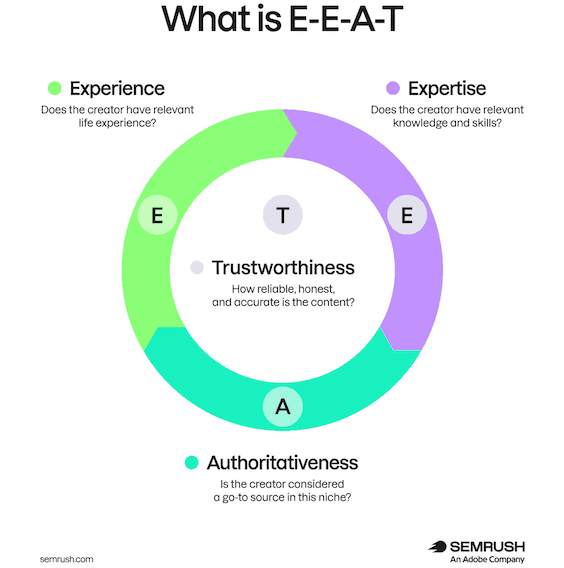
Don’t let Google’s claim that E-E-A-T isn’t a specific ranking factor.
Instead, start with these basics:
- Author bios: Show relevant experience and credentials as well as a link to works that demonstrate them.
- An About page: Explain who runs the website, what your site covers, and whom it serves.
- Editorial policies: Describe how you research, test, review, and correct content.
- Disclosures: Make sponsorships, affiliate relationships, and other relevant interests clear.
Take a travel website, for example.
“Passionate travel enthusiast” says little. However, a bio explaining that the author lives in Lisbon and personally walks the routes in their city guides offers specific, relevant context — provided it’s true.
Take the travel blog Earth Trekkers.
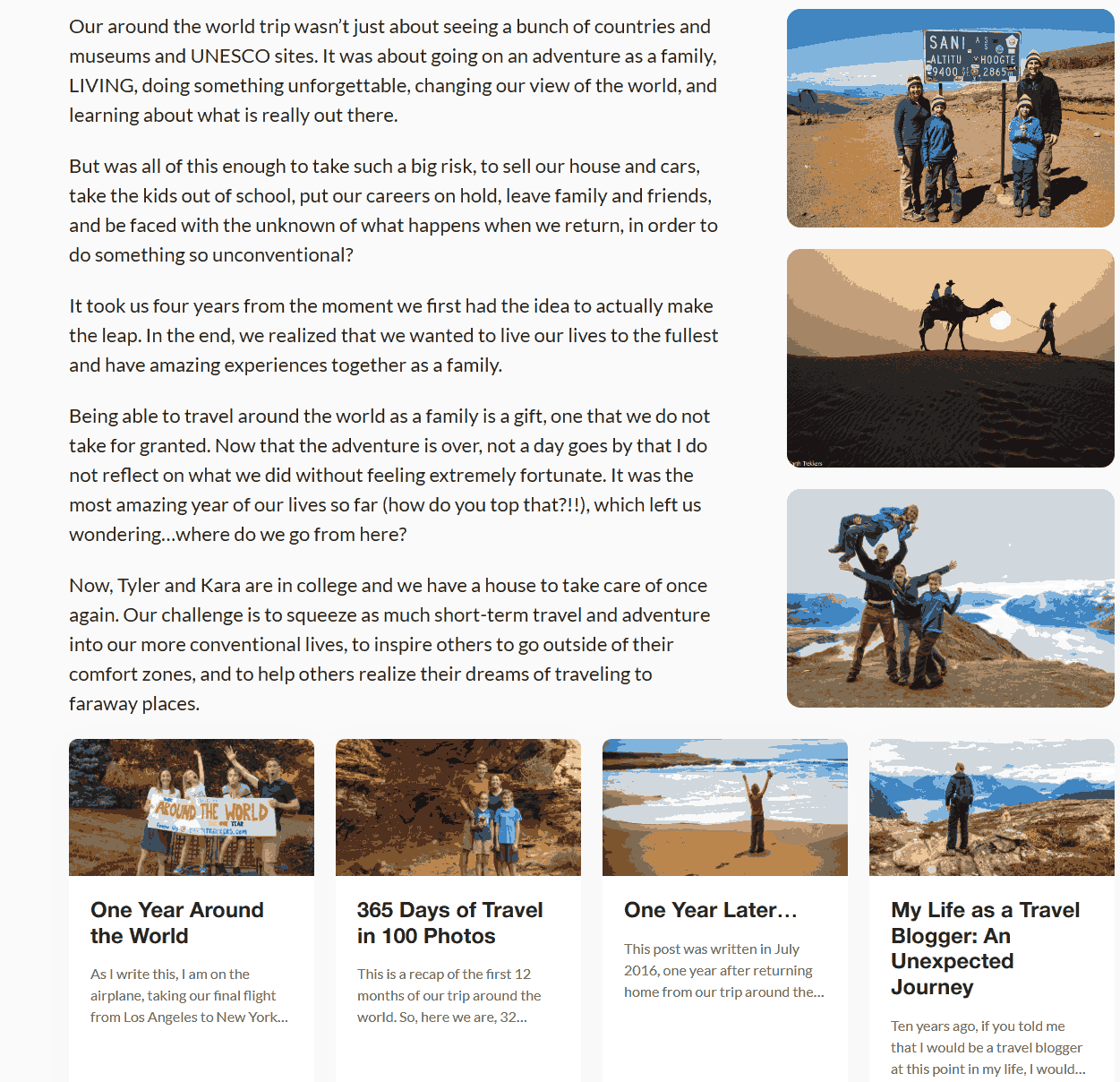
Its About page identifies Julie as its main author and photographer. It also describes the family’s 13-month trip through 35 countries. They even explain their editorial approach. That is, they pay for their own travel and only write about places they’ve visited.
That lets readers see who creates the guides, what experience informs them, and how the trips are funded.
Keep these details consistent across your website and public profiles.
8. Earn relevant coverage beyond your own website
Getting coverage elsewhere gives AI-assisted search tools another way to discover and assess your expertise.
Backlinko’s Asif Ali recommends earning relevant brand mentions across the web as part of a GEO strategy. That includes mentions without direct links.
Start with something worth sharing.
Say you run a freelance design blog and survey designers about the causes of delayed projects. You could:
- Share the findings and methodology with a design newsletter
- Offer commentary to an industry publication
- Discuss the results in a relevant community.
Of course, give each audience something they love.
- Publications like original findings and a clear explanation of why they matter.
- Podcast hosts take to specific experiences you can discuss with their listeners.
- Online communities prefer helpful answers, with your affiliation disclosed when relevant.
Start with Google Alerts to get email notifications when it finds new mentions of your brand.
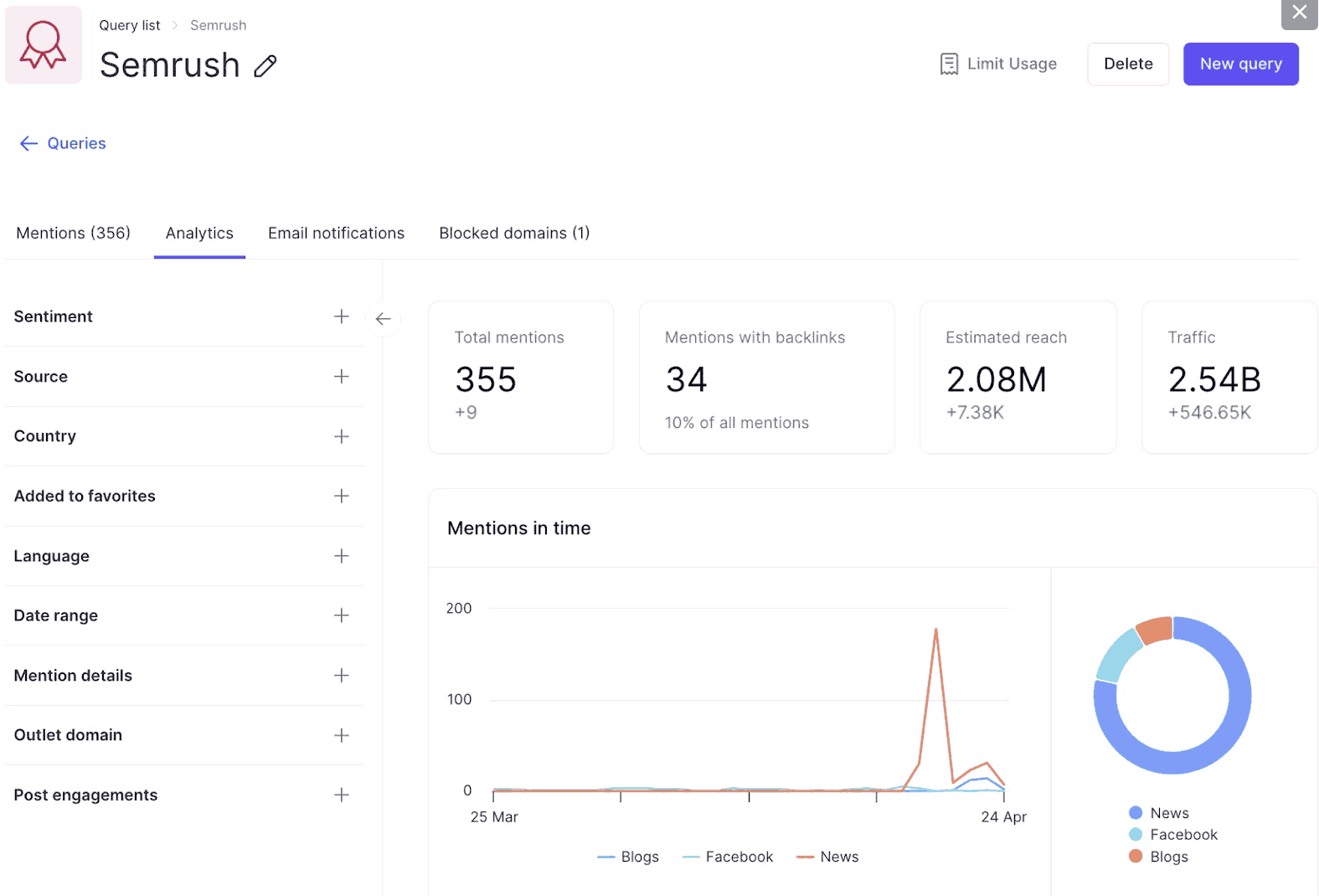
If you want to get even more detail, use Semrush’s Brand Monitoring app.
It reveals mentions from news sites, social media, and other websites in one dashboard. That also includes whether they link back to you.
9. Refresh the facts that can make an answer wrong
Conduct regular content audits to identify and remove outdated content or overlapping pages. One thing to check is which posts keep losing reach, engagement, etc. You can check individual posts with Semrush like this:
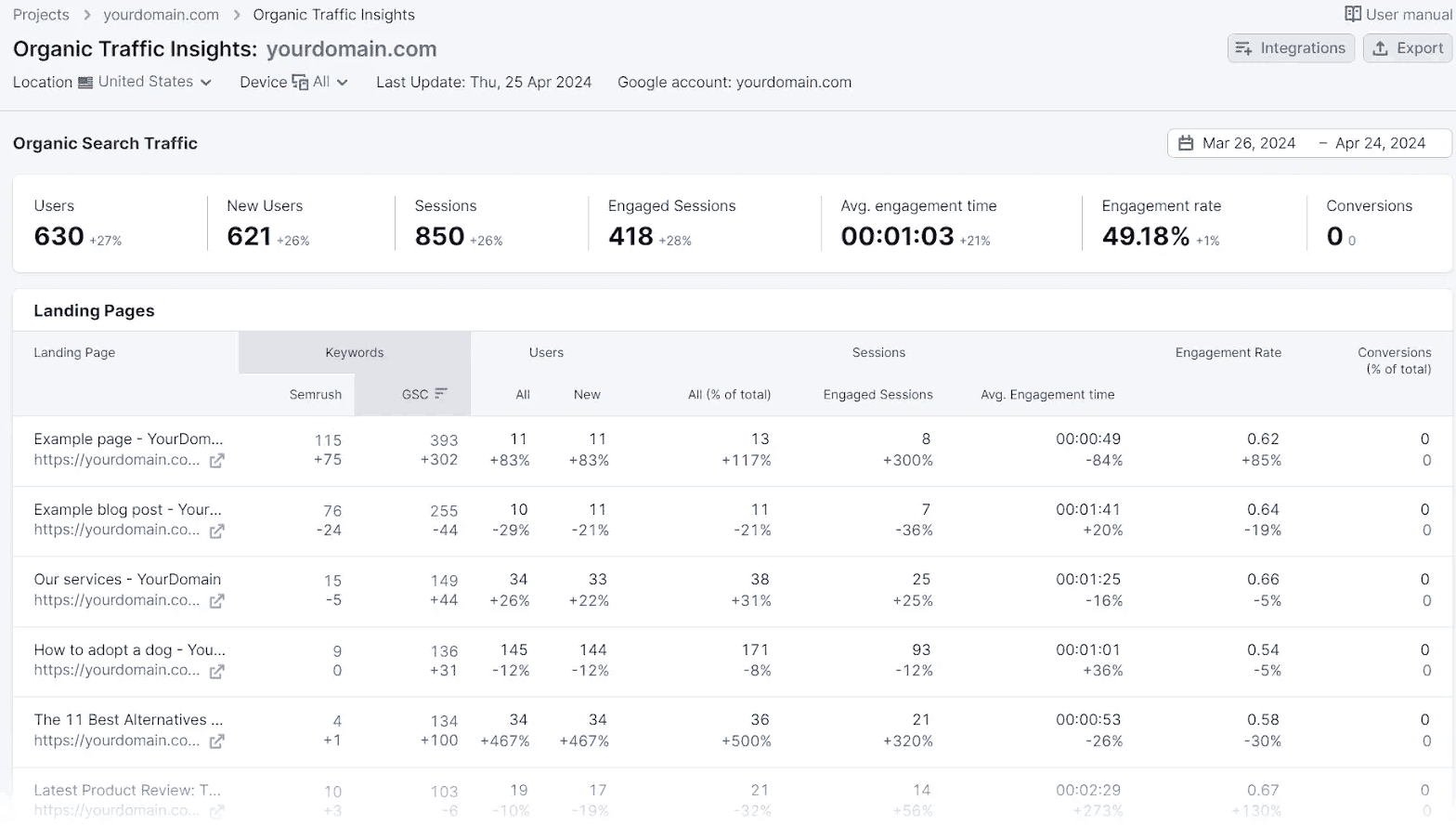
Say you run a travel website.
A guide you wrote says a local museum offers free Sunday entry. However, that offer has ended. In that case, the itinerary would still read beautifully. But it’d be giving outdated, even wrong advice at this point.
To avoid that, prioritize details that affect someone’s decision, such as:
- Update subscription costs, admission charges, and additional expenses.
- Refresh what a product or service currently offers.
- Refresh steps, screenshots, and links readers rely on to complete a task.
When a fact changes, check every relevant page. Updating your museum review won’t fix the outdated recommendation in your weekend itinerary.
Also, remember to update the substance before changing the date. Google explicitly cautions against making pages appear fresh when their content hasn’t substantially changed.
10. Measure citations, visits, and outcomes separately
Getting cited is encouraging. But did anyone visit your website, subscribe, or make an inquiry?
To answer that, return to your initial audit and track these four factors separately:
- Brand mentions: Does your name appear for your target questions?
- Citations: Which pages are linked as sources?
- Visits: How much identifiable traffic comes from AI search tools?
- Outcomes: Do those visitors subscribe, inquire, or buy?
For that, use Semrush’s Prompt Tracking, to monitor selected questions across ChatGPT Search, Google AI Mode, and Gemini.
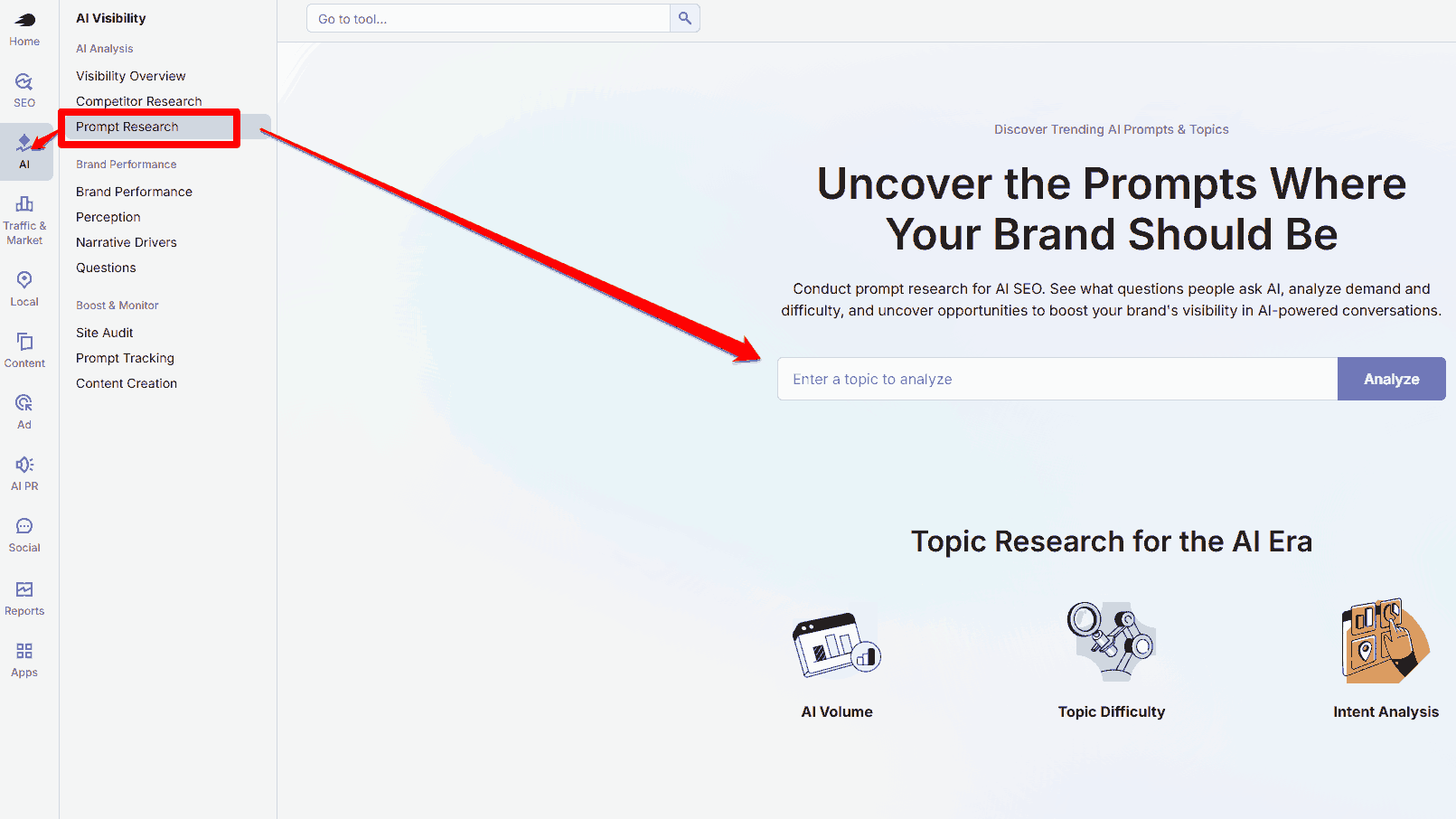
You can track mentions of your brand, inspect your cited sources, and compare your AI visibility with competitors.
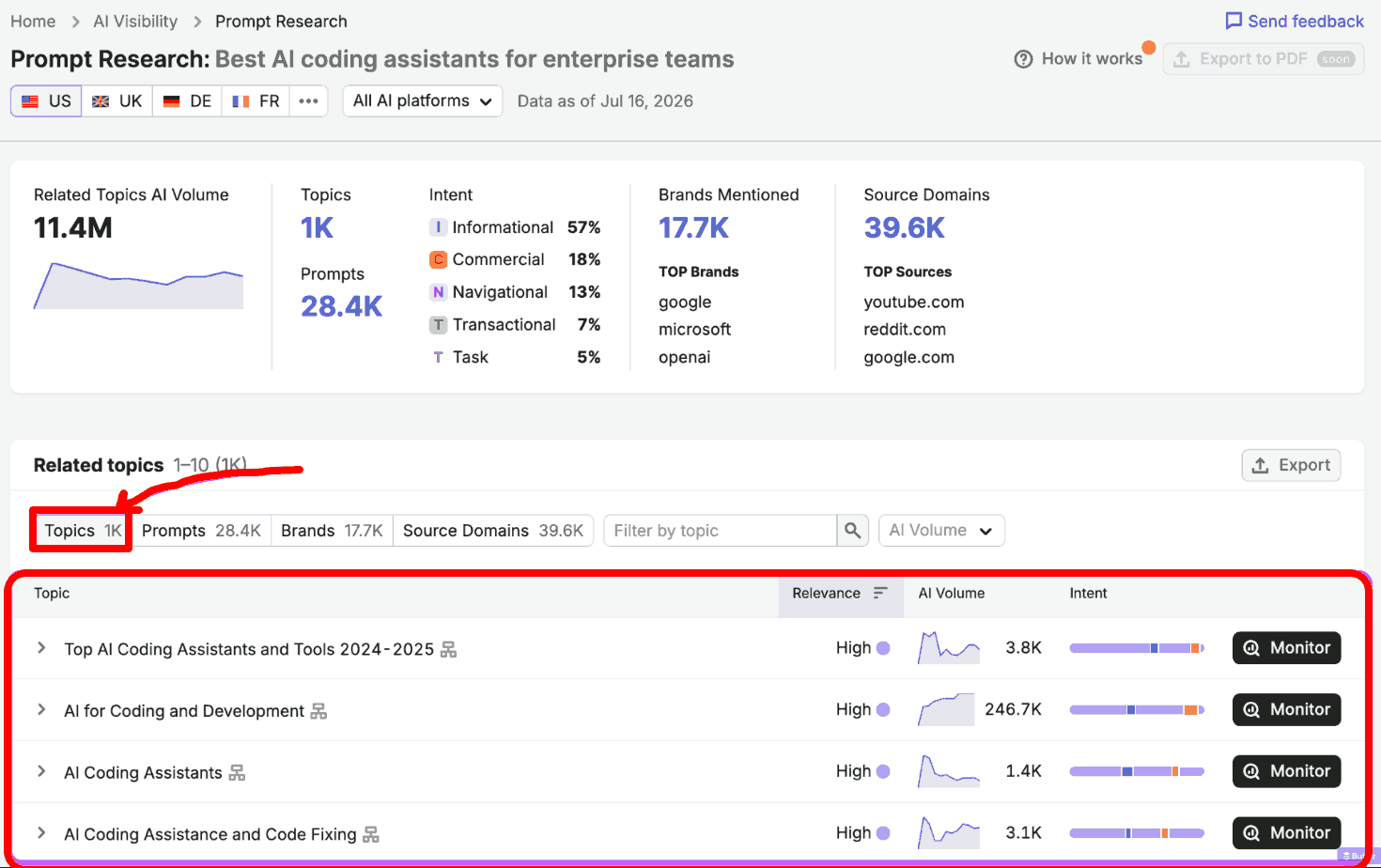
Here’s a practical way to use it:
- Add questions from your initial audit. Choose prompts relevant to your audience’s decisions.
- Review mentions and sources. See whether your brand appears and which pages the tools cite instead.
- Record your content changes. Monitor those same prompts over time to identify patterns worth investigating.
Then use your website analytics to track identifiable AI referrals and conversions.
For additional visibility data, use Google Search Console’s Generative AI reports to see impressions and pages appearing in its AI features.
Bing Webmaster Tools’ AI Performance report also tracks citations across supported experiences, including Copilot and Bing’s AI summaries.
FAQs about AI search optimization
- Does AI search optimization replace SEO? No. AI search optimization builds on SEO fundamentals, including crawlability, useful content, and clear site structure. It adds a focus on how your brand and pages appear in AI-generated answers.
- What is the difference between SEO, GEO, and AEO? SEO focuses on improving online search visibility in mostly traditional search engine results. GEO focuses on improving visibility in AI-generated responses. AEO focuses on becoming cited in direct answers, including featured snippets and voice responses. Their methods overlap, though.
- Do I need an llms.txt file? No. Google says you don’t need special AI text files to appear in AI Overviews or AI Mode. However, I recommend it, and you can use tools like Semrush to see where and how to add llms.txt files to boost your AI search visibility chances.
- Can I guarantee that AI tools will cite my website? No. While you don’t control which sources an AI tool selects for a particular answer, improving your content’s accessibility, relevance, and credibility increases your chances of getting AI citations.
- What is query fan-out? Query fan-out is when an AI search system runs multiple related searches, subtopics, and sources to help answer one question.
Give AI search a reason to reference you
You don’t have to tackle all 10 ways to optimize your website for AI search today.
Instead, start by checking where your website appears today. Then research access barriers on three important pages. Then begin optimizing, starting with editorial revisions, such as adding clearer answers and original evidence.
You’ll give your readers a reason to visit and stay.
Then track what changes: mentions, citations, visits, and the actions people take going forward. Start small, learn from the results, and build from there.